

CrowdStrike and NVIDIA announced an expanded collaboration at GTC Berlin on Wednesday that extends AI agent security from the software runtime down into the silicon underneath it. CrowdStrike is integrating Falcon Guardian, its AI Detection and Response (AIDR) product, with NVIDIA’s OpenShell secure runtime software, and plans a second integration with NVIDIA Sentry for in-silicon enforcement on BlueField-4 DPUs.
The announcement builds directly on the NVIDIA OpenShell Reference Architecture unveiled the same day, which gives enterprises a governed runtime for autonomous agents. CrowdStrike’s move makes it one of the first security vendors to plug a full detection-and-response platform into that architecture.
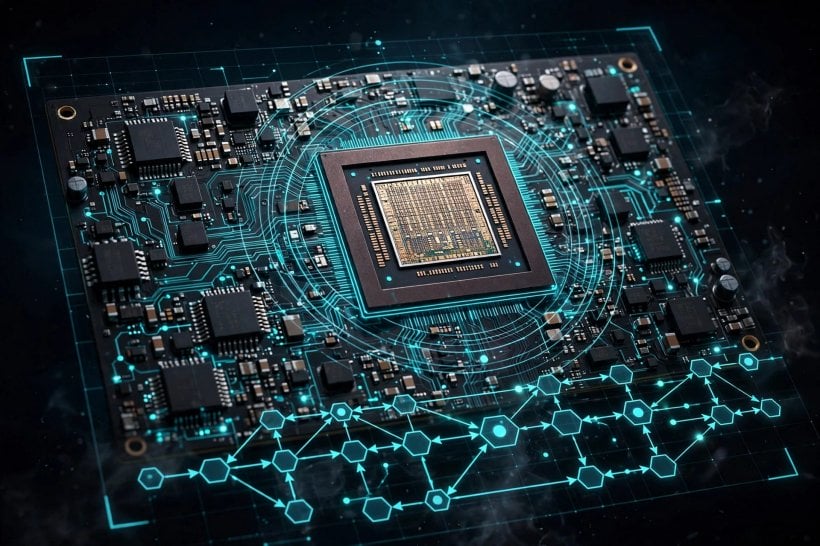
Falcon Guardian Inside The OpenShell Runtime
The OpenShell integration connects agent prompts, model interactions and runtime activity to the wider security context held in CrowdStrike’s Falcon platform. That linkage is what AIDR is built on: instead of judging an agent’s behaviour from a single session, Falcon Guardian can compare prompts, tool calls and model responses against threat intelligence and telemetry from across the enterprise, and flag malicious behaviour inside agent workflows.
CrowdStrike’s chief business officer, Daniel Bernard, framed the problem bluntly in the announcement: “AI agents have already created a new attack surface, and guardrails alone won’t stop an adversary.” The company says the goal is to set a standard for securing autonomous AI that runs from detecting threats in software to stopping them at the silicon level.
Sentry And BlueField-4: Enforcement Below The Runtime
The planned Sentry integration is the deeper half of the deal. NVIDIA Sentry runs on BlueField-4 data processing units, which sit alongside the main processors in AI servers and handle networking and security work out of band. Pairing AIDR with Sentry’s monitoring would let CrowdStrike detect and contain unsafe agent behaviour beyond the software runtime — in the infrastructure layer an agent cannot see or tamper with, even if the host environment is compromised.
NVIDIA’s vice president of enterprise, Justin Boitano, said securing agents in production requires protection “from the runtime to the underlying infrastructure,” and described OpenShell as the foundation for runtime security and hardware-based enforcement. The release also carried an endorsement from Autodesk’s chief trust officer, Sebastian Goodwin, who said Falcon Guardian gives the company visibility into what its agents are doing, what they can access and when to intervene.
Why It Matters
Falcon Guardian’s expansion matters because agent security is splitting into layers, and vendors are racing to own more than one of them. Runtime guardrails can be bypassed by a compromised host; enforcement on a DPU cannot be reached by software running above it. By wiring AIDR into both OpenShell and Sentry, CrowdStrike is positioning Falcon as the control plane that follows an agent from prompt to processor — a claim rivals such as the partners in NVIDIA’s wider GTC Berlin infrastructure push will have to answer. For enterprises deploying agents at scale, the practical test will be whether the Sentry integration ships on schedule and whether detection quality holds up outside demonstrations. The deal also deepens the pattern visible in NVIDIA’s partner announcements this week: NVIDIA supplies the architecture, and specialist vendors build the commercial layer on top of it.
Background
CrowdStrike and NVIDIA have been expanding their partnership through successive GTC cycles, moving from GPU-accelerated security analytics to joint work on agent runtimes. OpenShell itself only arrived today, as NVIDIA’s answer to a problem every enterprise deploying autonomous agents now faces: agents act with real permissions, so containing them requires controls in the runtime and the hardware, not just in the model. CrowdStrike, whose Falcon platform grew out of endpoint protection, has been repositioning AIDR as its answer to that same problem from the defender’s side.



0 Comments