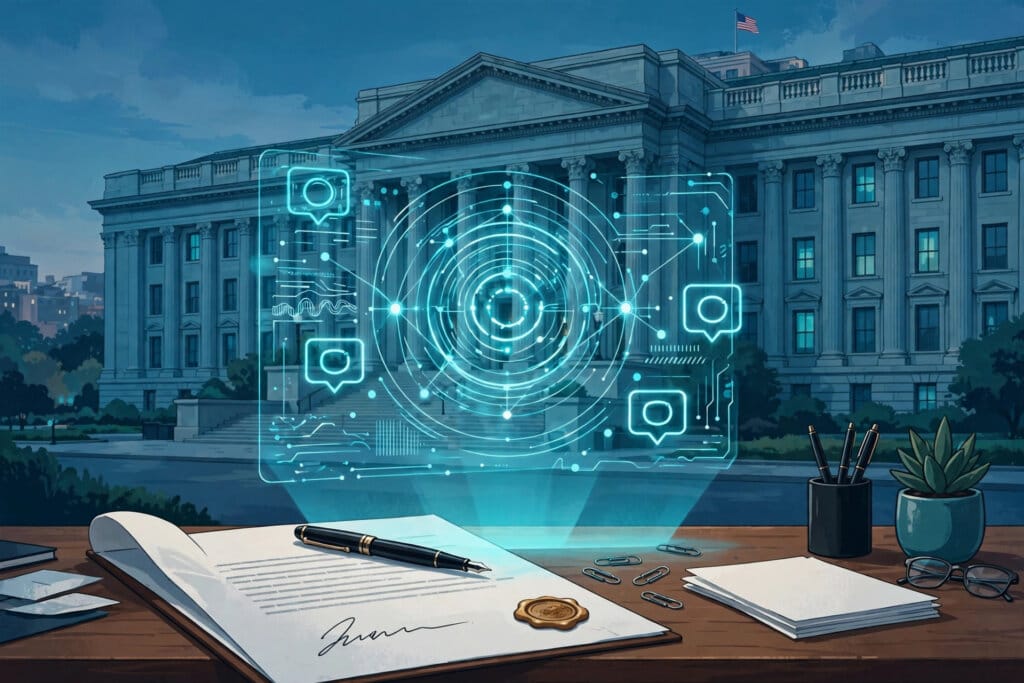
The US Department of Health and Human Services plans to award Anthropic a contract for Claude without open competition, according to a notice of intent the department posted on SAM.gov on Monday. The award is framed as a limited continuity-of-services bridge: HHS says it needs Claude to keep running while it prepares a competitive procurement for enterprise AI services.
FedScoop reported the notice on October 20. Neither HHS nor Anthropic responded to the outlet’s inquiries, and the notice discloses no contract value or duration. What it does disclose is the department’s reasoning — and procurement experts are already criticising it as a textbook case of vendor lock-in.
What The SAM.gov Notice Actually Says
The notice states HHS’s intent to sole-source an award to Anthropic “for a limited continuity of services award” while the department prepares its competitive process. The eventual competition has a name: the “HHS Enterprise Frontier SI Models and Advanced Features multiple-award BPA,” a blanket purchase agreement under which several frontier-model providers would presumably compete for the department’s business.
Until that competition runs, HHS argues, only one supplier can meet the requirement. “The capability is specific to one provider: Claude is Anthropic’s proprietary model family, and the requirement is continuity of the existing Claude deployment,” the notice says. In other words, the justification for skipping competition is that the service being bought is, by definition, the incumbent’s own product.
The Claude Workflows HHS Wants To Keep Running
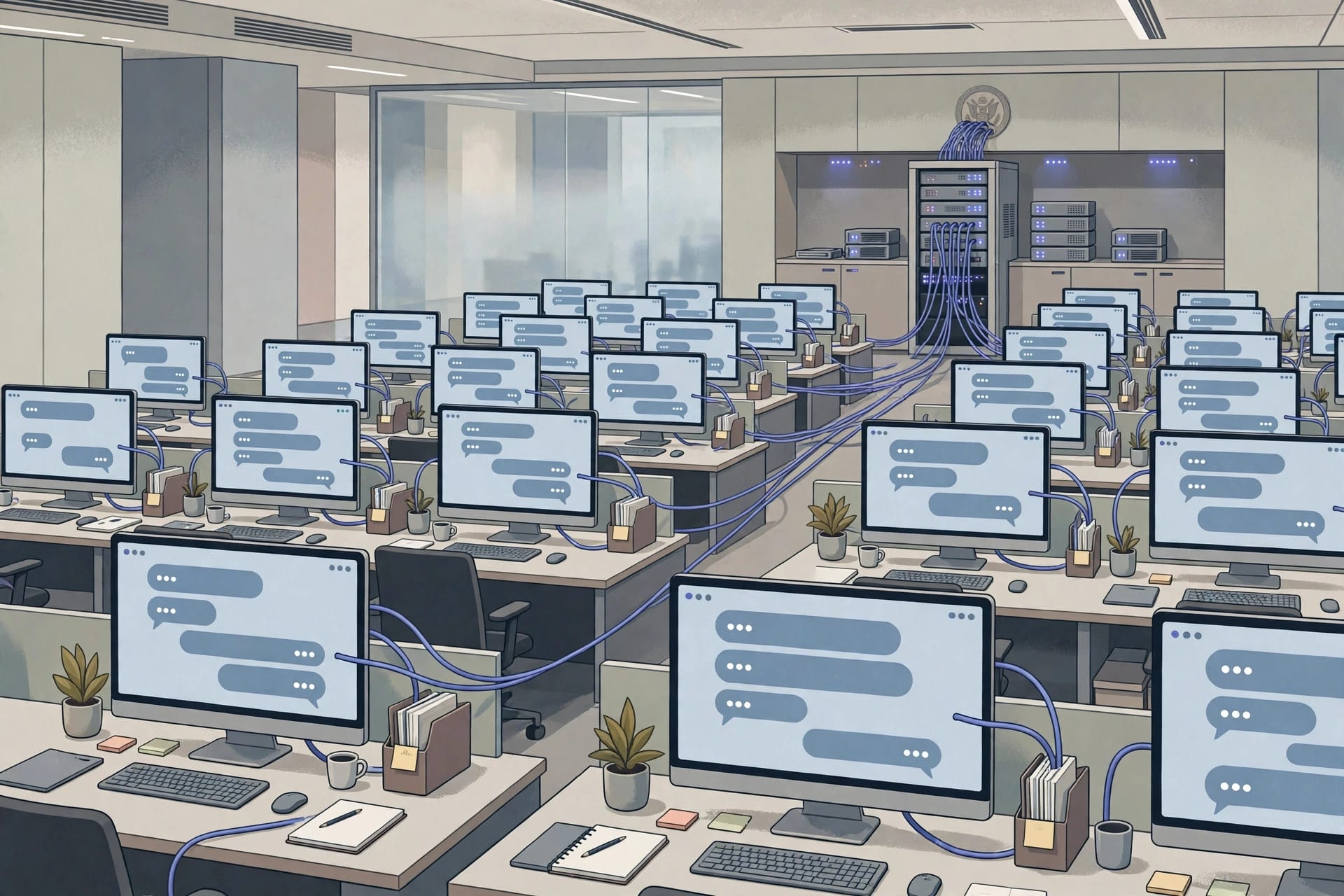
The deployment at stake is not a pilot. HHS rolled Claude out to its workforce in December 2025, after Anthropic offered its services to federal agencies at $1 a year under the General Services Administration’s OneGov initiative, and the department cited Claude use cases in its 2025 AI inventory. The notice describes the services HHS says Anthropic’s tool alone can fulfil: chat, drafting, summarisation, data-analysis workflows, application access and administrative controls.
That discounted OneGov arrangement is about to lapse. Like the other providers’ OneGov deals, Anthropic’s was extended once and is now set to end on October 31 — the immediate pressure behind the continuity award, since without a bridge the deployment loses its pricing basis at month’s end. OpenAI, for its part, has already announced a consumption-based pricing plan for agencies for the post-OneGov period, as Anthropic’s business with governments continues to expand on several fronts at once.
One Department Stays, Another Already Left
The sole-source plan lands in the middle of an unresolved fight between Anthropic and another part of the same government. The Trump administration imposed a government-wide ban on Anthropic earlier this year after the company’s clash with the Pentagon, and the legal battle over that dispute is still ongoing. The Food and Drug Administration, an HHS agency, had been using Claude in its Elsa chatbot but began transitioning the tool to Google’s Gemini following the ban.
HHS headquarters is now moving in the opposite direction from its own agency: while the Pentagon remains at odds with Anthropic, FedScoop notes the company appears to be on decent terms with officials elsewhere in government. The contrast underlines how uneven the federal position on Anthropic has become — a ban in one building, a no-bid continuity award in another, and a court case still running over the difference. Anthropic has been building its government-facing posture on other fronts too, from giving outside evaluators employee-level access to assess Claude’s risks to pitching its own draft AI safety legislation to lawmakers.
Why It Matters
HHS’s continuity award matters because it shows how quickly a $1 introductory deal can harden into structural dependence. Jessica Tillipman, associate dean for Government Procurement Law Studies at George Washington University, told FedScoop the notice reads as an admission that the agency is dependent on Claude. If switching vendors is too painful or too costly, she said, the agency negotiated poorly despite repeated warnings about vendor lock-in in AI procurement. Her sharpest point is about scope: the services the notice describes — chat, drafting, summarisation, analysis — are fairly general chatbot capabilities, which makes the claim that only Claude can provide them a questionable use of sole-sourcing. “To me, it just reeks of … ‘this is going to be a pain, so let’s just keep it going,’ but that’s not a normal justification,” Tillipman said. For every other agency that took a $1 OneGov deal, the HHS notice is an early look at what the renewal conversation sounds like when the discount ends — and for Anthropic’s rivals, it is evidence that incumbency inside a department may count for more than benchmarks when the competitive BPA finally runs.
Background
Anthropic, founded in 2021 by former OpenAI researchers, built its government business quickly after Claude’s enterprise push: the $1-per-year OneGov offer in 2025 put Claude inside multiple federal agencies, HHS among them, even as the company’s refusal to accept the Pentagon’s terms triggered a government-wide ban and litigation that is still unresolved. The October 31 expiry of the extended OneGov deals is the first big test of whether those discounted deployments convert into durable, full-price government contracts — and HHS’s sole-source notice is the first answer.
Source: FedScoop, reporting HHS’s notice of intent on SAM.gov (posted October 19, 2026).



0 Comments