
Tenstorrent, the Santa Clara AI chip startup led by veteran processor designer Jim Keller, said on Monday, October 19 that it has raised $1.5 billion in a late-stage Series E funding round that values the company at $6.2 billion post-money. The valuation more than doubles the one Tenstorrent carried out of its previous raise in December 2024, and it makes the ten-year-old company one of the best-capitalised challengers to Nvidia’s grip on AI computing. Reuters reported the round on Monday.
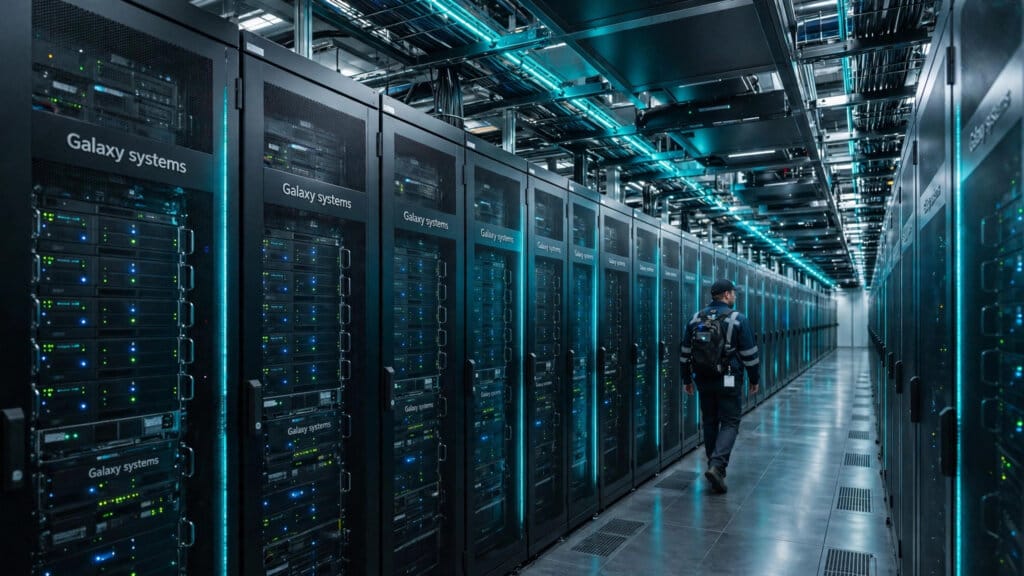
The Series E was led by Trace Capital and Innovation X, with Cathie Wood’s ARK Invest, Fidelity, Morgan Stanley, T. Rowe Price, SanDisk, Tether Investments, Cadence Ventures and Eclipse among the backers. Tenstorrent said the capital will fund volume manufacturing and global commercial expansion, scaling production of its Galaxy servers — systems that combine dozens of its AI chips to power applications including chatbots, coding assistants and video generators.
Galaxy Servers: Open RISC-V Silicon For Open-Weight Models
Tenstorrent’s pitch is openness at both layers of the stack. Its chips and software are built on RISC-V, the open-source chip architecture that lets companies design processors without licence fees and reduces dependence on proprietary ecosystems such as Arm’s. Its software stack is open source, and the systems are aimed squarely at serving open-weight models — the class of AI models released for anyone to run — on customers’ own premises as well as in large clusters.
The company sells AI compute at every level: a single card or workstation, full racks and superclusters of Galaxy servers, and licences for the AI and CPU intellectual property it develops for customers designing their own silicon. That range is deliberate. Rather than asking buyers to adopt one appliance, Tenstorrent wants its architecture to be the default substrate wherever open models are served outside Nvidia’s ecosystem.
Keller Chose Independence Over A Sale
The raise follows a fork in the road. Five months ago, Tenstorrent reportedly received acquisition interest from Intel and Qualcomm at valuations of as much as $5 billion. Keller told Bloomberg the company decided to remain independent and raise more capital after it showed that its Galaxy servers could run DeepSeek models — proof, in the company’s telling, that open-weight inference at scale is a business worth building rather than selling.
The new money prices that decision. At $6.2 billion, investors are valuing Tenstorrent above the reported acquisition interest, on the argument that the market for non-Nvidia inference hardware is only beginning to form. It is the same argument being made from other directions this week: Amazon’s TorchNeuron launch attacks Nvidia’s CUDA software moat, while Nvidia’s own Vera CPU win at Modal shows the incumbent expanding into the processor layer around its GPUs. Our explainer on Nvidia’s AI chips sets out the platform all three are circling.
Why It Matters
The central entity is Tenstorrent, and the attribute that changed is scale: a $1.5 billion war chest converts a respected chip-design shop into a manufacturer that can promise volume, supply and a roadmap to the largest buyers. Its neighbours feel the shift in sequence — Nvidia, whose challengers now attack its software, its CPU flank and its silicon at once; Intel and Qualcomm, which reportedly tried to buy this competitor and must now compete with a better-funded version of it; and the open-weight model ecosystem, whose low-cost serving story depends on exactly the kind of non-Nvidia hardware Tenstorrent is now financed to ship. Sovereign buyers and inference platforms looking to own their compute, rather than rent Nvidia’s, are the customers this round is really aimed at.
Background
Tenstorrent has spent a decade building processors around the open RISC-V architecture, long before open-weight AI models made that bet commercially interesting. Keller, its chief executive, previously led Tesla’s effort to develop a self-driving chip and held senior design roles at Apple and AMD. The company’s last round, in December 2024, raised more than $693 million at a $2 billion pre-money valuation, led by Samsung Securities and AFW Partners — the baseline Monday’s $6.2 billion valuation more than doubles, eighteen months of open-model momentum having repriced what an independent AI chip company can be worth.
Source: Reuters; TechCrunch

0 Comments