

Town, a San Francisco startup that gives every employee an AI assistant, announced on Monday, October 19 that it has raised a $108 million Series B round at a $1 billion valuation — unicorn status four months after its public launch. The round was co-led by Forerunner Ventures and Menlo Ventures, the company said in its announcement, with existing investors Andreessen Horowitz and First Round Capital returning alongside Better Tomorrow Ventures, Serena Ventures and others.
The product is the Townie: a personal AI assistant for each worker that connects to their email, documents, calendar and the core systems they work in, learns their relationship context, projects and voice, and takes work off their plate — drafting communications its person can review before anything is sent. Town has now raised at least $160 million in total, TechCrunch reported, after a $55 million Series A in June.
Townies That Talk To Each Other
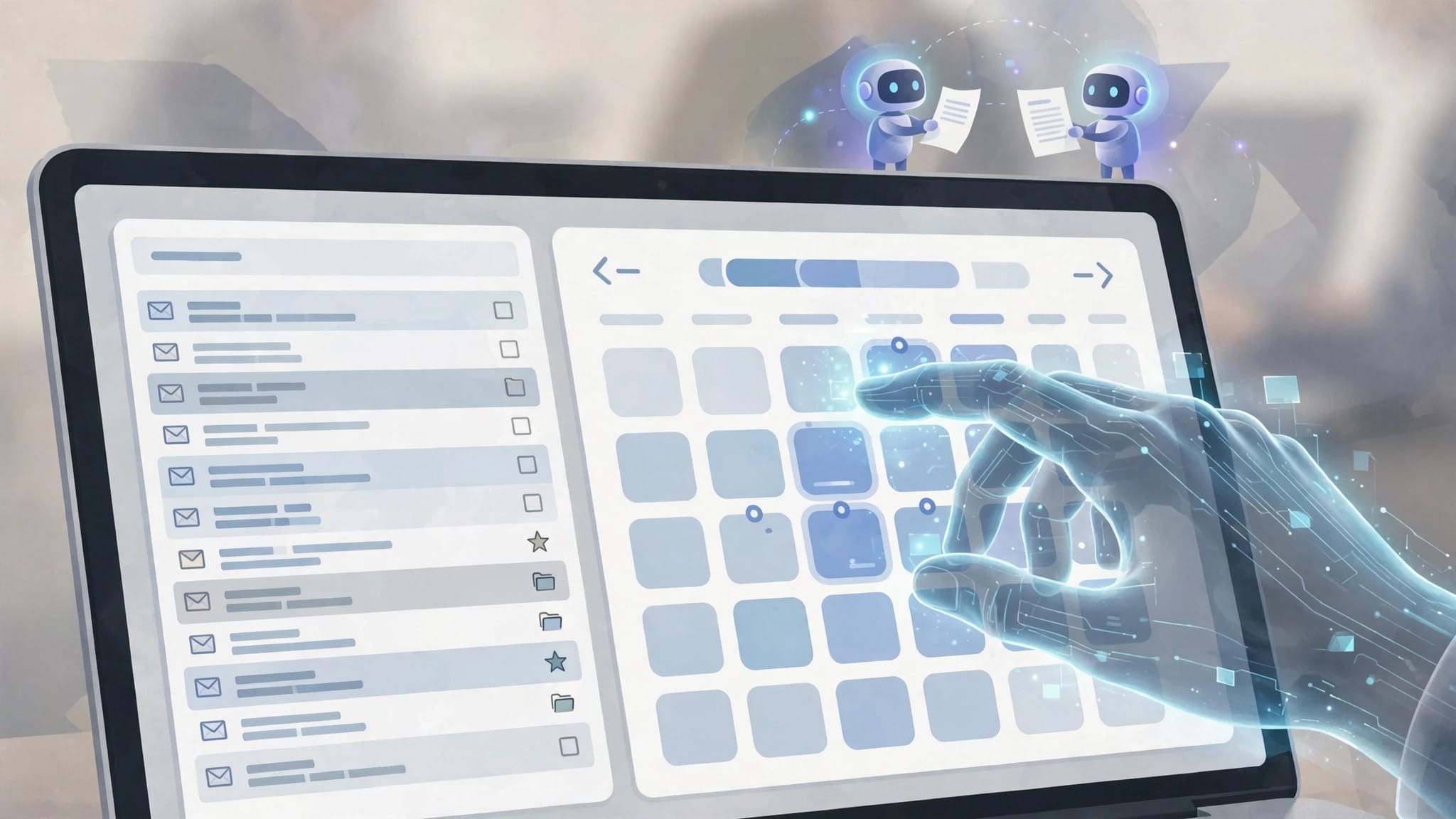
What separates Town from the crowded field of single-user assistants is that its agents are built to work as a team. A personal assistant knows its user but not the organisation; a shared team bot sees channels but nobody’s inbox or preferences. Town’s Townies can ask each other questions, hand off work and share approved information across a business — limited context, shared deliberately — and they can now work with customers and others outside the company as well.
Launched alongside the funding is a shared workflow that automatically updates every employee’s Townie with new business information, rather than requiring each worker to update their own assistant. In a company running hundreds of assistants, keeping each one’s picture of the business current is the unglamorous problem that decides whether the agents coordinate or quietly drift apart. Our explainer on what AI agents are sets out the goal-plan-tools loop that products like Town are packaging for ordinary office work.
A Fundraising Run At Full Speed
The pace is the other half of the story. Town raised an $18 million seed round in March 2025, led by First Round Capital, followed by the $55 million Series A ahead of its June 2026 public launch. The company said it reached millions of dollars in annual recurring revenue within weeks of launching — the trajectory that carried it from launch to a $1 billion valuation in four months.
That speed puts Town in the path of the industry’s giants, and alongside its risks. Assistants that act across a company’s email and calendar are exactly the systems Microsoft’s new Guardian Agents are built to police, and the campaign in which one hacker’s agents broke into more than 100 company websites — covered in our report on the Cairn intrusions — shows what autonomous agents do when nobody is governing them. Town’s bet is that assistants designed for teamwork, with sharing kept explicit and approved, land on the right side of that line.
Why It Matters
The central entity is Town, and the attribute investors just priced is coordination: not a better chatbot for one person, but a network of assistants that can work with each other. If that model holds, the unit of enterprise AI changes from the seat to the team — every assistant a company buys makes the others more useful, which is a very different sales motion from the per-user copilots the large platforms sell. The neighbours are those platforms themselves, whose assistants largely stop at the individual’s inbox, and the governance tools racing to supervise fleets of agents inside companies. A $1 billion valuation four months after launch says investors believe the gap between the two is real; Town’s revenue growth over the next year will say whether they are right.
Background
Town was founded by Tony Vincent and Jean-Denis Greze, the former chief technology officer of Plaid, the financial data network — a background in connecting systems that were never designed to talk to each other. The two-year-old company is one of dozens of AI assistant startups competing for enterprise budgets in 2026, but few have raised at its pace: seed to Series B and a unicorn valuation in nineteen months, on the claim that the assistant that matters at work is the one that knows the whole team, not just its owner.
Source: GlobeNewswire (Town’s official announcement); TechCrunch

0 Comments