

Walmart has launched the two pieces of plumbing it thinks AI shopping agents need before they can be trusted with a credit card’s worth of groceries. The retailer said on Wednesday it will roll out “Agent Profiles” next month and has launched the “Walmart Agent Gateway,” a platform that lets AI assistants such as OpenAI’s ChatGPT, Google’s Gemini and Meta’s Muse connect directly to Walmart and Sam’s Club systems to search products and complete purchases, Reuters reports.
The tools will be available to all Walmart account holders and will not require a Walmart+ membership. The launch is a deliberate contrast with Amazon, which has sought to limit third-party AI shopping agents’ access to its platform.
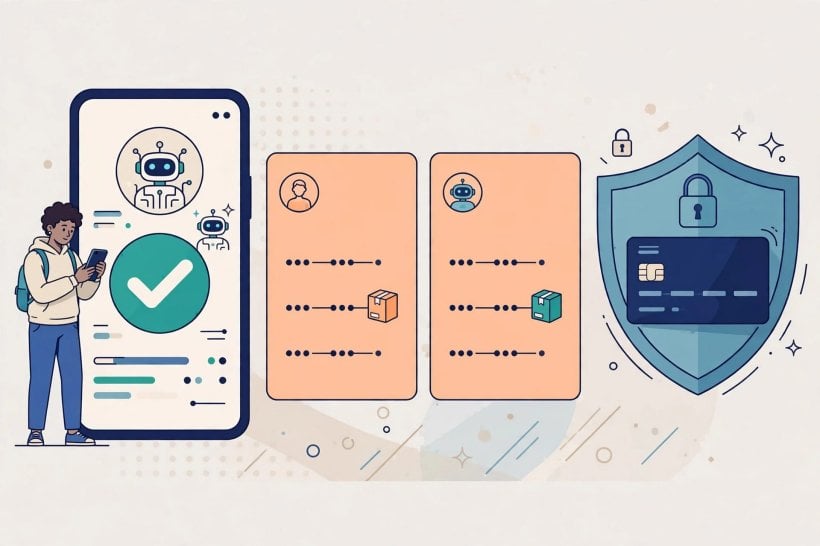
Agent Profiles: Per-Agent Identity, Limits And Revocation
Agent Profiles give each authorised agent its own identity inside a customer’s Walmart account. Shoppers can authorise individual AI agents, set a spending limit for each one or require approval for every transaction, and monitor the purchases an agent makes separately from their own orders. Access can be revoked at any time.
Two guardrails are built into the design. AI agents are barred from accessing customers’ payment card data, so the agent can assemble and submit an order without ever touching the card number behind it. And Walmart says agents can be blocked for violating company rules, which gives the retailer an enforcement lever over badly behaved or compromised agents, not just over customers.
Walmart Agent Gateway: A Direct Door For ChatGPT, Gemini And Muse
The Agent Gateway is the connection layer. It lets outside assistants plug directly into Walmart and Sam’s Club systems to search the catalogue and complete purchases, instead of scraping product pages or simulating a human shopper in a browser. TechCrunch reports the gateway is built on the Model Context Protocol, the open standard that has become the default way agents connect to outside tools and data.
That choice matters for control. A direct, authenticated connection lets Walmart see which agent is buying, apply the customer’s profile limits to it, and cut it off, none of which is possible when agents arrive disguised as ordinary web traffic. It is the opposite strategy to the one described in this site’s earlier reporting on websites and banks blocking AI agents from accounts and bookings: where those companies are walling agents out, Walmart is building them a door with a lock it controls.
Why It Matters
Agent Profiles and the Agent Gateway matter because they answer the question that has stalled agentic commerce all year: who is responsible when an agent buys the wrong thing, too much of it, or something it was tricked into buying? Walmart’s answer is identity plus limits plus revocability, applied per agent, with the payment credential never exposed. If that pattern becomes the industry template, the fight between retailers and assistant makers shifts from whether agents may shop to whose agent infrastructure the shopping runs on. Walmart is betting that being the retailer agents can most safely buy from is worth more than keeping them out, and it is making that bet while its largest rival is still trying the wall. The infrastructure is arriving from every direction at once, from retail gateways to agent tooling like Oracle’s Agent Studio for industry applications and the multi-agent systems documented in Straiker’s CARLIY0S investigation, which is exactly why the control layer is being built now.
Background
Walmart has been positioning for agent-led shopping through 2026, as assistants from OpenAI, Google and Meta began completing purchases inside their own apps and retailers faced a choice between integrating with them or being bypassed. Amazon chose restriction, limiting third-party agents’ access to its marketplace. Walmart’s launch makes the split explicit: the two largest US retailers now have opposite public strategies for the same technology.
Source: Reuters, TechCrunch




0 Comments