

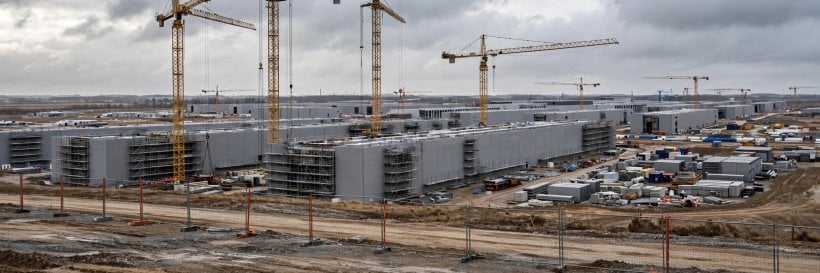
More than 100 activists broke into the construction site of a Microsoft AI data centre in Amsterdam on Friday, climbing cranes and hanging balloons as police stood by, as a growing backlash over the build-out of computing power for AI spread across Europe. The action was part of coordinated protests in 16 countries organised by the Stop Dirty Data Centres coalition, which wants a pause on large-scale construction until governments set clearer rules. Microsoft said it respected the right to peaceful protest but did not condone unlawful actions.
## What happened in Amsterdam
The activists gathered at the site and marched in arm in arm before breaking in, Reuters reported. Some carried placards reading ‘Screw your datacentre’. They climbed cranes, hung balloons and danced on the site while police stood by, turning a construction fence into a stage for the day.
The site is being developed by Pure Data Centres, which plans to invest more than $1 billion in the project and is backed by Brookfield-owned Oaktree. The company said it was committed to engagement with local stakeholders and asked those on site to leave safely and talk through their concerns about the development.
## A weekend of action across 16 countries
The Amsterdam breach opened two days of rallies organised by the Stop Dirty Data Centres coalition, which brings together environmental groups and digital-rights campaigns. Actions were announced in 16 countries on Friday and Saturday, including a march in Dublin, a protest outside the parliament building in Warsaw and a demonstration against a different Microsoft data centre in Denmark.
The coalition says it is not anti-progress and is not calling for existing data centres to be closed. Its demand is narrower: major construction should be halted until governments establish clearer rules on where the huge facilities can be built and what they owe the communities around them.
The European actions echo growing resistance in the United States, where [voters in Ohio approved bans or limits on data centres in at least 14 towns on 3 November](https://geroundtable.com/ohio-voters-data-center-bans/), led by an 80% vote for a ban in the town of Trenton.
## What the campaigners want — and what the builders say
Campaigners say data centres pressure electricity and water supplies, compete with housing and other businesses for scarce resources, threaten climate goals, and risk jobs and personal and national security as private companies and big tech concentrate power. The argument is not only about one site, but about who decides how much computing a country hosts.
Technology companies answer that data centres are essential to meeting global demand for artificial intelligence and cloud computing, and provide critical infrastructure for businesses, governments and consumers. Europe’s tech chief, Henna Virkkunen, struck a similar balance on Thursday, saying the region needs more datacentres for AI, but that it must be done with care.
Virkkunen added that citizens must be able to trust that their energy bills are not skyrocketing, that data centres will not cause electricity blackouts, and that the projects are not destroying the environment. Her remarks, made to Reuters on Thursday, landed a day before the Amsterdam breach put the same questions on a construction site.
## Our Read
This is the moment the data-centre backlash stopped being a policy debate and became a physical one. Until now the pushback has run through planning objections, lawsuits and election campaigns — [voters have already made data centres a ballot-box issue](https://geroundtable.com/voters-data-centers-biggest-fight/). A hundred people on cranes at a Microsoft site is a different kind of pressure.
Microsoft’s own response shows the bind every big builder is now in: it condemned the unlawful entry while respecting the right to peaceful protest. That is the line the industry will have to walk in every country where it wants to build, and the Amsterdam occupation suggests the line will be tested in person, not just in court.
The timing matters for Microsoft in particular. Its AI capacity plans are already under strain — [delivery delays have forced it to tighten the terms on which its cloud partners get chips](https://geroundtable.com/microsoft-neocloud-tightening-iren-delay/). A protest movement that can stop work on a site, even for a day, adds a new kind of delay to the schedule.
The industry’s answer so far has been community-benefits promises, such as [OpenAI’s compact with the towns that host its sites](https://geroundtable.com/openai-community-compact-data-centers/). Amsterdam suggests those promises may not be enough where residents feel the decision was made without them, and the next test will be whether builders negotiate before the cranes go up.
## Why It Matters
For the companies building AI infrastructure, the risk is no longer only regulatory. A planning delay can be appealed; an occupation stops work, raises insurance and security costs, and hands opponents pictures that travel. With about 200 data centres planned, under construction or in operation in the Netherlands alone, the Amsterdam breach is a template other campaigns can copy.
For policymakers, the protest lands the week [power costs became a top item on the new Congress’s AI agenda](https://geroundtable.com/democrats-ai-bills-congress-january/). The two pressures point in the same direction: the AI build-out has to be defended in public, not just permitted in private, and the projects that survive will be the ones that show the host community what it gets.
## Background
Europe is caught between its ambition to catch up with the United States and Asia on AI and its stricter controls and public protections. A Google project in Finland faces a criminal probe over land clearances, Italy and Portugal are tightening environmental rules for datacentres, and Microsoft pulled out of a British project hit by infrastructure delays.
Source: [the Reuters report](https://www.reuters.com/world/europe/activists-breach-microsoft-data-centre-construction-site-protests-spread-europe-2026-11-06/)


0 Comments