

Bedrock Robotics has raised $600 million in a Series C round that values the autonomous construction startup at $4.1 billion, after its self-driving excavators began doing paid work on live commercial job sites. The round, announced on October 26 and co-led by CapitalG and Emergence Capital, brings the two-year-old company’s total funding to nearly $1 billion. Bedrock retrofits excavators that contractors already own, rather than selling them new machines, and says its customer base has more than doubled since 2025.
Retrofits, not new machines
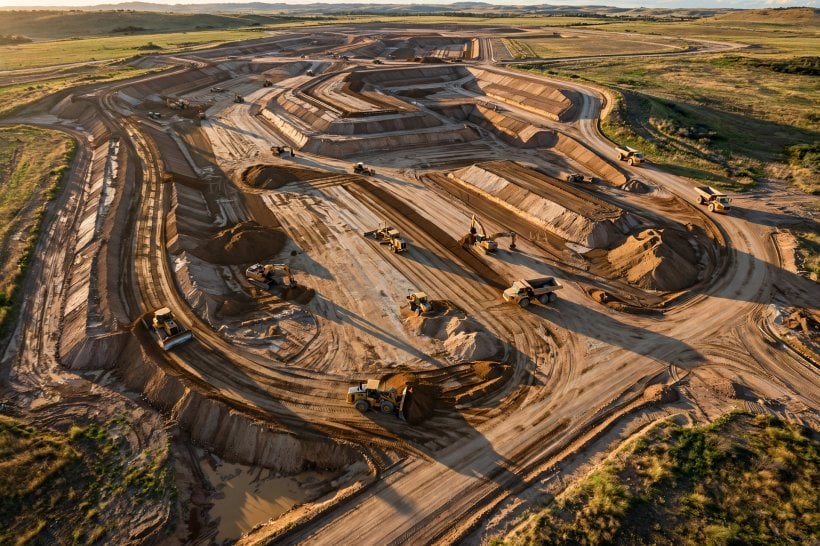
Bedrock’s kit turns an excavator a contractor already owns into a machine that can dig on its own, starting with earthwork on commercial sites. The company says its machines have performed fully autonomous, paid work on live job sites since mid-August 2026, a milestone it calls defining for physical AI.
Named sites include a Nevada water treatment facility, an earthwork site run by Champion Site Prep in Texas, and a 1.2 million-cubic-yard civil project with Zachry Construction. Haydon, an Arizona contractor, is the newest partner, starting with autonomous earthwork at a remote Texas site before testing trenching and larger machines.
Bedrock is not the only startup bringing AI to building work, though most rivals attack design rather than digging itself. AI world models that design whole buildings have already drawn seed funding, while Bedrock bets the harder, nearer prize is the earthwork itself, where machines already exist and crews are short.
Why contractors are buying
The pitch lands because construction cannot hire fast enough: Bedrock says mastering an excavator takes five years or more, while industry figures cited in its announcement say 87% of firms report openings for hourly craft roles. The company also says 88% of firms find those roles as hard or harder to fill than a year ago.
Bedrock says employers must fill about 1.7 million openings a year through 2035, combining growth with retirements and workers moving to other jobs. Those figures come from the company’s announcement, not an independent survey, so they should be read as its case for automation, not as settled fact. The direction is clear: contractors are buying capacity, not just machines.
The money and the backers
CapitalG, Alphabet’s venture arm, and Emergence Capital co-led the round, with new money from the US Innovative Technology Fund, Bessemer Venture Partners and Singapore’s Temasek. Existing investors including 8VC, Eclipse and NVIDIA also took part. The round lifts Bedrock’s valuation from $1.75 billion in February 2026.
The company has now raised nearly $1 billion since its founding in 2024, and it plans to spend the new money on more deployments and the field teams behind each machine. Two hires signal that shift: Amy Jones Satrom, a veteran of Amazon, Nuro and Uber, becomes operations chief, and Lando Juarez, formerly Uber’s autonomous-mobility legal head, becomes general counsel.
Why It Matters
The round matters because it puts paid work, not just a valuation, behind one of the largest physical-AI bets of the year. A rival robotics software firm is reportedly seeking about $20 billion while still without revenue, a bet on a future market rather than a present one.
Bedrock, by contrast, can point to machines already earning money on real sites, which is a stronger, if narrower, claim. The open question is scale: the company has not disclosed how many machines are running autonomously or how many hours they have logged.
Investors are betting that the deployment playbook, not just the autonomy, is what turns a demo into a business. If Bedrock can staff field operations as fast as it signs contractors, its retrofit model could spread across the country’s job sites far quicker than any plan that requires selling new machines.
Background
Bedrock was founded in 2024 by former Waymo engineers, including chief executive Boris Sofman, who previously led Waymo’s self-driving trucks program and co-founded the robotics firm Anki. The company plans to move from excavators toward mixed fleets that can orchestrate themselves across a job site. Its next test is whether autonomy survives contact with more contractors, regions and machine types.


0 Comments