

OpenAI will turn on creative enhancements by default for ChatGPT Ads self-serve campaigns from October 30, allowing its AI to rewrite an advertiser’s headlines and descriptions, translate the ad text, resize images and change the destination page — without the advertiser approving each version before it runs.
The change was set out in an email OpenAI sent to ChatGPT Ads advertisers on October 20, published by Search Engine Roundtable, whose editor Barry Schwartz received the message as an advertiser himself. OpenAI’s own help documentation describes the same system: enhancements are built from the advertiser’s existing ad and landing-page content, and are designed to make the message more relevant to the conversation and the user’s interests.
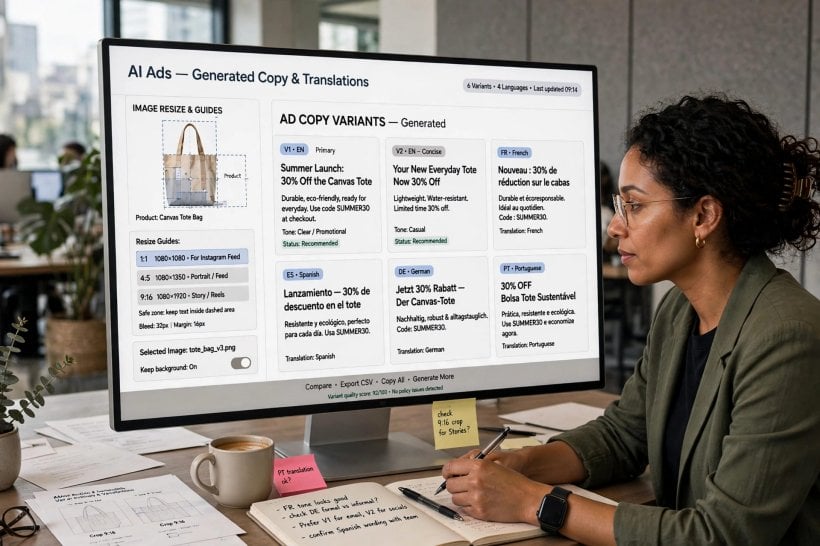
What OpenAI Can Change In An Ad
The help documentation lists four kinds of change. Headlines and descriptions can be created or updated so the offer connects to the conversation or to user interests. Ad text can be translated into another language. Images can be resized to fit the ad format. And the destination URL can be optimised to send a person to a relevant page on the advertiser’s own website rather than the page originally submitted.
OpenAI says variations may be prepared in advance or created in real time as a conversation unfolds. Its own example turns a grocery delivery headline, “Fresh groceries delivered”, into “Groceries for quick weeknight dinners” inside a conversation about planning weeknight meals. When the feature is enabled, those versions can run automatically, with no review or approval step for each one.
The Dates, The Opt-Out And The Settings Hierarchy
The advertiser email says: “Starting Friday, October 30, 2026, we’ll enable creative enhancements for your new and existing self-serve campaigns.” Advertisers can opt out before October 30 or change the setting at any time in Ads Manager. Existing account-level and campaign-level opt-outs are preserved, and campaign-specific settings take priority over account defaults, the email says. Schwartz’s screenshot of his own account settings shows the creative enhancements toggle already switched on.
One detail needs care. Secondary coverage that read OpenAI’s help page on October 21 noted the help page giving a start date of October 29, one day earlier than the October 30 date in the advertiser email. Advertisers who want to opt out should work to the earlier date rather than assume the email’s date is the one that governs their account.
How This Follows ChatGPT Ads’ Wider Format Changes
The default-on switch lands days after a separate round of ChatGPT Ads updates, covering wider visual cards, a redesigned conversions page and weekly performance emails. Those changes expanded how ads look and how results are reported. Creative enhancements go a step further: they change who — or what — writes the ad itself, moving copy decisions from the advertiser’s submitted text to variations the platform generates in context.
The move also mirrors a pattern advertisers already know from other platforms, where automated creative is switched on by default and the burden falls on the advertiser to find and change the setting. Our coverage of Google Ads AI Max being spotted automatically enabled in some Ad Grants accounts shows the same default-on dynamic on the search side, and ChatGPT’s new locked chats show how quickly product-level settings are becoming part of the ChatGPT experience for users as well as advertisers.
Why It Matters
ChatGPT Ads is asking advertisers to trade control for relevance. An ad whose headline is rewritten to match the conversation it appears in could perform better than the static copy an advertiser submitted, and OpenAI frames the feature exactly that way — better performance with less work creating multiple versions. The cost of that trade is approval: a brand’s legal, claims and tone checks normally happen before copy runs, and a system that generates and serves variations automatically, including translations and different landing pages, moves those checks after the fact, if they happen at all.
For smaller advertisers without the staff to produce many versions, the feature could genuinely help. For regulated industries and careful brands, the practical step is the same either way: check the Ads Manager setting now, decide at campaign level where it matters, and do not wait until the end of October to discover the toggle was already on.
Background
ChatGPT Ads is OpenAI’s advertising product inside its flagship assistant, sold through a self-serve Ads Manager to businesses that want their offers shown alongside conversations. OpenAI has been building the product out through the autumn, adding visual formats, measurement partners and reporting tools, as it turns a large consumer audience into a second revenue line alongside subscriptions and API sales. Automated creative is a familiar stage in that build-out: Google and Meta both moved advertisers toward platform-generated ad variations, and OpenAI’s default-on setting follows the same path.
Source: Search Engine Roundtable, reporting OpenAI’s email to ChatGPT Ads advertisers and its help documentation; MACCUS, reporting the OpenAI Help Center page as checked on October 21.




0 Comments