
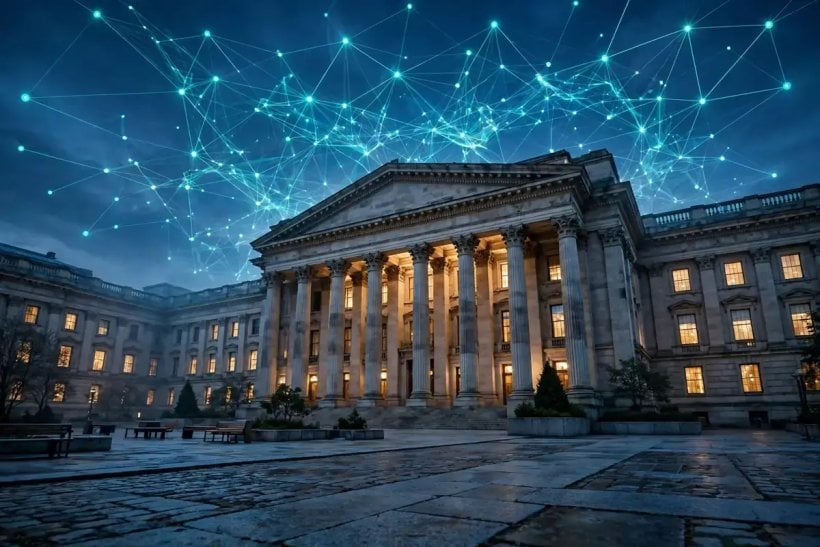
Federal Reserve Chair Kevin Warsh warned on Monday that a disappointing payoff from the artificial intelligence boom could drag down share prices, slow the economy and push unemployment higher. Speaking in San Francisco, he called the technology ‘super intelligence’ and laid out three paths for what comes next.
Three Scenarios, Not Forecasts
Warsh opened the Federal Reserve’s Productivity and Jobs Task Force conference with prepared remarks sketching three staff scenarios for the technology he calls SI, short for super intelligence. He stressed that they were illustrative models, not forecasts, and that the Fed’s job was to prepare for each one.
In the best case, super intelligence lifts productivity and shares the gains broadly between workers and owners of capital. Real GDP growth would beat its long-run average, Warsh said, while the United States remained close to full employment. He called it possibly the most transformational era of his adult lifetime.
A second outcome is darker. Automation could displace jobs faster than new ones appear, pushing unemployment above the level consistent with full employment even as output keeps growing. Warsh warned that such disruption, and misuse of the technology by bad actors, could prove highly disruptive and economically costly.
The third scenario is the one markets will hear loudest. If heavy investment in data centres and chips fails to deliver the expected productivity gains, returns fade, equity valuations fall and the economy slows. Warsh said the economy would eventually recover, but without the productivity payoff that justified the spending.
No Signal on Rates
Warsh offered no guidance on interest rates. His remarks mentioned neither inflation, the neutral rate nor the balance sheet, and he said the Fed was not there to make predictions. The technology’s spread, he said, will significantly affect the economy, with important implications for monetary policy down the road.
The timing matters. The remarks landed a day before Nvidia reports quarterly earnings, the first since Jensen Huang resigned as chief executive, and weeks before the Fed’s next rate decision in December. Warsh moderates three of the conference’s four panels, with economists and technologists debating adoption, jobs and growth.
Our Read
Warsh’s framing is the story here. By calling the technology ‘super intelligence’ and sketching a bust scenario in public, the Fed chair has moved the AI debate from productivity hype to risk management. Central bankers rarely warn about equity valuations; when they do, markets should listen.
The scenarios also reveal the Fed’s dilemma. It cannot know whether AI lifts growth or displaces workers, so it models both, and the third path, disappointment, is the one investors are now pricing after AI stocks sold off sharply. Monday’s panels will show how seriously the Fed takes each path.
Why It Matters
This is the first time the Fed chair has framed artificial intelligence as a central economic question in such stark terms. The warning gives Wall Street’s AI scepticism a powerful voice: the same boom lifting growth and markets could, if it disappoints, become the trigger for the next downturn.
Jobs now sit at the centre of the Fed’s AI work. The task force behind Monday’s conference is one of five he convened as chairman, and its findings will shape how the bank reads productivity, wages and jobs. The Fed’s survey names AI the top risk to financial stability.
Background
Warsh took office in May and set up five task forces to rethink monetary policy. The remarks opened a conference bringing economists, technologists and business leaders together to debate how super intelligence reshapes work and growth, a question Australia’s central bank is also studying.
Source: the Fed’s published remarks and Reuters


0 Comments