
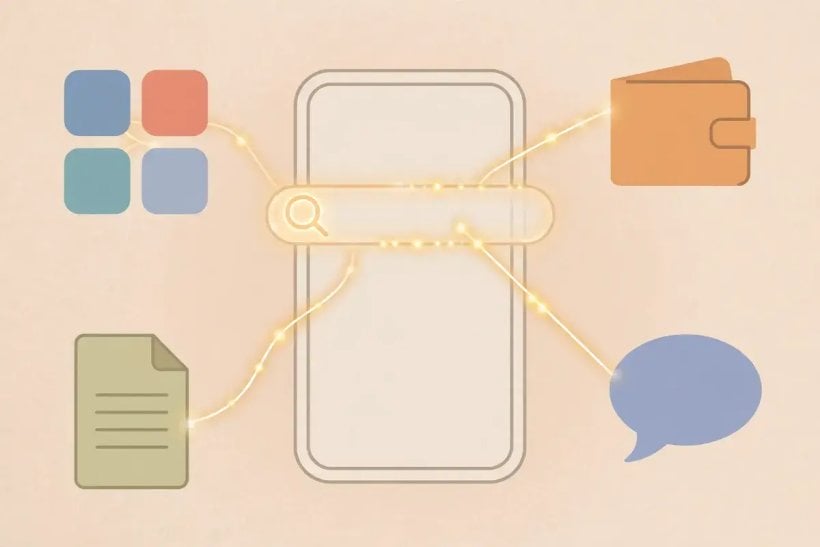
Google is wiring your spending, documents and chats into Search. From today, you can opt in to connect Google Wallet to Personal Intelligence in AI Mode, Google announced, with Drive and the Gemini app following in the coming weeks. The aim: answers shaped by your context, not just the web.
What Wallet, Drive and the Gemini App Add
Wallet goes first, because money questions are the most personal. Connect it, and AI Mode can map your milestones, spot ways to trim spending, and optimise your cards — cash-back categories, travel perks and reward points. Google stresses the access is read-only: it cannot move, manage or invest your money.
Drive follows next, and it reaches deeper. With documents, sheets and PDFs connected, AI Mode can weigh the context scattered across your files when you ask it to plan a project or a big decision. Google’s example is a tax-season preparation plan, built from your own paperwork.
The third connection closes a loop Google opened earlier. Soon you will be able to share context between the Gemini app and AI Mode, so an idea explored in one carries over to the other. The reverse already exists: Search history can already feed Personal Intelligence inside the Gemini app.
Everything is opt-in, and Google makes a point of saying so. To connect an app, open Search Personalization, choose Connected Apps, and pick the ones you want. Connections can be switched off at any time, and a Personalization icon below tailored responses will soon show which context AI Mode used.
You can also correct the picture in plain language. Tell AI Mode something has changed — Google’s example is “I’m no longer a vegetarian” — and it should adjust. The same personalisation reaches AI Overviews too, so a trip you have been planning picks up where you left off.
Our Read
This is the personalisation layer Google has been assembling all year, now landing in its flagship product. Wallet joined the Gemini app ten days ago, and the homepage became a Gemini chat app last week. Each step alone looks small.
Together, the steps point one way: Search stops being a window on the web and becomes a concierge that already knows you. That is the bet — that personal context makes answers so much better that users will hand over the keys to their spending, files and chats.
The trade-off is real, and Google’s own framing concedes it. Opt-in and revocable are the right words, but the value only appears once the data flows. What you spend, write and ask is the most sensitive data a search company can hold.
Rivals are moving the same way, which is why the timing matters. ChatGPT and Perplexity have spent the year building memory into their answers, and Microsoft is wiring its services into Copilot. Google’s edge is the data it already holds — Gmail, Calendar and Photos connected first.
Why It Matters
For users, the question is whether AI search should know you — and whether that is worth it. For publishers, personalised answers may depend more on your history than on the open web. For Google, this is the moat: no rival sees as much of your life.
Background
Personal Intelligence arrived in the Gemini app this month, starting with Gmail, Calendar, Photos and Search history, and Wallet followed on November 13. Search has added AI Mode connections through November, from home-services booking to grocery checkout, as Google turns its search box into a place where tasks get done.
Source: Google’s announcement and Search Engine Roundtable




0 Comments