

Google and Samsung have opened pre-orders for their first Gemini-powered smart glasses, priced from $395, with the first pairs shipping on December 10 in the United States and South Korea. The glasses, built by Samsung and framed by Warby Parker and Gentle Monster, put Gemini a voice command away, with a 12-megapixel camera, open-ear speakers and up to nine hours of battery in frames weighing about 41 grams. It is Google’s return to a category Meta’s Ray-Bans have defined so far.
What you get for $395
The launch covers 30 designs across two fashion collections. Warby Parker offers three styles — Alden, Reid and Wren — in optical and sun versions, from $395. Gentle Monster brings six bolder designs, from $449 to $489 depending on the frame.
Both collections go on sale in stores and online on December 10, with hands-on demos at select Samsung stores from the same day. Only the United States and South Korea get the glasses at launch, and Google has named no dates or prices for other markets.
What Gemini does from your face
Gemini is the point of the glasses. Say ‘Hey Gemini’ or tap the frame, and the assistant can answer questions about what you are looking at, identify a landmark or translate a menu in real time. It can also add items to a shopping list, read a calendar from a poster or summarise a whiteboard straight into Samsung Notes.
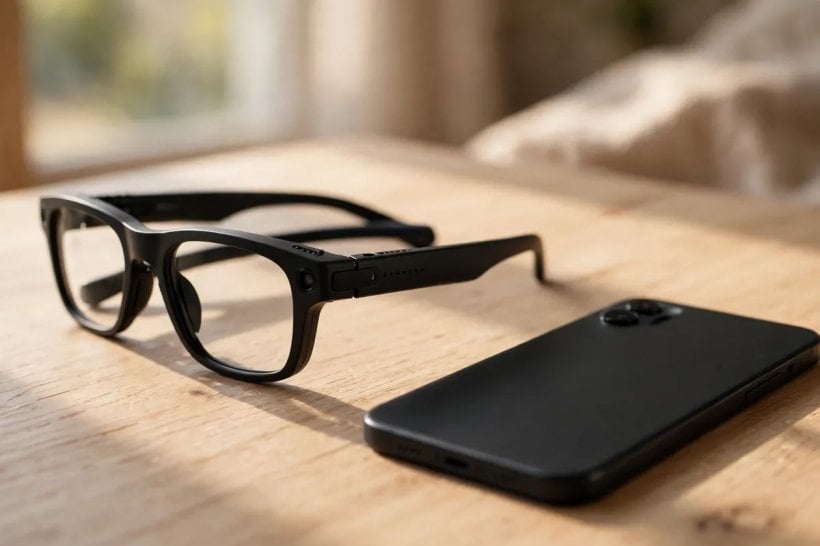
The hardware is Samsung’s: a Snapdragon AR1 Gen 1 chip, 2GB of memory and 64GB of storage, a 12-megapixel camera that shoots 3K video, and four microphones behind open-ear speakers. Battery life runs to nine hours, or 72 hours with the charging case. The frames are rated IPX4, and a split-computing design offloads some work to the connected phone.
The glasses work with Pixel 7 phones and newer, recent Galaxy phones and iPhones. They need a Pixel on the September 2026 Android 17 update, a Galaxy on One UI 9.0 or an iPhone 13 Pro or newer. Some features, including Guided Vision descriptions for blind and low-vision users, need an Android phone at launch.
Privacy is the sales pitch
Google made privacy the centrepiece of the launch. The glasses carry a camera on the wearer’s face, and bystanders cannot tell when they are being recorded. Google’s answer is a set of rules: an outer LED that lights up while recording, sensors that block photos if the light is covered, and a switch that turns the glasses off.
The software rules go further. Camera visuals sent to Gemini are not saved in Gemini History, are not used to train AI models and are not used to target ads, Google says. Bystanders’ faces are redacted before Gemini sees the image, and Gemini is tuned to the wearer’s voice. Users must be 18 or older, with age checks at setup.
The privacy pitch lands in a charged debate. Senators have already pressed Meta over bystander privacy in its camera glasses, and Google’s design reads as a direct answer to those concerns. Whether the safeguards hold up in use — and whether people trust a camera on a stranger’s face — will be tested the moment the glasses reach the street.
Our Read
Read plainly, this is Google’s answer to the one wearable category Meta has owned. Meta’s Ray-Bans turned AI glasses from a curiosity into a product people actually buy, and Google is coming back with fashion brands and a privacy story. The $395 starting price keeps the glasses in the range of eyewear, not a gadget splurge.
The honest limit is the missing display. This launch covers the audio tier only: there is no in-lens screen, so everything runs through voice and the phone. A display version is not part of this launch. For now, the glasses are a voice-first companion, not a phone on your face.
Why It Matters
It matters because the AI glasses race is now a real contest. Meta has had the field to itself, building the category while rivals talked. Google’s entry brings the full weight of Gemini, Android and Samsung’s hardware to a $395 price point, just before the holidays. If the glasses sell, every phone maker will want a pair of its own.
For buyers, the test is practical: whether Gemini on your face is worth $395 when the phone in your pocket does the same work. The glasses’ case rests on speed — a question answered without reaching for a phone — and on the privacy rules holding up in public. December 10 will give the first real answer.
Background
Google showed its smart-glasses ambitions at I/O in May, previewing the partnerships with Warby Parker and Gentle Monster. Samsung engineered the hardware, Google supplied Gemini. Google is not the first to put Gemini in glasses — XREAL’s AURA did that in October — but this is the first pair Google itself is selling.
Source: Samsung’s announcement and Google’s privacy post.


0 Comments