
Google has opened its Workspace MCP servers and command-line tool to every developer, and set a hard deadline for the switch. From 1 February 2027, AI agents must reach Gmail, Drive and Docs through Google’s managed interfaces instead of traditional programming interfaces. Billing for heavy use starts 1 April 2027.
What Google is launching
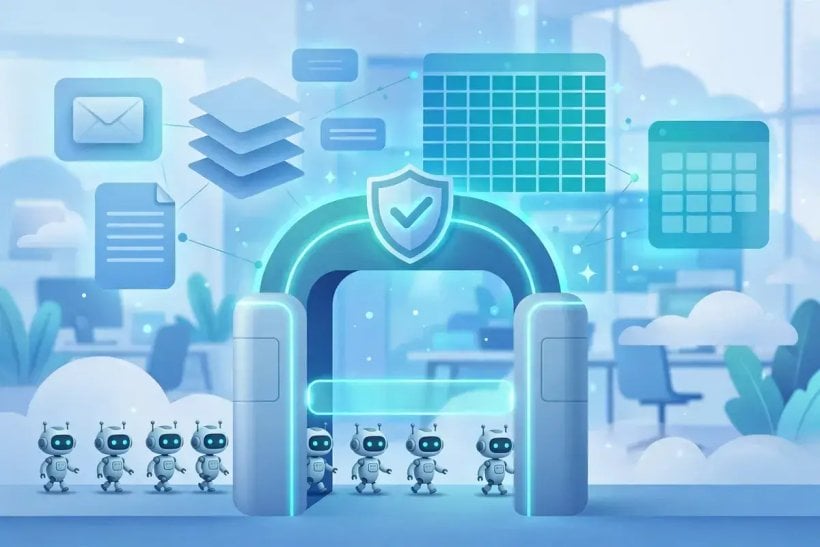
The launch covers two Google-managed front doors for agents. Remote MCP servers, built on the open Model Context Protocol, work across Gmail, Drive, Docs, Sheets, Slides, Calendar, Chat and Tasks, with Keep coming soon. A Workspace CLI serves local and desktop agents, with scoped sign-in and IT-set guardrails.
Unlike older integrations, the MCP tools return relevant context inside Workspace’s own security boundary instead of downloading emails and files line by line. User confirmations, data-loss-prevention rules, access controls and audit logging are built in from day one, Google said, so IT teams can watch and manage agent actions.
The February deadline
The mandate is the sharp end of the announcement. A new Workspace AI Tools Addendum requires agents to connect through the MCP servers or CLI rather than REST APIs, with enforcement starting 1 February 2027. Every call will then be checked against Workspace permissions, data-loss rules and classification labels.
Agents will also have to identify themselves clearly. External agents must use dedicated OAuth client IDs with least-privilege scopes, and time-limited approvals are coming soon. Usage quotas apply now, with billing from 1 April 2027. People keep control of high-impact actions like sending external emails.
What the protections cover
Google lists six protections in all. Admins can view, control, audit and revoke agents from the console, and users will soon be able to see agent activity and revoke access to their own emails and documents. Sensitive Gmail messages and Drive files will soon be placed off-limits to external agents.
The rules also reach beyond Workspace itself. The addendum bars agents from using Workspace data for model training or permanent raw storage, requires derived data to be removed within a defined window, and mandates deletion of a customer’s data when they disconnect. Scraping Workspace APIs through agents is prohibited.
Our read
This is less a developer convenience than a governance land-grab, and Google is unusually open about it. The company frames traditional APIs as built for human-paced software that cannot secure machine-speed agents, and the February enforcement date turns that argument into a migration order for every agent vendor touching Workspace.
The timing is no accident. Canva opened its design engine to agents through MCP days earlier, and Claude gained skills over MCP this week. The protocol is becoming the default agent interface, and Google is making sure that, inside its suite, it controls the front door and the audit trail.
For developers the message is blunt: rebuild on Google’s managed interfaces, or lose access in February. For customers the trade is clearer — agents get governed, audited access, and Google polices the boundary. The open question is whether rival suites follow with mandates, or let agents keep using APIs.
Why It Matters
Workspace holds the documents of over 4 billion users and more than 13 million organisations, so how agents reach that data is now a platform decision, not a developer preference. Google’s mandate sets the template for other suites: managed access, agent identities, and deadlines instead of guidance.
Background
Google has been moving agents into Workspace for months, adding Gemini skills while rivals opened products to agents. Grok arrived as a Workspace add-on beside Gemini. The MCP servers build on that push, but the February enforcement date is new: until now, agents could reach Workspace through REST APIs.
Source: Google’s Workspace announcement




0 Comments