

Harbinger has raised $240 million in Series D funding to take its electric truck platform well beyond trucks. The California company says the money will fund expansion into energy storage, power generation, autonomy software and defense, while it ramps up manufacturing of its medium-duty electric vehicle platform. Tiger Global, Capricorn’s Technology Impact Fund and defense-focused Ridgeline co-led the round, with Fidelity Management joining as a new investor and FedEx returning as a strategic backer. The financing takes Harbinger’s total raised since its founding past $650 million.
From Trucks to a Five-Vertical Platform
The round, announced on 5 November, is the company’s largest yet. It comes almost a year after Harbinger’s $160 million Series C, which included an initial truck order from FedEx. That relationship has since deepened: FedEx ordered 2,000 all-electric Harbinger trucks valued at more than $300 million, and FedEx executive Paul Melander has joined Harbinger’s board.
Harbinger describes itself as an industrial technology platform company, and the Series D is structured to match. The company says it will build out five areas: commercial vehicles, energy storage systems, power generation, autonomy software and defense applications. Goldman Sachs and Morgan Stanley served as placement agents on the financing.
The Defense and Autonomy Push
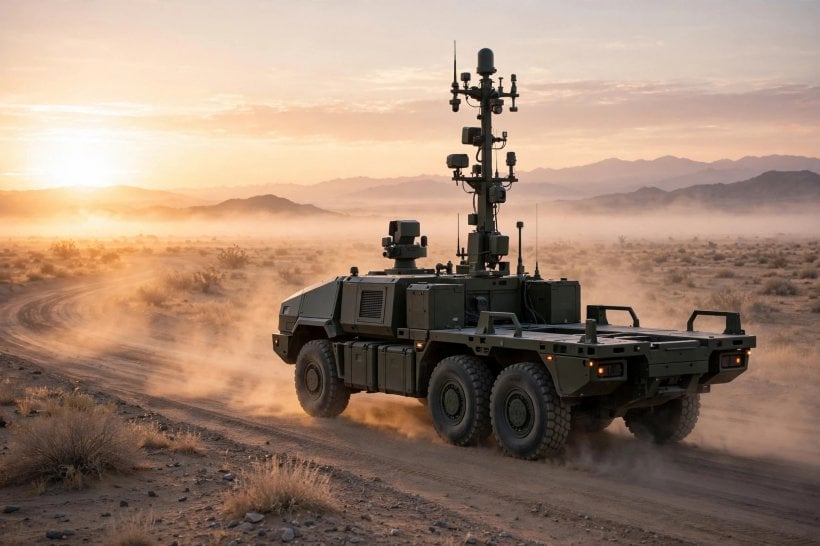
The defense and autonomy parts of the plan are the newest. Harbinger has bought autonomy startup Phantom AI, and it has shown a driverless hybrid-electric platform built for the military. Its chief executive, John Harris, frames electrification as the thread running through the whole expansion, saying it is ‘increasingly, at the core of industry, defense, mobility, and AI.’
Tiger Global partner Griffin Schroeder put the investment case plainly, saying electrification ‘has become one of the most pressing bottlenecks of the AI era.’ The argument is that data centers, vehicles and defense systems all need the same thing: more power, delivered reliably.
Harbinger’s bet is that the company building the electric core can sell into all of those markets at once. The round also drew in Fidelity Management, which tends to invest in companies nearing the public markets, and TechCrunch reports Harbinger is weighing going public.
Our Read
Harbinger is selling a story investors clearly want to hear: one platform, many buyers. The $240 million is not a truck round or a defense round, it is a bet that electrification is the shared constraint across the AI economy’s physical layer. That framing helped it land Tiger Global and Fidelity, two names that do not usually chase truck makers.
The risk is execution across five fronts at once. Harbinger must scale truck manufacturing, deliver a 2,000-vehicle FedEx order, and turn a defense sideline into real contracts — all while energy storage and power generation compete for the same capital.
The defense push has a head start, though. An autonomy acquisition and a driverless military platform give Harbinger more than a slide deck, and the same pattern is playing out across the sector, with defense autonomy deals drawing some of the year’s largest checks.
Why It Matters
Harbinger’s round is a marker for where venture money is going in late 2026: toward companies that build the physical systems the AI economy runs on, not just the models. The week’s largest rounds were dominated by defense and autonomy, from drone delivery to satellite networks, and Harbinger extends that pattern from the sky to the road.
It also shows how far the funding week stretched. Harbinger’s $240 million sits alongside a $730 million raise for an AI satellite network, in a week when defense, space and autonomy took most of the largest checks — and the biggest rounds kept getting bigger.
Background
Harbinger was founded by former employees of EV startup Canoo and battery company QuantumScape, starting with a single electric truck chassis. It has since expanded into hybrid emergency vehicles and autonomous driving technology, and its funding week sits alongside other large AI infrastructure rounds.
Source: Harbinger’s announcement and TechCrunch’s report


0 Comments