
ElevenLabs crossed $500 million in annual recurring revenue in May 2026, a number that separates it from most of the AI industry. Plenty of AI companies have users and headlines; far fewer have a half-billion-dollar revenue engine. So where does the money actually come from?
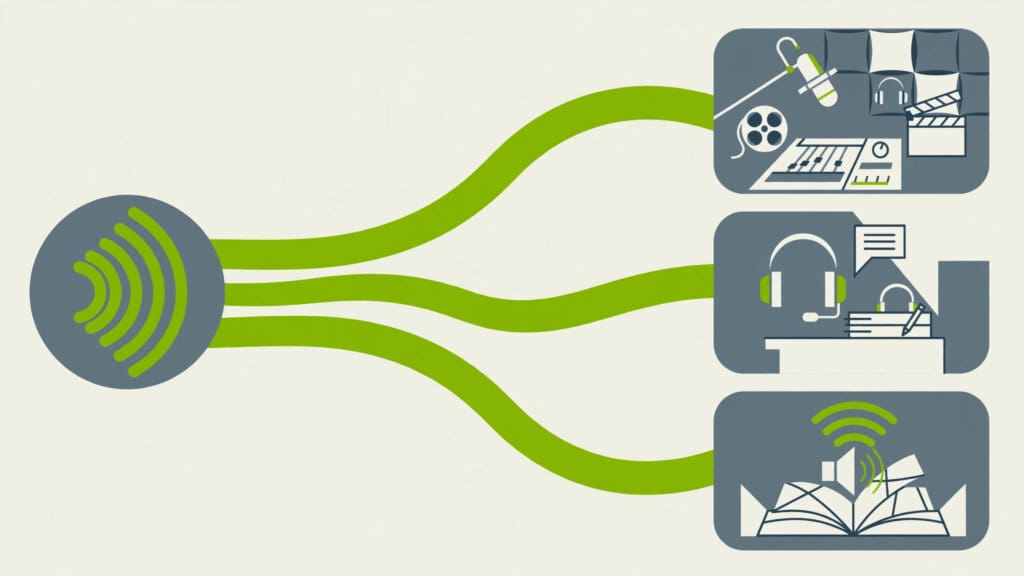
The short answer is that ElevenLabs sells the same voice technology at three very different scales: subscriptions for creators, dubbing and publishing deals for media companies, and per-minute voice agents for enterprises. Each stream reinforces the others.

Stream one: creators pay by the character
The entry point is the subscription. Creators pay monthly tiers that grant a quota of characters converted to speech, with higher tiers unlocking better models, commercial rights and professional voice cloning. Run out of characters, and you buy more or upgrade.
This stream matters beyond its size. Hundreds of thousands of small customers de-risk the business — no single client can hurt it — and they generate the usage data and word of mouth that keep ElevenLabs’ voices the default choice in tutorials, tools and templates across the internet.
Stream two: dubbing and publishing
The second stream is media. Studios and platforms use ElevenLabs to dub films, series and videos into other languages, keeping the original actor’s voice and performance instead of hiring a new cast. What once took a studio weeks per language can now be turned around in days.
Publishing runs on the same engine. Audiobook producers, news sites and education companies convert text catalogues into narrated audio at a fraction of studio cost. For publishers sitting on decades of un-narrated backlist, that is not a novelty; it is a new revenue line on assets they already own.
Stream three: agents that answer the phone
The fastest-growing stream is the enterprise one. Companies pay for voice agents that hold real conversations — customer support lines, appointment booking, order tracking, debt reminders — typically priced around the minutes of conversation handled.
Voice agents are attractive economics for both sides. The customer replaces or supplements one of its most expensive operations, the call centre. ElevenLabs gets recurring, usage-based revenue that grows automatically as call volumes grow, without having to win a new sale for every increase.
Why the mix works
Each stream feeds the next. Creator subscriptions prove the technology in public. Media deals put ElevenLabs voices in front of millions of listeners. Enterprise agents then sell into companies whose staff already know the product from the first two streams.
The mix also explains the company’s $22 billion valuation in September 2026. Investors are not paying for a text-to-speech tool; they are paying for a platform that monetises voice at every level of the market at once, from a teenager narrating videos to a bank answering its phones.
The risks are the honest ones: competition from the big labs bundling voice into their assistants, and the trust problem that follows any company whose product can imitate a human voice. But the revenue structure — diversified, recurring and usage-based — is about as solid as the young AI industry has produced.
Stream four: the platform underneath
Underneath the three visible streams sits a fourth: the API. Developers embed ElevenLabs’ voices into their own products — apps, games, reader tools, marketing software — and pay by usage. It is rarely the headline, but platform revenue is sticky: once a voice is wired into a product, it tends to stay.
The API also seeds the other streams. A startup that starts with a few thousand characters of API usage can grow into a media or enterprise contract, and ElevenLabs sees the demand coming in its own usage data before any sales team makes a call.
The shape of the whole business
Step back and the structure is unusual for an AI company. The revenue is recurring rather than one-off, spread across consumers, media and enterprises rather than concentrated in a few contracts, and tied to usage of a model the company owns outright rather than resells.
That is what $500 million of annual recurring revenue means in practice: not one big customer, but a machine with many intakes, each feeding the others. Whatever happens to the wider AI market, voice is a utility people demonstrably pay for — and ElevenLabs has arranged to be paid at every level of it.

0 Comments