

Microsoft will switch on AI-powered, context-aware phishing detection inside Teams in early November, watching messages for malicious behavior rather than just malicious attachments — with external first-contact chats first in line. According to BleepingComputer, Microsoft says the new capability reads conversation context without retaining message content, catching suspicious behavior that carries none of the traditional red flags such as dodgy links or files. The targeted release runs through mid-November, general availability worldwide is expected between early and mid-December, and IT administrators need take no action to enable it. “This capability is used only for security protection,” Microsoft says — not for training, summarization or user monitoring. It is the latest escalation in a year-long campaign to harden Teams against the social engineering attacks that cybercrime groups now run at scale.
How The Detection Works
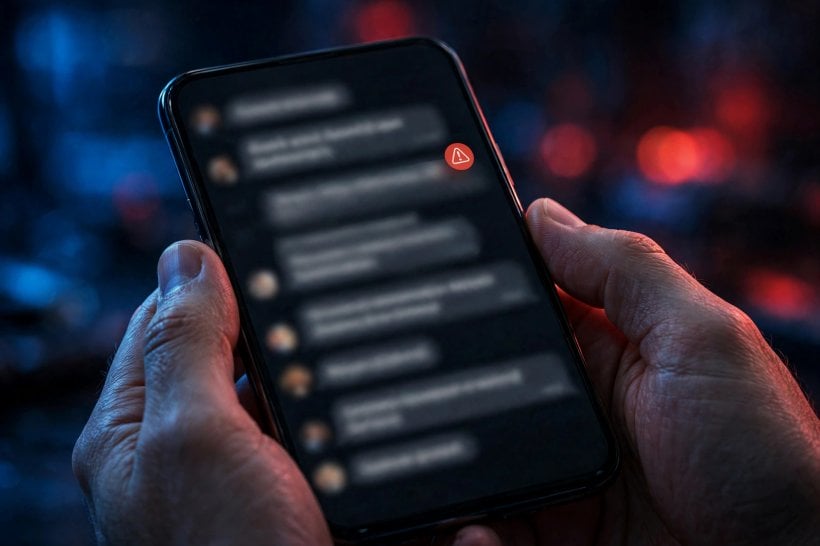
The system is aimed at higher-risk messaging scenarios, and for most users that means the first message from someone outside the company. Microsoft says the AI uses conversation context to judge whether a message is a phishing attempt, a social engineering ploy, an impersonation or evidence of deceptive intent — rather than scanning for known-bad links and files. That matters because the attacks Teams now faces increasingly have no payload to catch. A scammer impersonating a supplier in a first-contact chat, coaxing an employee into a gift-card purchase or a credentials hand-over, leaves no malicious URL behind. Traditional filters see nothing; Microsoft says this one is built to see the behavior.
The context analysis is deliberately bounded. Microsoft says it examines conversation context without retaining message content, and none of that data is kept for AI training or for any use beyond security protection. That is a narrower promise than blanket privacy: the AI looks at what is happening in the chat, but the chat’s contents are not banked for model improvement or repurposed elsewhere in the Microsoft stack.
The Rollout Timeline
The feature first surfaced publicly in a Microsoft 365 Roadmap entry the week before BleepingComputer’s report, and Microsoft then confirmed it in a Microsoft 365 Message Center update on Wednesday. “Microsoft Teams is introducing AI-powered, context-aware phishing detection to help identify phishing, social engineering, impersonation attempts, and deceptive intent,” the update said. The targeted release phase begins in early November and is expected to run through mid-November, with general availability to customers worldwide likely between early and mid-December.
For IT administrators, the key detail is that there is nothing to switch on. Microsoft says the protection applies without any admin action, and for most users it focuses on external first-contact chats — the scenario where an employee is most exposed, because there is no established relationship to calibrate suspicion against. That zero-touch model also matches the wider direction of Microsoft’s security tooling: defenses arrive through the platform rather than through policies admins must write, a pattern visible in Project Perception, Microsoft’s agentic security system, which layers AI-driven protection over the company’s own agent fleet.
What It Will Not Do
Microsoft has drawn a bright line around the capability’s purpose. The company says the detection is used only for security protection and “not for productivity, summarization, advertising, user monitoring, or other non-security purposes.” Customer data is not retained for AI training, and the analysis is not fed back into product telemetry for anything else. The framing is a direct answer to the trust question every AI feature in workplace software now faces: employees and compliance teams want to know whether a tool that reads their chats to stop attacks also reads their chats for other reasons. Microsoft’s stated answer is no — the system looks at conversation context to stop phishing, and the job ends there.
Why It Matters
Teams is a prime hunting ground for social engineering because it is where work conversations already happen. A message from an apparent colleague or supplier inside Teams carries more trust than a cold email, and attackers — including ransomware gangs — have built their playbooks around that trust. Detecting intent from context instead of artifacts is Microsoft’s bet on how to catch attacks that traditional filters, trained to flag bad links and files, structurally miss.
The timing is also commercial. Teams is one of the distribution points Microsoft leans on for its workplace AI story — alongside milestones such as the 330,000-employee Volkswagen Copilot rollout — and security features like this one feed the argument for the premium tiers where Microsoft’s AI empire actually bills. If behavioral phishing detection lands without friction and without privacy complaints, it becomes another reason enterprises stay inside the Microsoft 365 bundle rather than bolting third-party security on top.
Background
This is the latest in a steady drumbeat of Teams hardening. In December, Microsoft announced that administrators could lock external users out through the Defender portal starting in January, aimed at cybercrime groups abusing Teams for social engineering. In August, a Teams meeting protection policy began automatically blocking identified external bots. Last month, Teams started blurring QR codes arriving from external senders and gave users a way to report suspicious guest invitations. And in early October, Microsoft outlined plans for third-party deepfake detection and impersonation protection in Teams meetings. The November phishing detection extends the same campaign from meetings and invitations into everyday chat.
Source: BleepingComputer



0 Comments