

Moonshot AI, the Beijing lab behind the Kimi assistant, is setting up operations in Singapore, Reuters reported on Wednesday, after the company advertised a sales role on its LinkedIn page this week — the clearest sign yet that the Chinese lab is building a commercial base outside its home market.
The posting, dated Tuesday, is for a Singapore-based sales hire who can, in the listing’s own words, “translate early wins into scalable revenue, strategic partnerships, and market presence”. Moonshot did not immediately respond to a Reuters request for comment on its Singapore plans on Wednesday.
A Sales Hire, Not A Launch Event
There has been no launch event, press release or executive statement. The entire public evidence for the move is the job listing itself, which asks for applicants with experience in sales, venture capital, consulting, product or engineering — a generalist commercial profile rather than a narrow account-management brief.
That breadth matters. A first commercial hire in a new market is usually expected to find the earliest customers, line up local partners and test pricing before a fuller team follows. The listing’s emphasis on turning “early wins” into revenue suggests Moonshot believes it already has initial traction with customers or partners in the region, though the company has named none of them publicly.
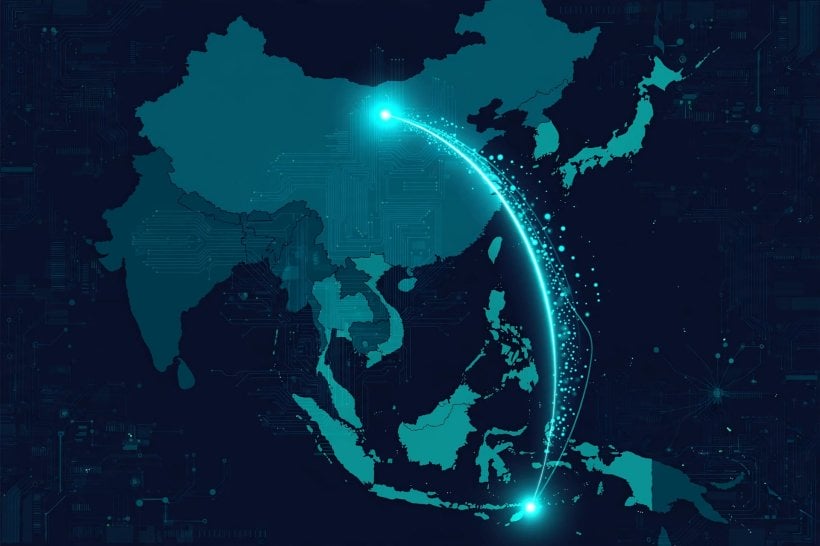
Singapore is the standard beachhead for Chinese technology firms expanding into Southeast Asia: it offers a common-law business environment, a deep pool of regional headquarters staff and a timezone that overlaps both Beijing and the region’s biggest markets. For an AI lab selling models and API access, it is also a place where multinational customers run their Asia-Pacific operations.
A Singapore Entity That Predates The Push
Registry records add a second, quieter strand to the story. Moonshot already has a business entity in Singapore, incorporated in July 2023 — the year the lab itself was founded — and renamed Novascent in June 2026, according to the business registry records Reuters cited.
A dormant or lightly used local entity is common for fast-growing startups, which often incorporate abroad early for fundraising and contracting flexibility. The combination of a three-year-old entity, a fresh rename this summer and now a first sales listing points to a presence that is being activated rather than created from scratch.
What the Singapore operation will sell is not spelled out in the listing. Moonshot’s commercial offer centres on the Kimi assistant and API access to its K-series models, which compete for the same enterprise and developer budgets as rival Chinese labs pushing abroad, including DeepSeek.
Kimi K3 And The Backers Behind The Move
Moonshot released its Kimi K3 model in July, describing it as the world’s largest open-weight AI system, with performance approaching that of Anthropic’s models — the company’s own characterisation of a release that put it at the centre of the open-weight race. Our explainers cover what Kimi is and how the assistant works and what made K3 such an unusually large open release.
The lab’s backers include Tencent Holdings, Meituan and China Mobile, according to Reuters — a shareholder list that mixes platform distribution, consumer reach and a state-owned carrier, and that has funded Moonshot’s rise from a 2023 startup into one of China’s most watched model labs.
Overseas commercial expansion is the logical next contest. Chinese labs face a home market crowded with well-funded rivals and heavy price competition on API access, while demand for Chinese open-weight models has grown abroad precisely because the weights can be downloaded, self-hosted and fine-tuned. The race between Moonshot and its domestic rivals is one we have tracked in Kimi vs DeepSeek.
Why It Matters
Moonshot’s Singapore move is small in headcount and large in signal. The open-weight model race has so far been fought on downloads, benchmarks and API prices set from Beijing; a sales office in Singapore turns that into a contest for enterprise contracts, local partnerships and government-adjacent customers across Southeast Asia, fought on the ground.
It also tests how far a Chinese frontier lab can commercialise abroad at a moment when Chinese AI is under active political pressure in Washington — the United States has moved against DeepSeek’s use by federal agencies, and Beijing has publicly vowed to defend its companies. A Singapore base gives Moonshot a neutral commercial address from which to sell into markets that may hesitate to contract directly with a Beijing entity.
For rivals, the listing is an early-warning marker: when a lab starts hiring people to convert “early wins” into regional revenue, the model release cycle is no longer the whole business.
Background
Moonshot AI was founded in Beijing in 2023 and built its reputation on Kimi, a long-context assistant that became one of China’s most used AI apps before the lab’s K-series open-weight models — culminating in July’s K3 — made it a global name among developers. Backed by Tencent, Meituan and China Mobile, it now joins the wave of Chinese AI firms looking beyond a saturated home market, with Singapore as the region’s customary first stop.
Source: Reuters

0 Comments