

NVIDIA released Nemotron 3.5 Super VL on October 15, an open 120-billion-parameter model built for specialized always-on agents, alongside two smaller Bolt edge models for local deployment. Super VL and Nemotron 3.5 Bolt 74B-A9B are available now, NVIDIA said, with the smaller Bolt E4B model due on October 23.
The three models cover the full range of agent deployments, from large enterprise servers down to edge devices and local hardware. NVIDIA said the aim is that organisations no longer have to choose between capability and deployability when they run agents on its infrastructure.
Nemotron 3.5 Super VL: A 120B Multimodal Model For Always-On Agents
Super VL, built in collaboration with the Nemotron Coalition, is a vision-language model that handles reasoning, instruction following and tool use in a single system while understanding text, images, documents and video. NVIDIA says it delivers leading accuracy on multimodal agentic tasks, comparable with its largest reasoning model at roughly one-fifth the parameter count, and up to five times the throughput of comparable open models for agent work, citing Artificial Analysis leaderboard results.
The technical profile explains the positioning. Super VL uses a mixture-of-experts design that activates about 12 billion parameters per token, was trained on about 26 trillion tokens across pretraining and continued pretraining, and was then post-trained with roughly 3.8 million samples and reinforcement learning across dozens of environments. It ships with open weights, open datasets and training recipes, so organisations can post-train it on their own data, deploy it on their own infrastructure and oversee what they build.
In practice, NVIDIA targets the documents agents actually meet: optical character recognition, tables, charts and structured information in web pages, PDFs and other files, with context carrying through as work moves from document to data to decision. The model is available on Hugging Face, OpenRouter and ModelScope, and as an NVIDIA NIM microservice, and it runs across DGX Spark, DGX Station, RTX PRO and RTX systems as well as data centre and cloud environments.
Bolt Brings Nemotron 3.5 To Local Machines In 24GB And 4GB
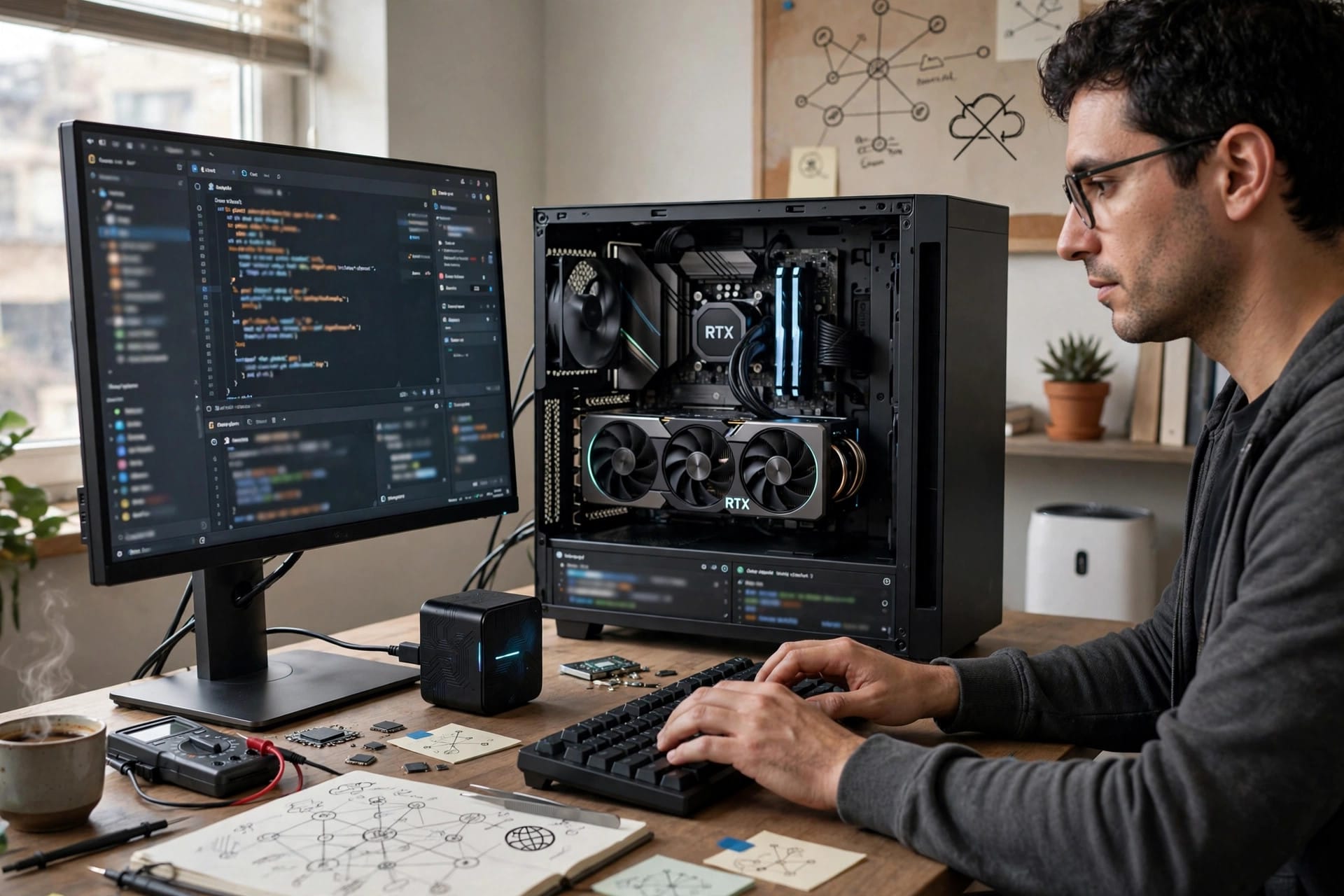
Bolt 74B-A9B 24GB is designed to run everyday agentic tasks locally on NVIDIA RTX and DGX Spark systems, using native 2-bit quantization to fit in 24GB of memory and run alongside other applications. NVIDIA says users can delegate projects to popular local agent harnesses, from researching the web to writing and debugging code, without sending those workloads to the cloud. It is available now on Hugging Face, with support for llama.cpp, Ollama, LM Studio, Unsloth and vLLM, and it was built for the RTX Spark laptops that went on sale this month.
Bolt E4B 4GB, due October 23, is built for physical and conversational agents on GeForce RTX, Jetson and RTX/DGX Spark systems, combining natural conversation with multi-turn agentic capability for fast local voice assistants, interactive characters and embedded interfaces. Together with Lightning, released in August for high-throughput workloads, and Ultra, aimed at the hardest reasoning tasks, the new models complete a Nemotron family that now has a tier for each deployment size.
Who Is Already Post-Training Super VL
NVIDIA listed dozens of organisations already customising Super VL on private data. Scale AI post-trained it for finance agents, AfterQuery for credit-agreement analysis, and AI21 and Alice for cybersecurity attack resilience, while platform partners including Atlassian, CrowdStrike, Salesforce and Perplexity are integrating it into their own agent products. Customisation is supported through NVIDIA NeMo, and NVIDIA said NIM packages are refreshed every two weeks with security patches and performance improvements.
The enterprise pattern matches what GEroundtable has seen elsewhere in NVIDIA’s stack, from Santander’s use of NVIDIA to cut AI serving costs in banking to the hardware base that explains why NVIDIA powers so much of the AI boom: the company sells the chips, the serving software and, increasingly, the open model that runs on both.
Why It Matters
Nemotron 3.5 is the central entity, and its attributes point in one direction: agents that run for days or weeks cannot all live in someone else’s cloud. A 120B open model that reads documents and charts gives enterprises a server-scale agent they can post-train and keep on premises, while a 74B model squeezed into 24GB and a 4GB conversational model give the same family a local and edge tier. For rival open-model labs, the release raises the bar on throughput claims and on shipping datasets and training recipes, not just weights. For NVIDIA’s neighbours, from cloud providers to RTX laptop buyers, it ties the open-model story directly to its hardware: every tier of Nemotron runs best, by design, on an NVIDIA machine.
Background
Nemotron is NVIDIA’s open model family, built since 2023 from its enterprise language-model work and expanded this year into a tiered lineup, with Lightning for throughput and Ultra for hard reasoning preceding the 3.5 release. The family sits inside NVIDIA’s wider shift from chip supplier to full AI platform, in which NeMo tooling, NIM microservices and Dynamo serving software turn each model launch into a reason to deploy on NVIDIA infrastructure, whether in a data centre or on a desk.
Source: HPCwire / AIwire, publishing NVIDIA’s official October 15, 2026 announcement

0 Comments