
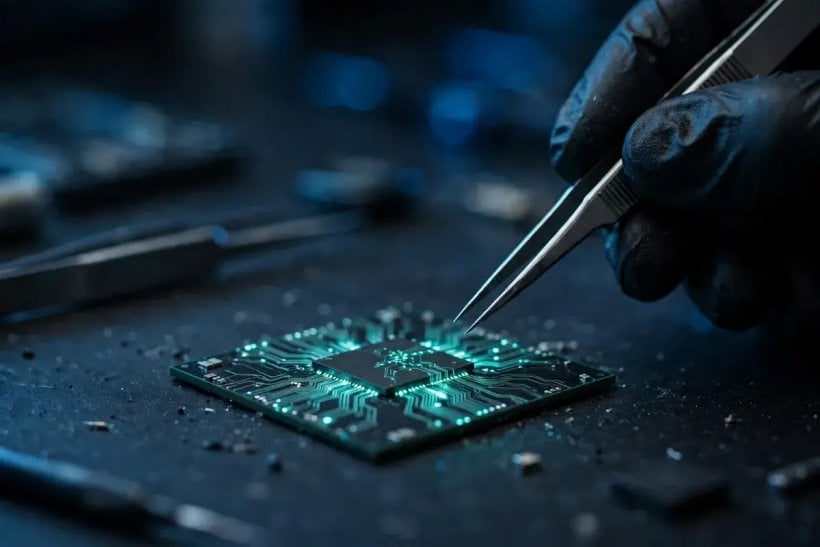
OpenAI says its models cut about 13 percent of the standard-cell area from the vector unit of its Jalapeño inference chip, and 10 percent from its matrix unit. The same approach delivered up to 14 percent better power, performance and area on AMD’s flagship graphics designs.
What changed inside Jalapeño
OpenAI started using GPT-o3 mini to help design Jalapeño in early 2025, and even that early model found real savings. In the vector unit, which runs parallel computing tasks, the gains came from floating-point adders and multipliers, conversion functions, reduction logic and the special-function unit.
The matrix unit tells the story in single circuits. One multiplier redesign used about 15 percent less cell area in synthesis while cutting latency from two clock cycles to one, and a separate adder redesign saved about 15 percent while keeping its two-cycle latency.
These are not paper gains. OpenAI says the optimisations were silicon-proven during Jalapeño’s bring-up, when engineers tested the manufactured chip. The models explored alternative logic and ways to split work across pipeline stages, finding room to share hardware and cut intermediate storage.
The AMD work
The same approach went further on third-party hardware. OpenAI partnered with AMD on power, performance and area, and reports up to 14 percent improvement on flagship GPU designs against heavily optimised baselines. The models rewrote the SystemVerilog code that describes the chips’ circuits.
OpenAI calls it roughly a year of progress achieved in less than five months. AMD has already put some of the model-written changes into a design sent for manufacturing, and added others to its production design files for future versions. AMD also verified single-digit gains on its next flagship CPU.
How the models measure up
To track progress across model generations, OpenAI tested each one on two open-source 32-bit RISC-V cores, PicoRV32 and Ibex. With a comparable budget of about 112,000 tokens per run, GPT-6.2 Astra had the highest average score on both cores, and roughly doubled GPT-6 Astra on PicoRV32.
All five models scored higher designing a core from written requirements than optimising an existing one, across 9,881 scored runs. OpenAI is candid about the gap: a from-scratch design can omit features like performance counters, so tighter area limits and timing checks would make the test more representative.
Our Read
The AMD detail is what makes this more than a research demo. Model-written circuit changes are already inside a design AMD sent for manufacturing, which means the work survived the checks that production hardware demands. That is the line between a benchmark result and a product result.
The loop is also closing. The same models that run on the chips are now helping design the next ones, and OpenAI is training a model with Synopsys to use chip-design tools the way engineers do. The chip industry’s next race may be over who has the best AI designer.
Why It Matters
Chip design is where the AI race meets physics, and every percentage point of area or power is worth real money at manufacturing scale. If models can improve production silicon, the companies with the best chip-design models gain an edge in the hardware that trains the next generation of models.
Background
OpenAI first described Jalapeño in August, when it said frontier models had accelerated the chip’s development. The new post is the follow-up with the numbers. GPT-6.2 Astra, the model behind the best RISC-V scores, is also OpenAI’s first model rated high for self-improvement.
Source: OpenAI chip design research post




0 Comments