
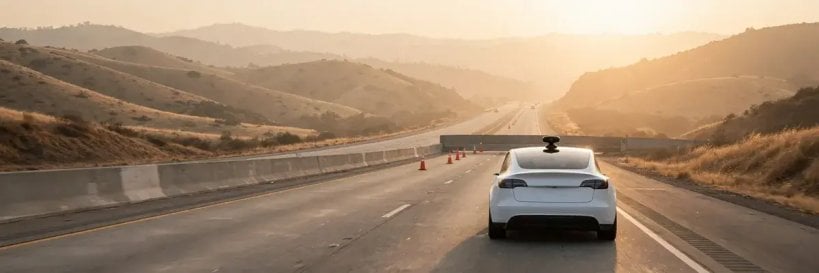
California Bans Waymo From Freeways, and Waymo Pulls Out Everywhere
California has barred Waymo’s driverless cars from the state’s freeways, calling them an imminent hazard to public safety after two incidents near San Francisco. Waymo answered by pausing freeway rides in every market where it offers them, from Phoenix to Miami.
Two Incidents in Two Days
On 5 November, three Waymo vehicles drove into an active construction closure on US Route 101 near Burlingame, in the San Francisco Bay Area. The next day, a Waymo car tried to pass California Highway Patrol vehicles holding back traffic on Highway 280 in San Francisco.
The Department of Motor Vehicles said Waymo’s cars pose an imminent hazard because of recurring incursions into active construction zones, where workers, vehicles and equipment are present. The ban covers operating and testing driverless vehicles on all California freeways for now.
A Nationwide Pause
Waymo has temporarily restricted commercial freeway rides in all markets where it operates the service, a spokesperson said. The company still runs freeway testing with trained autonomous specialists behind the wheel, and its street service continues in 15 metropolitan areas.
Waymo had offered freeway rides in five of its 13 operating areas: the San Francisco Bay Area, Los Angeles County, Phoenix, Miami and Austin. The suspension, which began last Wednesday, also takes the company off airport runs in San Francisco for the second time this year.
The restriction took effect on 11 November and has no end date. It stays in place until Waymo demonstrates to the department that it has taken effective corrective action, and the National Highway Traffic Safety Administration said it is in contact with both sides.
Not the First Time
This is the second time this year that Waymo has faced highway restrictions in California. The company paused freeway operations in San Francisco and Los Angeles in May to improve how its vehicles respond to construction zones, after similar incidents that month.
A CNN analysis in June found hundreds of incidents in which robotaxis made dangerous moves, from running red lights to driving into active crime scenes. Waymo said most rides are smooth and uneventful, and its data shows 95 percent fewer serious-injury crashes than human drivers.
Our Read
The ban is a safety ruling, but it is also a credibility test for Waymo. Waymo’s pitch has been that its cars are safer than human drivers, and the data backs that claim. Two cars entering a work zone is the kind of failure statistics cannot smooth over.
Waymo did the right thing by pausing everywhere instead of only in California. A patchwork response would have invited the question of why rides are safe in Phoenix if they are not safe in San Francisco. The pause buys time, but the fix must be visible before the ban lifts.
Why It Matters
Robotaxis are moving from pilot projects to everyday transport, and regulators are now setting the terms. California’s action shows a state can pull a service off the road without waiting for a federal ruling, and every other state watching will read the same message.
For Alphabet, the stakes are commercial as well as reputational. Waymo sits in the company’s Other Bets segment, which lost 2.05 billion dollars last quarter, and freeway rides are the service that makes airport trips possible. Street rides continue, but the growth story just slowed.
Background
Waymo is Alphabet’s self-driving unit and operates in 15 US cities, though it offered freeway rides in only a few. It is expanding its fleet with Toyota-built robotaxis in Japan, and the California ban is the second freeway restriction it has faced this year.
Source: CNN’s report.




0 Comments