

DeepSeek is a Chinese artificial intelligence company that became one of the most talked-about names in AI by doing something the big Western labs mostly resist: giving its best models away. Its chatbot app and its open-weight models are now used by hundreds of millions of people.
The company sits in Hangzhou and grew out of a quantitative trading firm, which helps explain its obsession with efficiency. Where rivals compete on scale, DeepSeek competes on doing more with less compute.
Where DeepSeek came from
DeepSeek began as the research arm of High-Flyer, a successful Chinese quant fund. That origin matters, because a trading firm lives or dies on squeezing performance out of hardware it already owns.
When US export controls limited access to the most advanced chips, that efficiency culture became a strategic advantage. DeepSeek’s engineers learned to train and serve models on constrained hardware without giving up much quality.
The result was a lab that behaved less like a Silicon Valley startup and more like an engineering collective. It published papers, released weights, and let anyone inspect, download and build on its work.
Why the open part matters
Most frontier chatbots are closed. You can talk to them through an app or an API, but the model itself stays behind the company’s walls, and the rules can change without warning.
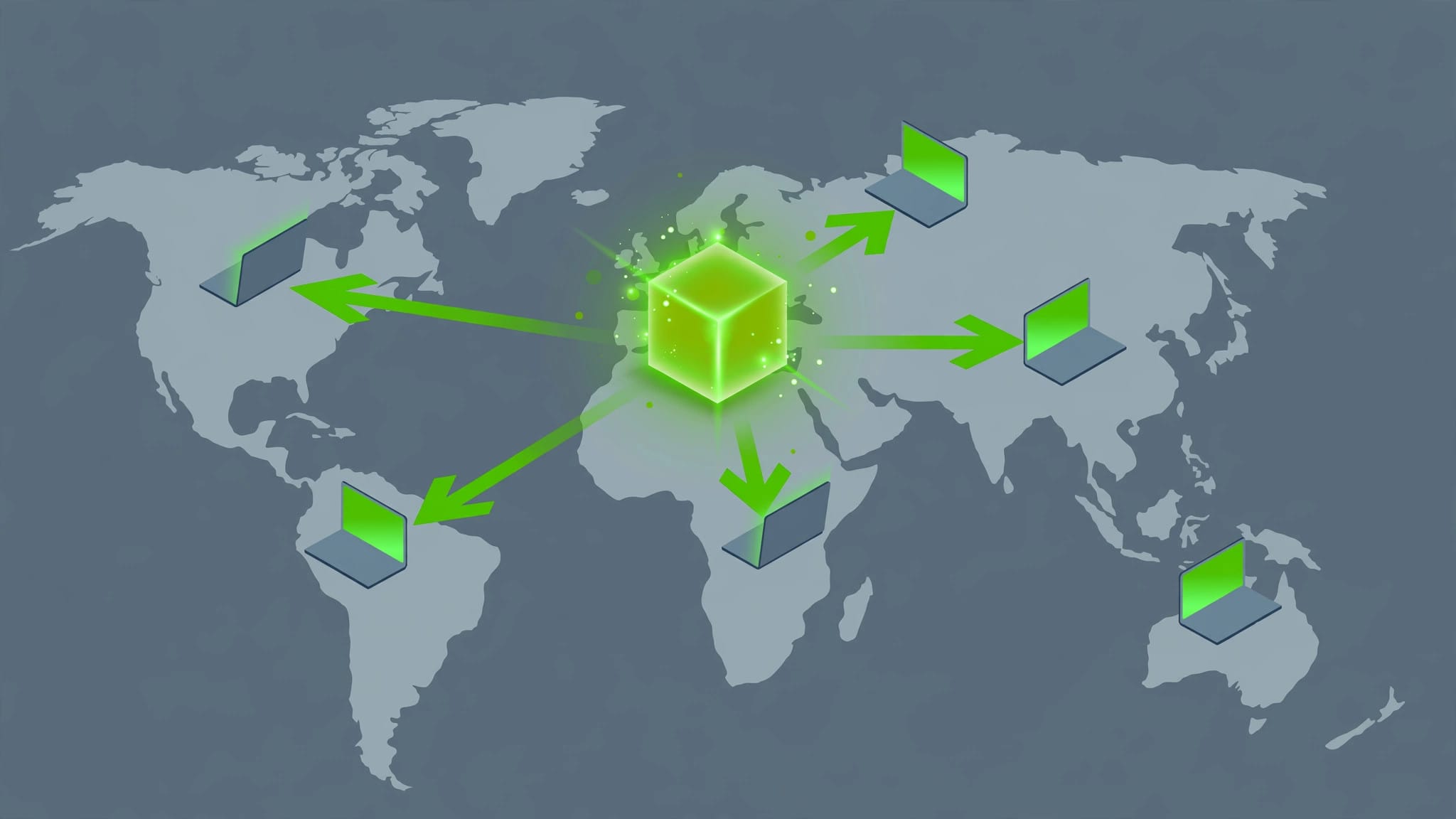
DeepSeek’s flagship models are open-weight, meaning the trained model files are downloadable. Developers can run them on their own servers, fine-tune them for narrow jobs, and audit roughly how they behave.
That openness is why DeepSeek shows up everywhere from university labs to startup prototypes. Industry trackers put its web traffic at roughly 319 million visits a month in 2026, with around 130 million monthly users inside China alone.
How people actually use it
For ordinary users, DeepSeek is a free chatbot app that answers questions, writes, codes and reasons through problems step by step. Its reasoning models became popular for showing their working instead of just an answer.
For developers, the story is different. Cheap API access and downloadable weights make DeepSeek a building block: customer-support bots, research tools and on-device experiments all run on it.
That local angle is growing fast. As hardware built for on-device AI arrives, such as the machines in our look at NVIDIA’s RTX Spark laptops, open models are the ones you can actually load and run yourself.
The technology underneath. DeepSeek’s reputation rests on a few engineering choices that recur across its models. Its systems use a mixture-of-experts design, in which only a subset of the model activates for any given task, keeping running costs far below the headline size.
Its reasoning models added a second trick: training the system to work through problems in extended chains of thought before answering. That produced the distinctive “thinking out loud” style users loved, and rivals quickly imitated it.
A third choice is distillation, using a large model’s outputs to train smaller ones. It lets DeepSeek spread capability down into cheaper models that ordinary hardware can run, widening the funnel of people who encounter the brand.
None of these ideas is unique to DeepSeek in isolation. The distinction is execution: combining them, publishing the recipes in unusual detail, and shipping the result as downloadable weights rather than a demo behind a login.
That combination is also why the lab’s papers are read so closely by competitors. Each release functions as a free engineering briefing for the entire field, which compounds DeepSeek’s influence beyond its own products.
What to watch
DeepSeek’s challenge is sustainability. Giving models away builds influence, but servers, engineers and research still cost money, and the company competes for talent with far richer rivals at home and abroad.
Its geopolitical position also cuts both ways. Governments worry about data and dependence on a Chinese supplier, while many users simply see the best free option available to them.
There is also a talent story underneath the technology. DeepSeek recruits heavily from Chinese universities and publishes enough research to function as a magnet for ambitious engineers who want their work used, not shelved.
And there is a user story: for millions of people, DeepSeek was simply the first AI assistant that felt both powerful and free. First experiences set loyalties in consumer technology, and plenty of loyalties now point to Hangzhou.
Either way, DeepSeek has already changed the industry’s defaults. Openness is no longer a niche preference; it is a strategy the biggest labs now have to answer.

0 Comments