
Qwen is the family of artificial intelligence models built by Alibaba, the Chinese technology group better known in the West for e-commerce and cloud computing. Unlike a single chatbot, Qwen is a whole catalogue: dozens of open models in different sizes and specialities.
That catalogue strategy is the point. Qwen aims to be the default starting point whenever a developer needs a model, whether it runs on a phone, a laptop or a data-centre cluster.

A family, not a single model
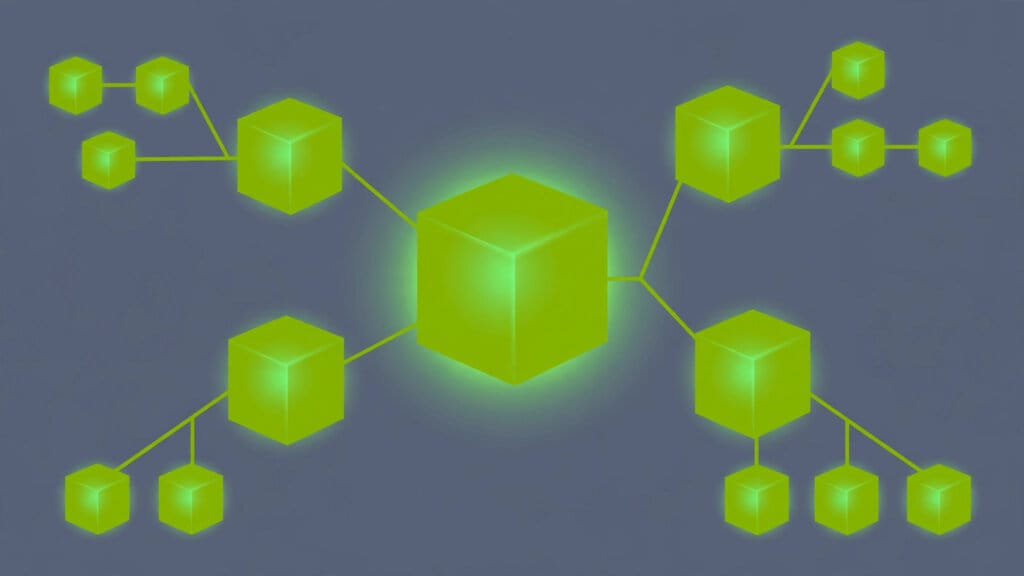
Most AI brands sell one flagship. Qwen ships a ladder: small models that run on modest hardware, mid-size models for everyday products, and large flagship systems that chase the frontier on reasoning, coding and multilingual tasks.
The family also splits by job. There are models tuned for code, models for vision and images, models for audio, and reasoning variants that think step by step before answering.
Because the sizes share designs and tooling, a team can prototype on a small Qwen model and scale up within the same family. That continuity is a quiet but powerful advantage.
Why open is the strategy
Alibaba releases most Qwen models with open weights under permissive terms. Anyone can download them, modify them and use them commercially, which turns every developer into a potential distribution channel.
The numbers show how well it works. Qwen is the most-downloaded open model family in the world, passing three billion downloads on Hugging Face, the main public library for AI models.
Downloads are not just vanity metrics. Each one is a team that may standardise on Qwen, file bug reports, publish improvements and teach the next team to start with Qwen too.
The consumer side: China’s number two app
Qwen is not only a developer story. Alibaba’s Qwen consumer app has grown to roughly 167 million monthly users in China, second only to ByteDance’s Doubao among Chinese AI assistants.
Inside Alibaba, the same models power shopping search, customer service and cloud services sold to other companies. The family therefore earns its keep three ways: products, cloud demand and ecosystem influence.
For users outside China, Qwen usually appears indirectly: inside apps, research tools and local-AI setups. Open weights travel well, including onto machines like those in our RTX Spark laptops report, where a mid-size Qwen model is a realistic on-device choice.
Qwen beyond China. Western readers often meet Qwen without realising it. Because the weights are open and the licence permissive, Qwen models sit quietly inside translation tools, research assistants, customer-service bots and hobbyist projects on every continent.
Startups pick it for unglamorous reasons: the small models are genuinely good, the documentation is thorough, and the same family scales from a phone to a cluster. Familiarity breeds more familiarity, especially among engineers who change jobs and carry their defaults with them.
Alibaba supports the spread because every deployment is a potential cloud relationship. A team that prototypes on Qwen today is a team Alibaba’s sales engineers can talk to tomorrow about hosting, fine-tuning and support.
Geopolitics shadows the expansion, as it does for every Chinese technology export. Some organisations restrict Chinese-origin models for sensitive work; many more, particularly outside the US, treat Qwen as simply the best open option available.
The result is a split world of defaults. In much of Asia and the open-source community globally, Qwen is the starting point; in US enterprise, it is the strong alternative that procurement asks about.
What to watch
Qwen’s test is whether ubiquity becomes revenue and frontier prestige at the same time. Being everyone’s default download is valuable, but the headline race still rewards whoever has the single smartest model.
Qwen’s internal role deserves a mention too. Alibaba is one of the world’s largest commerce and logistics operators, and its own search, recommendations, seller tools and customer service run on the same family it gives away.
That dogfooding shows in the product’s practicality. Qwen models are tuned on the unglamorous tasks (extraction, classification, translation, summarising chaos into structure) that real businesses actually pay to automate.
There is a rhythm to following Qwen: expect frequent releases, honest technical reports and at least one size in each family that surprises people with how much it can do on modest hardware.
For now, Qwen has secured the position every open ecosystem wants: when in doubt, developers start here. That default status is hard to buy and harder to dislodge.

0 Comments