
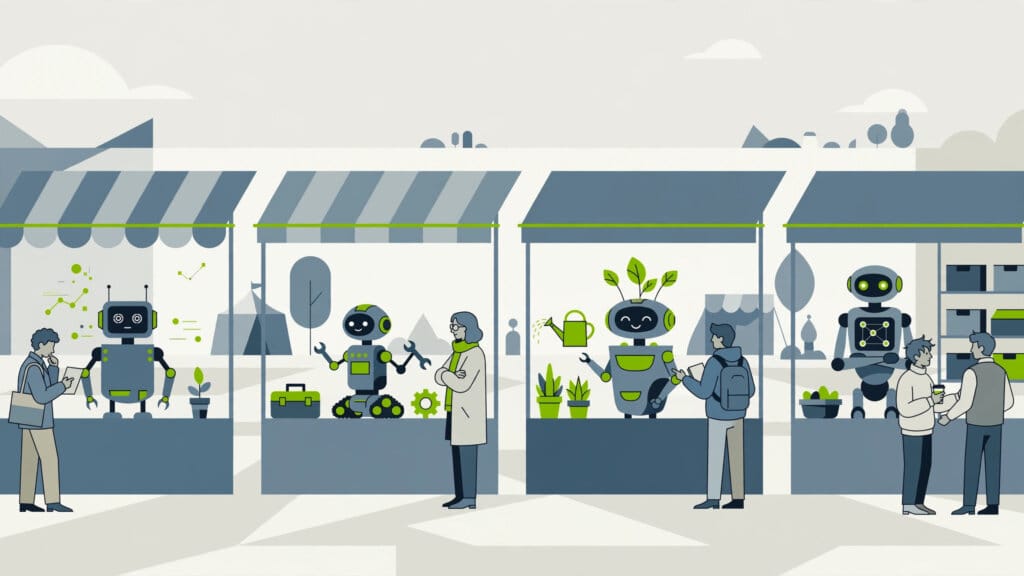
Every major AI company now sells agents, but the market has a shape worth understanding. On one side stand the platform giants — Google, OpenAI, Anthropic and Microsoft — building agents into products billions of people already use. On the other stand the independents, led by names such as Manus and OpenClaw, trying to prove a dedicated agent can beat a bundled one.
This is the 2026 map: who the serious platforms are, what distinguishes them, and why the contest matters for anyone choosing tools this year.
The giants bundle agents into everything
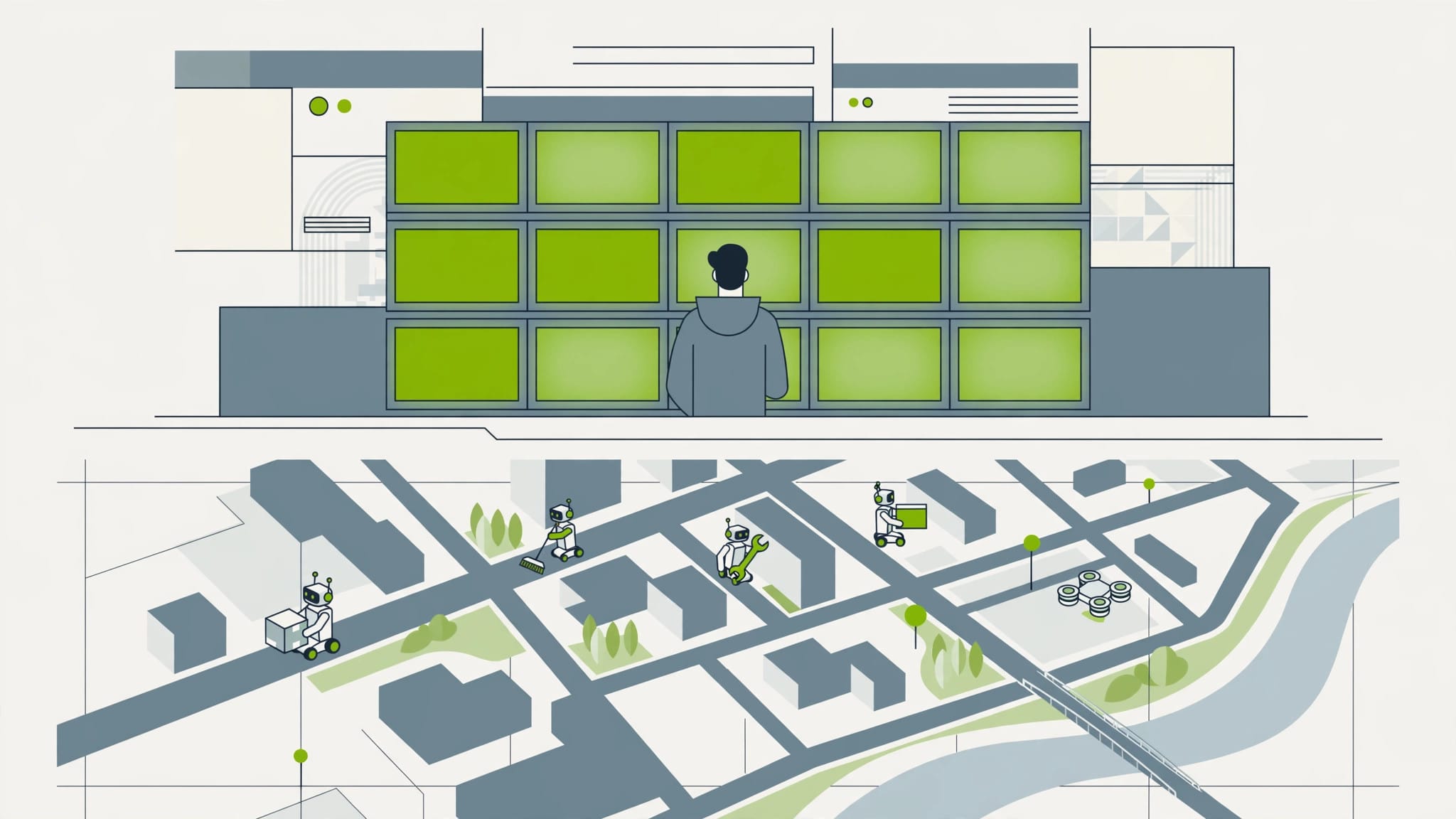
The big labs’ strategy is distribution. Google weaves agents through Search, Gemini and its shopping layer — the Universal Cart checkout in Search and Gemini is an agent doing commerce. OpenAI and Anthropic push agents into their assistants and developer platforms, and Microsoft embeds them across Windows and its 365 suite.
Bundling is a powerful advantage. The agent inherits the user’s accounts, payment details, files and habits, which are exactly the things an agent needs to be useful. A laptop that runs agents locally is the same play in hardware form, as the RTX Spark machines showed at launch.
The giants also sell the picks and shovels: agent-building frameworks, tool protocols and cloud runtimes that let other companies construct agents on their models. Win or lose any single product fight, they collect rent on the whole category.
The independents: Manus, OpenClaw and the specialists
Manus made the independent case famous: a general agent that takes a task — build this analysis, research this market, produce this deliverable — and returns finished work rather than a chat transcript. Its pitch is depth: long-running tasks, real tooling, deliverables you can hand to a client.
OpenClaw represents the other independent path: open, self-hostable agent infrastructure that developers run themselves. Where Manus sells a finished service, OpenClaw sells control — your data, your machine, your rules — and it has become a reference point for the open-source agent scene.
Around them sits a tier of specialists: coding agents, research agents, sales and support agents, each narrowing the job until reliability is achievable. The specialists rarely make headlines, but they are where much of the paying usage already is.
What separates the serious platforms
Four things distinguish a platform from a demo. Tool breadth: how many real systems the agent can touch. Run length: whether it survives a two-hour task or dies at minute ten. Verification: whether it checks its own work or merely asserts success. And governance: permissions, budgets and logs that let an organisation trust it with real access.
Price is the fifth, quieter separator. Agents consume models by the task, not by the message, so a platform’s cost per completed job — including the failed attempts — decides whether the economics beat hiring the work out.
How to choose in 2026
Start with the job, not the brand. If your work lives inside one ecosystem — Google Workspace, Microsoft 365 — the bundled agent will usually win on access alone. If the task is a self-contained deliverable, an independent like Manus is built precisely for it, and if control and privacy dominate, the OpenClaw route keeps everything in-house.
Expect consolidation. Agent platforms are expensive to run and the giants can subsidise theirs for years. But the category is young enough that the map will be redrawn at least once more before it settles — which is exactly why it is worth knowing the players now.
The question underneath: who owns the relationship?
Agent platforms are fighting over something more valuable than features. Whoever supplies the agent sits between the user and every service the agent touches — the shops, the calendars, the banks. That is the position search engines and app stores made fortunes from, and it is why the giants will subsidise agents long past the point an independent could match.
The independents’ counter-argument is neutrality and depth. A platform that only does agents, for every ecosystem at once, can be better at the job than a giant for whom agents are one feature among fifty. Manus built its name on exactly that claim; OpenClaw’s community makes it from the open side.
For buyers, the safest reading of the market is that no position is final. Contracts are short, tools change quarterly, and the platforms on this page are best treated as current answers, not permanent ones. The agent layer is the most contested real estate in AI right now — and 2026 is the year the contest stopped being theoretical.

0 Comments