
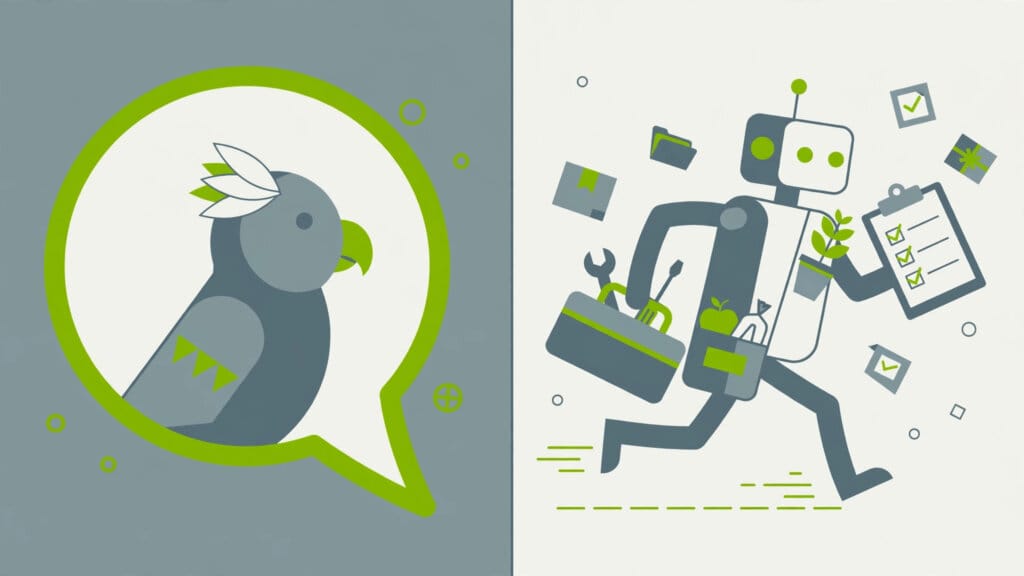
“Agent” is the AI industry’s favourite word of 2026, and it is often pasted onto ordinary chatbots to make them sound new. The two are built from the same models, and they can look identical on a screen. But they differ in the one way that matters: a chatbot talks; an agent acts.
Here is the difference in plain terms — what each one does with your request, how much rope each is given, and how to tell which one you are actually using.
The core difference: output versus outcome
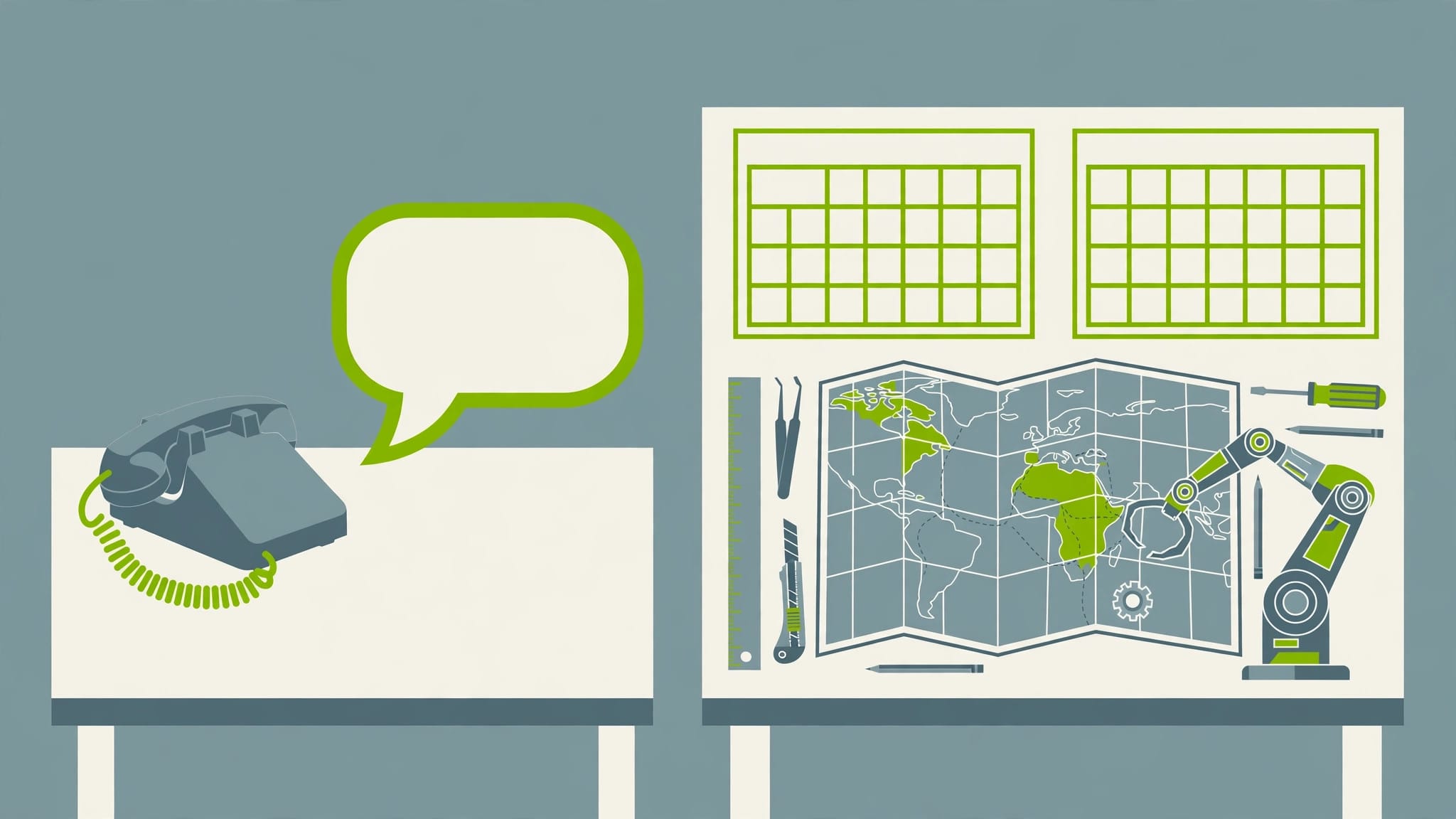
A chatbot’s job ends at the reply. Ask it how to plan a Lisbon trip and it returns an itinerary — good advice, but advice. Booking, checking and paying remain your problem. The chatbot’s output is text, and its success is measured by whether the text satisfied you.
An agent’s job ends at the outcome. Give it the same trip and it searches live inventory, applies your constraints, holds or books the options and reports what it did. Its output is a changed state of the world: a reservation that exists, a file that is updated, a cart that is checked out.
You can see the shift in search itself. The classic answer box is a chatbot pattern — it tells you things. The new shopping layer, where the assistant assembles and buys a basket for you, is the agent pattern arriving in the same window. Telling and doing now sit one tab apart.
Five practical tests
First, initiative. A chatbot waits for each prompt. An agent, once given a goal, generates its own next steps. If the software only ever responds, it is a chatbot, however it is branded.
Second, tools. Chatbots primarily produce language. Agents call tools — browsers, databases, payment systems, other applications — and the quality of an agent is largely the quality of its toolset. No tools, no agency.
Third, memory of the task. A chatbot remembers a conversation. An agent remembers a job: what has been tried, what failed, what remains. Fourth, error recovery: a chatbot that fails gives a worse answer; an agent that fails tries another route, because the goal, not the reply, is the point.
Fifth, accountability. When a chatbot errs, you get a bad paragraph. When an agent errs, something happens — money moves, messages send, records change. That is why agents come wrapped in permissions, limits and logs, and why rolling them out is slower than the demos suggest.
Why the confusion exists
The honest reason is that the boundary moves. A chatbot given a browser tool and a shopping budget becomes a simple agent. Vendors slide along that spectrum and advertise the far end of it. The same product can honestly be a chatbot in one mode and an agent in another.
The commercial reason is simpler: “agent” is where the money and the headlines are in 2026. Every assistant roadmap promises agents, so every chatbot release borrows the word. The five tests above are the consumer’s defence against the relabelling.
Which one do you actually need?
For questions, drafts and decisions, a chatbot is not a lesser tool; it is the right one, and its passivity is a safety feature. You stay in the loop, and nothing happens that you did not approve line by line.
Agents earn their complexity when the work is multi-step, digital and verifiable — research with sources, monitoring with alerts, transactions with limits. The rule of thumb forming across the industry: chatbots for judgement you want to keep, agents for errands you want to delegate.
The direction of travel
None of this means chatbots are being replaced. It means they are being promoted: the chat window is becoming the control panel from which agents are dispatched, questioned and overruled. The conversation does not disappear; it becomes the management layer for work done elsewhere.
You can already see the hybrid form in the wild — assistants that answer in chat, then ask permission to go and do the thing they described. That permission moment is the seam between the two technologies, and product designers are putting more thought into it than into any model upgrade.
So the practical takeaway for 2026 is not to ask whether a product “has agents.” It is to ask where the seam sits: what it may do alone, what it must ask about, and what it can never do at all. Products that answer those three questions clearly are the ones worth trusting with real work.

0 Comments