
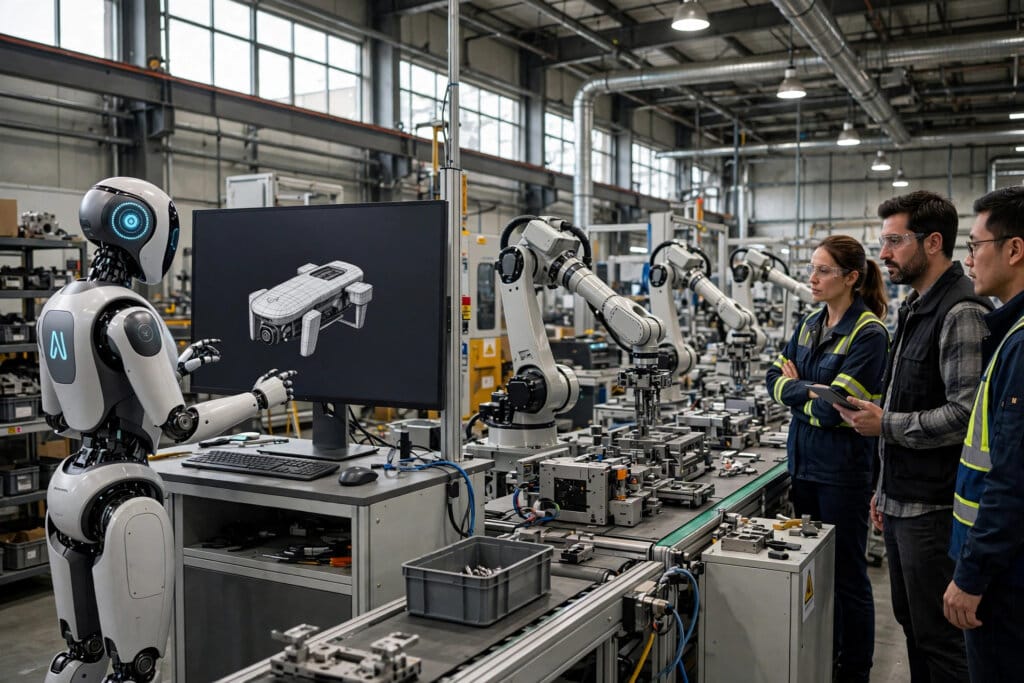
Arda Industries, the manufacturing AI company founded by former OpenAI chief research officer Bob McGrew, emerged from stealth on Tuesday, October 20, saying it has raised $232 million in total funding. Its $160 million Series A, co-led by Altimeter, Accel and Khosla Ventures, values the company at $1.5 billion, the company announced in its official launch release.
Arda’s software turns a product design into a working assembly line — and keeps that line current when the design changes. It is already deployed at defence company Anduril, its first design partner and customer, as part of Anduril’s ArsenalOS manufacturing software.
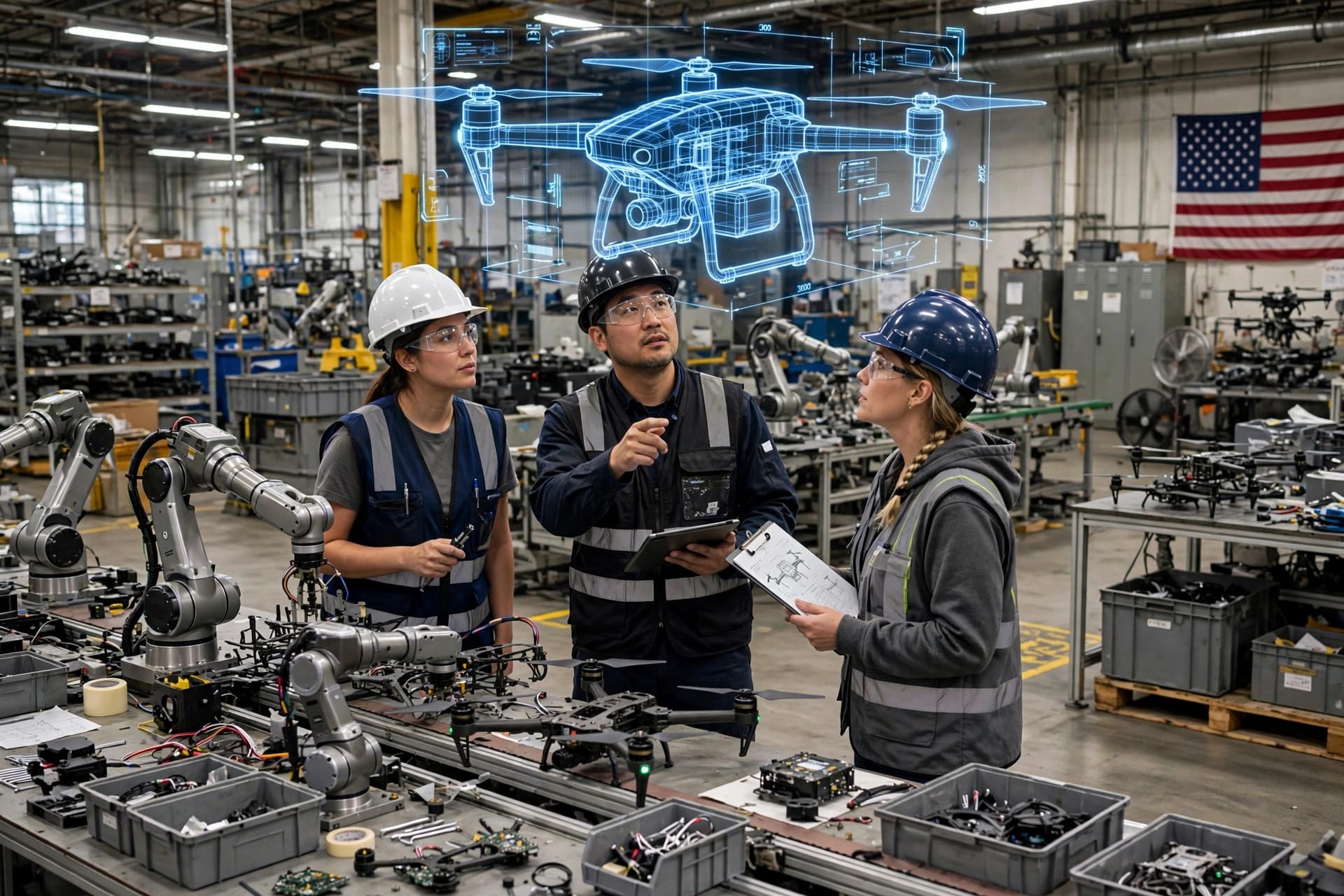
Arda’s Funding: A $160 Million Series A On Top Of A $72 Million Seed
The $232 million total is made up of two rounds. The Series A raised $160 million at the $1.5 billion valuation, with participation from XYZ Venture Capital, 8VC, SVAngel and Felicis alongside the three co-leads. It follows a $72 million seed round led by Accel and Founders Fund, with Khosla Ventures and XYZ Venture Capital also participating. CNBC, which interviewed McGrew for the launch, reported the total as about $230 million — the company’s own release gives the exact $232 million figure and the round-by-round breakdown.
Arda said it will use the funding to grow its engineering and research teams, expand deployments with manufacturers in defence, electronics and the data centre supply chain, and develop the robotics models needed to automate assembly. The round follows the same pattern as other physical-world financings today, including ASI’s $325 million Series C at a $3 billion valuation: investors backing AI that operates on factories and infrastructure, not only on text.
What Arda’s AI Agent Does: From CAD Files To Assembly Instructions
Arda’s agent works from a product’s CAD files and other design artifacts. It works out the assembly order, writes the work instructions and lays out the stations — the manufacturing engineering that today has to be redone, largely by hand, every time a fast-changing product is revised. The company compares a modern product to a 7,500-piece set that arrives with no instruction book.
The deployment numbers at Anduril are the proof point Arda leads with. Basic work instructions that once took 10 hours can now be created in 15 minutes, the company said, while more complex engineering workflows that previously took up to 30 hours now take roughly 2.5 hours. Anduril co-founder and chief operating officer Matt Grimm said Arda helps its engineers get design changes onto the floor faster and catch potential issues sooner.
The problem is a timing mismatch. Hardware now changes at software pace — only about a quarter of a phone’s parts carry over between generations — while programming conventional automation for one station can take three to six months and cost close to $1 million, by which time a product with a four-month production run has moved on. Humans learn new instructions in a day; automated lines cannot — a core reason fast-changing consumer hardware is not built at scale in the United States.
Arda’s Roadmap: AI Agents That Program The Robots
Arda is starting in defence and the data centre supply chain — it works with manufacturers of transformers and electrical equipment that bring power online — with consumer electronics next. Its next step, already in prototyping, is to use AI agents to program robots to carry out its assembly plans station by station, so automated lines can be updated in days rather than months.
McGrew’s team is built for that crossover. Co-founders include Augustus Odena, chief AI officer, who co-founded Adept and worked at Google Brain and Meta; Alex Mark, chief technology officer, a former Palantir engineering leader; and Jakob Frick, previously at Palantir and SpaceXAI. The wider team includes engineers from Palantir and Tesla and AI researchers from MIT. The profile matches other founder-led physical AI bets backed this week, such as Eka Robotics’ manipulation model and Reliable Robotics’ autonomous flight system.
Why It Matters
The central entity is Arda, and the attribute that changed is visibility: a company built in stealth is now a $1.5 billion business with a named customer, measured time savings and a robotics roadmap. Its neighbours are the story — US manufacturers, whose constraint is the engineering hours needed to turn designs into lines; defence producers such as Anduril, iterating weapons and drones under live demand; and the data centre supply chain, where transformer output now gates AI build-out itself. McGrew described the product to CNBC as an agent that does for manufacturing engineers what Claude or Cursor does for programmers. If that holds in production, where fast-changing products can be built becomes a software question rather than a labour-cost question.
Background
Bob McGrew led product and engineering at Palantir through its first decade, then joined OpenAI when it was a small nonprofit lab, leading its research team from 2018 and leaving as chief research officer in September 2024. He founded Arda with colleagues from Palantir and Adept, and the company began working with Anduril before it was even incorporated. Its stealth period produced the $72 million seed and the ArsenalOS deployment; Tuesday’s launch, Series A and $1.5 billion valuation make it one of the best-funded attempts yet to bring software-speed change to American factory floors.
Source: Arda official announcement via Business Wire; CNBC interview, via Zot News





0 Comments