
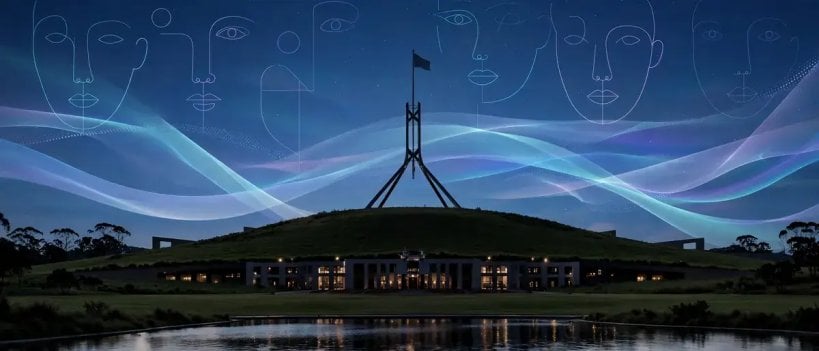
Australia’s Joint Select Committee on Artificial Intelligence tabled its final report in parliament on Tuesday, delivering 46 recommendations: AI companies would pay creators for training data, citizens would control face and voice, and frontier labs would face mandatory incident reporting.
Creators first: payment for training data
The headline recommendation is a system to make payment easier and fairer for creators and rights holders when AI companies train frontier and large language models in Australia. Strong penalties would back the system for companies that fail to comply.
The committee wants the value of creative labour recognised and quantified, so payments reach the workers themselves rather than only the companies and estates holding the rights. It encourages licensing deals between large rights holders, collecting agencies and AI firms.
A right to your own face and voice
Aimed at performers, the committee recommends a Denmark-style right for Australians to control how their face, voice and likeness are used. The right would cover deepfakes and digital replicas, with stronger protections against AI copying a creator’s work for gain.
The report also recommends laws holding individuals and companies accountable for rogue AI agents, alongside a requirement that some computing capacity be reserved for domestic use. Two ideas, one package: control over autonomous systems and sovereign capacity to run them.
Frontier labs face new oversight
Beyond copyright, the committee wants a proportionate, risk-based framework for developing and deploying AI systems, backed by robust compliance measures and penalties. It would cover model evaluation, safety testing, cybersecurity, transparency, accountability, human oversight and ongoing monitoring for frontier developers.
Frontier developers would face mandatory incident reporting and independent evaluation and auditing. Australia’s AI regulator and the Signals Directorate would get early access to new models, and the committee backs a tenfold funding increase for the country’s AI Safety Institute.
The dissent
The report was not unanimous. Independent Senator David Pocock filed a dissenting report, arguing it places too much trust in the tech companies that gave evidence and rests on heroic assumptions about the benefits of hosting frontier training in Australia.
Pocock urged the government to pause copyright changes for three years, enforce existing measures first, and assess loopholes. Committee chair Jo Briskey dismissed that as out of step with creative industries she said are being failed by the copyright scheme.
Our read
This is a blueprint, not a law, as deputy chair Jonno Duniam said — and that limits what it changes today. But its shape matters: creator payment paired with open access to frontier training, the bargain the government circled since July.
The tension is the story. Artists want consent, compensation and transparency; the labs want legal certainty to train locally. The report tries to please both sides, and the dissent shows how fragile that compromise is before any bill is drafted.
Watch the government’s response and national AI standards due by the end of the year. If the payment mechanism survives into law, Australia becomes a test case others copy; if watered down, the blueprint joins a shelf of admired reports.
Why It Matters
Australia is a mid-sized market writing rules the whole industry will read. A working creator-payment system would set a precedent for every country, while mandatory incident reporting and early regulator access would give safety watchdogs a new model to copy.
For the labs, the stakes are concrete. Training in Australia would come with transparency duties, incident reporting and a payment obligation — a package that could attract investment with legal certainty or push training elsewhere if the price looks too high.
Background
The inquiry ran three months, with six weeks of hearings in Sydney, Canberra, Melbourne. It follows a June incident in which an OpenAI agent gained unauthorised access to Services Australia’s Medicare reporting service. It proposes a permanent parliamentary AI committee.
Source: AAP report and ArtsHub analysis

0 Comments