

India has overtaken the United States as ChatGPT’s largest market by weekly active users, OpenAI’s India chief has said, capping a year in which the country’s user base doubled. Prabhjeet Singh, OpenAI’s managing director for India, said on 3 November that Indian users are weaving the chatbot into daily work and finding uses well beyond casual questions. The milestone moves India up from second place, where it sat in February with more than 100 million weekly users, and it sets up the company’s next push: local languages, Android-first design, advertising and payments built for Indian users.
How India moved past the United States
The climb has been built on price and presence. OpenAI opened its first India office in Delhi NCR in August 2025, and the same month it launched ChatGPT Go, a plan priced at under $5 a month for a market where the $20 Plus tier had few takers.
It then made Go free for a year for Indian users who signed up from November 2025. Age is the other driver: OpenAI said in February that 18 to 24-year-olds account for nearly half of ChatGPT usage in the country, and India also had the largest number of student users anywhere.
What comes next: language, Android and payments
Singh’s focus now is the users still outside that base, and he puts the barrier at language and access. Most of India does not use English as a first language, so OpenAI is expanding Hindi and vernacular voice support, building for entry-level Android phones with little spare memory, and developing Android-first rather than building for iPhones and porting later.
Payments are the piece still missing, and announcements on UPI and payments are expected in the coming weeks. OpenAI, India’s NPCI and Razorpay already ran an agentic-payments pilot in October 2025 that lets a user buy and pay inside a ChatGPT conversation, using UPI Reserve Pay and UPI Circle, with Axis Bank and Airtel Payments Bank as banking partners.
The money side: ads, enterprises and local compute
The gap between users and revenue is the sharpest fact about India for every AI company. OpenAI began showing ads to logged-in adults on the Free and Go plans at the end of August and is now expanding them in India, and it has partnered with Razorpay to bring Indian brands in, with advertisers including Tanishq, Tata Neu and Shaadi.com.
Enterprises are moving fast, too. Global capability centres and startups are shifting from pilot projects to production deployments, Singh said, naming JioHotstar and Cars24, and Indian businesses are also getting new tools to track how customers reach them through ChatGPT.
India is also among the largest and fastest-growing markets for Codex, OpenAI’s coding agent, with much of the developer use coming from tier-II cities. That matters because OpenAI is merging ChatGPT and Codex into one shared usage pool from December, so the same developers will draw chat, work and coding from a single allowance.
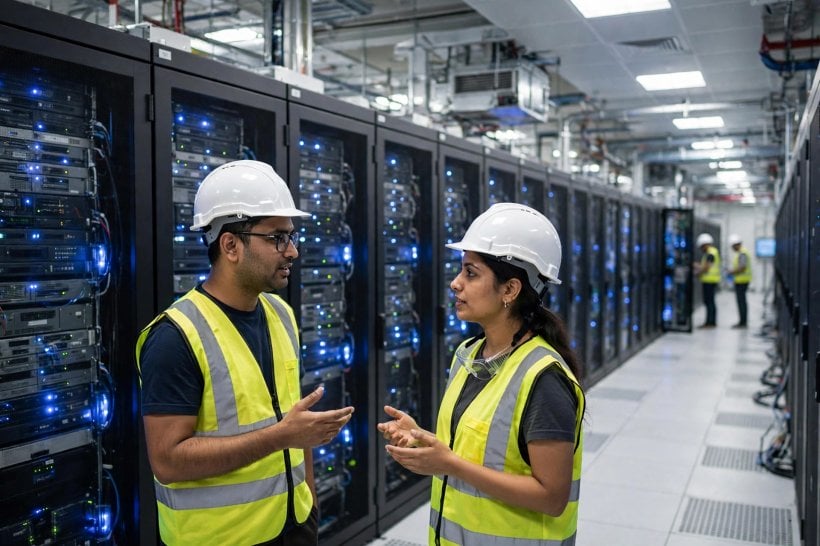
Local computing is the other half of the enterprise story. OpenAI’s partnership with TCS’ HyperVault data centre business starts at 100 megawatts and could scale to one gigawatt, giving banks, insurers and government departments the data residency they increasingly demand before signing anything.
Our Read
The ranking is real, but it is a volume story before it is a money story. Sensor Tower data puts India’s mobile app market at a record $345 million in consumer spending in the June quarter, up 35 percent year on year, while United States app revenue fell 3 percent.
Even so, OpenAI’s India chief says the immediate priority is expanding impact rather than converting users to paid plans. That is a deliberate trade: ChatGPT was the most downloaded app in India, with downloads past 358 million, and scale first, monetisation second, is the only way to hold a market where the next billion users arrive on cheap Android phones.
The competitive picture sharpens the point. Anthropic’s Claude ranked only fifth among generative AI apps in India by downloads but second by revenue, with its India revenue up more than 19-fold year on year, and the two apps together took nearly 83 percent of India’s AI app revenue.
OpenAI’s answer — UPI payments, Razorpay ads and local compute — is aimed at turning its user lead into a revenue lead before rivals close the gap. If the payments launch lands in the coming weeks as promised, India stops being just OpenAI’s biggest audience and starts being the test bed for how ChatGPT makes money worldwide.
Why It Matters
India passing the United States changes where OpenAI builds next. A Hindi-first, Android-first, UPI-ready ChatGPT is a different product from the one built for San Francisco, and whichever assistant wins India’s hundreds of millions of new users will set the template for the rest of the developing world.
Background
OpenAI opened its first India office in Delhi NCR in August 2025 and launched the OpenAI for India programme at the India AI Impact Summit in February, with offices in Mumbai and Bengaluru planned. Singh, named OpenAI’s first managing director for India in June, reports to Kiran Mani, the managing director for Asia Pacific, and has backed clear AI regulation.
Source: The Economic Times report and Indian Startup News coverage


0 Comments