

Genspark has launched Media Studio, an all-in-one AI video studio that turns a few prompts into a finished video, from script and storyboard to voiceover, music and editing. An agent acts as the director: Claude Opus 5.5 and Fable 5.1 plan the piece, write the script and write the code, while GPT-6 Astra checks the work in a 3D director stage. The studio is available now inside Genspark.
An agent runs the production
The point, Genspark says, is that a generation model does not make a video. Something has to plan the piece, write it, storyboard it, check it and cut it, and in Media Studio that falls to the agent. Users describe what they want briefly, agree the concept, script, storyboard and budget with the agent, and the system renders the result.
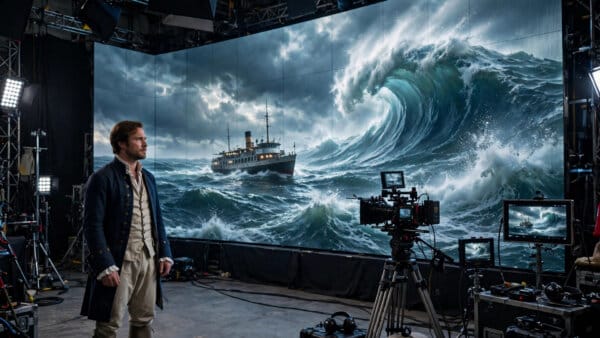
The 3D director stage is the most distinctive part of the pitch. Scenes are first blocked out as white models, letting creators judge composition and camera movement before rendering begins. GPT-6 Astra then verifies the work multimodally, a step Genspark presents as the guardrail between a fast draft and a finished piece.
Once a first cut exists, Media Canvas gathers assets in one place, and an editor takes over. It includes a layer editor, a multi-track video timeline, a motion studio, a 3D white-model director stage for blocking out scenes, and an interactive film and game engine. Anything the user dislikes can be circled on the frame, with notes on changes.
From a short ad to a short film
Genspark pitches one pipeline for different jobs: a 15-second advertisement, a 10-minute short drama, a poster, or a film for a games platform. The range is the point, the company says: one studio handles today’s clip and the long-delayed project. Genspark Magic can start from a piece the user admires, carrying its look, pacing and mood into an idea.
Audio is part of the canvas. The director brain orchestrates dozens of models across image, video, audio and 3D, drawn from a dozen-plus providers, including Seedance 2.5, GPT Image, Nano Banana, ElevenLabs and Seed Audio. Voice work is therefore built into the pipeline, as with generated video soundtracks elsewhere, as covered in our report on ElevenLabs’ instant video soundtracks.
Launch coverage also highlights a Story Bible feature that saves character settings and reuses them across shots, plus partial reshoots and frame-level editing. Those features address the consistency problem that has dogged AI video, where a character can change appearance from one shot to the next.
Genspark has not, in the blog post, published pricing for Media Studio, and launch coverage describes a limited-time credit promotion for paying plans. That leaves the real cost of a finished video unclear until users test credit consumption on longer projects.

Why It Matters
Media Studio matters because it marks a shift in AI video from models to workflows. The contest is no longer about which model renders the prettiest clip, but about which system can carry a project from idea to finished edit with the fewest human interventions. It will be judged on whether creators finish projects faster, not on demo reels.
The competition is moving the same way. Google’s Flow and Veo tools have pushed AI video from clips toward editable projects, as explained in our guide to making AI videos with Flow and Veo. Genspark’s answer is to be model-agnostic: as new models ship, it says, they join the studio, so users are working with the strongest ones available.
The open question is quality control. Genspark says the agent runs generation, quality checks, editing and compositing, but the blog shows finished examples rather than failure rates. Creators will judge the studio on how often the first cut is usable, and how much rework the frame-circling workflow actually saves.
Background
Genspark is a Silicon Valley all-in-one AI workspace. Media Studio was announced on its blog on 27 October, with launch coverage following on 29 October.
Source: Genspark announcement and launch coverage



0 Comments