

India’s Defence Secretary Rajesh Kumar Singh said on 23 October 2026 that India is building its own artificial-intelligence layer for the armed forces, developed with the IndiaAI Mission, according to ANI. Speaking at KPMG’s Agrasar Bharat Manch, Singh said AI is already being put to work in decision support, target acquisition, data fusion and sensor-to-shooter loops, but the kind of military data involved means India cannot hand the job to foreign companies: “we have to develop our own AI layer for our services”. The computing capacity for the programme has already been procured, and the defence establishment plans to build it with private industry partners already selected under the IndiaAI Mission. Collaboration with friendly countries, he added, remains open.
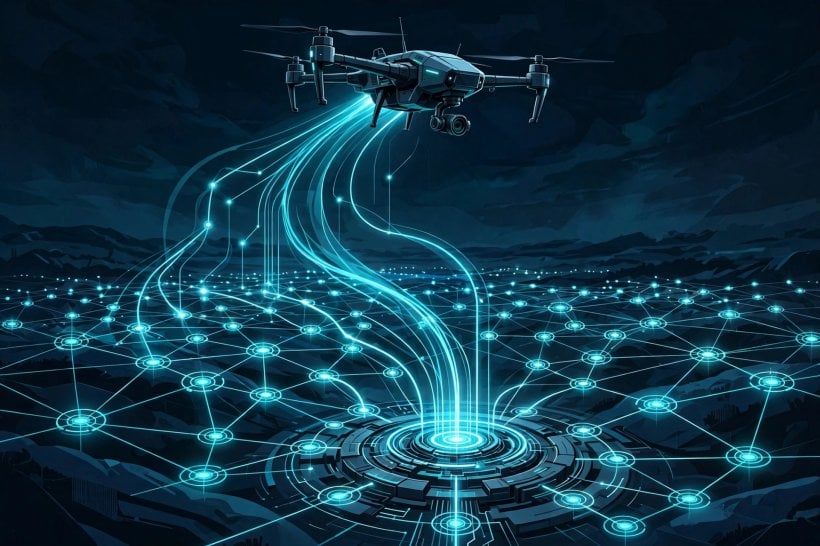
Military Data Is the Deciding Argument
The case Singh made was blunt: the technology is too critical to rent from abroad. AI will sit across the armed forces’ decision chain, from fusing sensor feeds into a single operational picture to compressing the sensor-to-shooter loop that decides how fast targets are identified and engaged. Because those pipelines run on classified operational data, a foreign model or cloud dependency is treated as a strategic liability — an argument that now echoes the logic behind sovereign AI programmes in other large militaries.
That logic is not abstract anymore. Elsewhere, Western militaries are already fielding autonomous software agents and locked-in targeting systems — from the US Army Cyber Command’s ECHOTRIBBLE agents to Palantir’s Maven NATO system with no kill switch. India’s position is that it will not be a customer in that stack; it will own the layer.
Private Industry Gets a Seat at the Table
The announcement came packaged with a broader industry push. The government is opening DRDO-developed conventional missile technologies to private manufacturers through technology transfers, and roughly 17 large private and public players have taken up or are in the process of taking up the offers, the Financial Express reported. A new procurement framework promises five years of assured orders for successful defence-startup prototypes, with contracts worth around Rs 2,000 crore already signed under the scheme.
The direction is clear: the state retains the strategic core while private firms get guaranteed demand to scale production. For an AI layer that will need chips, sensors and software engineers at volume, that guaranteed-demand mechanism is likely to matter more than any single technology transfer.
Record Exports and a Rs 1.78 Lakh Crore Production Base
Singh also laid out the numbers behind the indigenisation drive. Defence exports hit a record Rs 38,424 crore — about €3.6 billion — with equipment reaching more than 80 countries, making India the third-largest arms exporter to Europe. Domestic defence production stands at nearly Rs 1.78 lakh crore, and the government aims to spend 75 per cent of annual defence capital expenditure — roughly $20–25 billion — inside the country.
An AI layer built on this industrial base rather than imported wholesale fits the same pattern: keep the spending, the data and the intellectual property at home. It is the attribution-era lesson from Western cyber operations applied to procurement — dependence is a vulnerability.
Cheap Guns for the Drone Era
Singh offered one telling example of the doctrine the AI layer will serve. India’s Integrated Air Command and Control System is now fully networked, he said, and vintage air-defence guns — retrofitted with modern fire control — have become useful again against drones. The economics are the point: firing a retrofitted gun at a cheap drone makes sense when the alternative is a missile costing Rs 5–10 crore each. AI-assisted sensor fusion is exactly what makes those old guns hit.
Why It Matters
India’s sovereign military AI layer is the latest sign that the world’s large militaries are building their own AI stacks rather than renting Western models — and the IndiaAI Mission’s computing capacity now has its first large-scale defence application. The military-data-sovereignty argument is fast becoming the standard justification worldwide, and it is one that no export control or licensing regime can override: the data never leaves. With private industry holding technology transfers and five-year assured orders, the programme has the demand pipeline most sovereign-AI efforts lack. Watch the fine print of the IndiaAI Mission partner list — whichever firms build this layer will own the template for India’s defence AI for a decade.
Background
The IndiaAI Mission is India’s national AI programme, which has been procuring compute capacity and partnering with private industry for civilian applications; Singh’s announcement puts defence formally on its roadmap. The push extends the Atmanirbharta (self-reliance) drive that has spent a decade moving Indian defence production from import dependency to record domestic output and exports.
Source: ANI; The Financial Express


0 Comments