

Ukrainian drones struck five Russian data centres in October, hitting three facilities run by technology giant Yandex, one belonging to Sberbank, Russia’s largest bank, and one serving social network VKontakte, in a campaign that disrupted banking, payments, taxis and cloud services across the country and may have damaged the supercomputers Moscow relies on to develop its AI models. The Associated Press reported the full scale of the attacks on October 22; Yandex acknowledges two of its sites were completely suspended. Experts cited by AP warn the repairs could take months or even years, setting Russia’s AI development further behind the United States and China.
Five Facilities Hit In Twelve Days
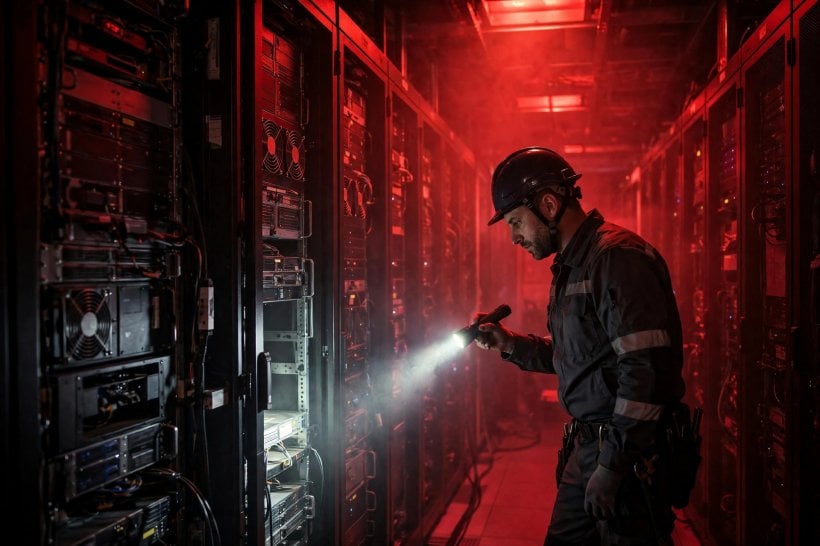
Between October 7 and 11, Ukrainian drones struck three Yandex data centres, in Sasovo in the Ryazan region, in Kaluga and in Vladimir, according to an analysis by OSW, the Polish Centre for Eastern Studies. On October 14, another data centre in Balakovo, in Saratov Oblast, owned by Sberbank, came under attack. On October 18, a server facility in Leningrad Oblast used by VK, Russia’s largest social network, was also hit. Sberbank and VK confirmed strikes on their facilities while maintaining their systems ran without disruption. Yandex went further: operations at Sasovo and Vladimir were completely suspended, Kaluga’s infrastructure was hit and power systems were damaged, leaving the company in emergency mode since October 8.
The targets were not obscure: around 64,000 customers use Yandex Cloud, including major finance, retail and IT companies, and Balakovo was Sberbank’s largest data centre, where its most advanced supercomputer has been under construction since 2020.
Services Broke Far Beyond The Server Halls
The fallout reached ordinary Russians quickly. AP reports that banking, e-commerce, geolocation and ride-hailing services suffered lasting disruptions, that some users could not collect online orders, access personal data or book taxis through Yandex’s apps, and that taxi driver Pavel Belyavskiy had to cancel several trips because he could not contact passengers. The damage reached the state itself: several arbitration courts reportedly had to cancel or postpone sessions after losing access to their databases. Yandex says it restored most key cloud services within days by shifting operations to its remaining Russian data centres, but OSW estimates full restoration will take at least six months and substantial investment.
Data centres are fragile targets: dense server halls dependent on specialised power and cooling, where fire can do more harm than the blast itself. “After such a strike it is hard to expect anything to have survived: data-centre equipment is fragile, demanding and expensive,” Mikhail Klimarev, head of the Internet Protection Society, told AP. “Soot from fires is extremely harmful to electronics.”
The AI Damage Is The Hard Part To Replace
The deepest concern is computing power. The affected facilities housed Russia’s three largest supercomputers, used to develop Russian AI models such as YandexGPT and the Alisa virtual assistant. The most powerful, at Sasovo, ranked 19th in the TOP500 list in 2021 but had fallen to 101st by June 2026; no new supercomputers have entered service in Russia since 2021, and all were built on NVIDIA hardware. If reports that the machines were damaged are confirmed, as widespread problems reported by Alisa users suggest, Russia falls further behind still.
Replacement is the hard part. Connor Martin of the Council on Foreign Relations, cited by AP, said the strikes would likely delay Russia’s AI development further, and replacing US-designed Nvidia A100 chips could prove difficult amid global shortages and Western sanctions. Klimarev warned rebuilding could take more than a year and said the attacks set Russia far behind in the AI race. Eurasia Group’s Nick Reiners added that Russia’s vast territory and limited air defences make every such facility hard to protect.
Why It Matters
Ukraine’s campaign marks the moment data centres became a declared category of war target, with direct consequences for a country’s AI capacity rather than just its websites. Russia’s own rules made the damage worse: its sovereign internet policy forces companies to store data on domestic servers with no backup copies beyond the reach of drones, while Ukrainian companies kept operating through Russian strikes on their facilities by using cloud infrastructure in the European Union. The lesson travels well beyond this war, and it is the same dependence question European governments are asking about American AI platforms, as Palantir’s assurances over its NATO Maven system showed this week. States are racing to build sovereign AI capacity, from India’s planned military AI layer to Europe’s defence-tech funding behind companies like Helsing, and Ukraine has now demonstrated that the physical plant behind that capacity is only as strong as the air defence above it.
Background
The strikes followed a Russian campaign against Ukraine’s own data centres that has run since mid-September: on September 27, ten data centres in Kyiv and one in Dnipro were damaged, including facilities operated by Kyivstar and Ukrtelecom, and on October 10 Russian drones damaged a technology facility in Odesa. Data centres are the latest category of targets Ukraine has struck deep inside Russia, after oil industry facilities and e-commerce platforms.
Source: Associated Press via The Business Standard, OSW Centre for Eastern Studies


0 Comments