
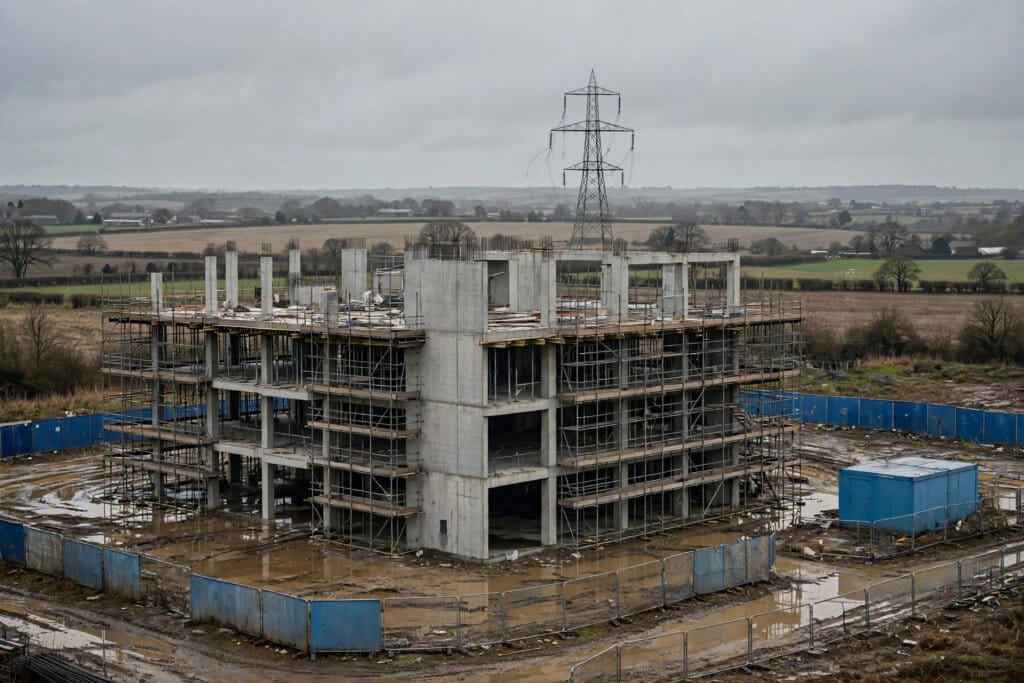
Microsoft has pulled out of its deal to serve as the anchor tenant at Nscale’s planned AI data centre in Loughton, Essex, ending its agreement to rent capacity built around 23,000 NVIDIA chips at a site that still does not have a power supply. Reuters reported the withdrawal on October 18, following the Telegraph’s reporting, and the Guardian has also reported that Microsoft informed Nscale it was ending the agreement over concerns about electricity supply to the site.
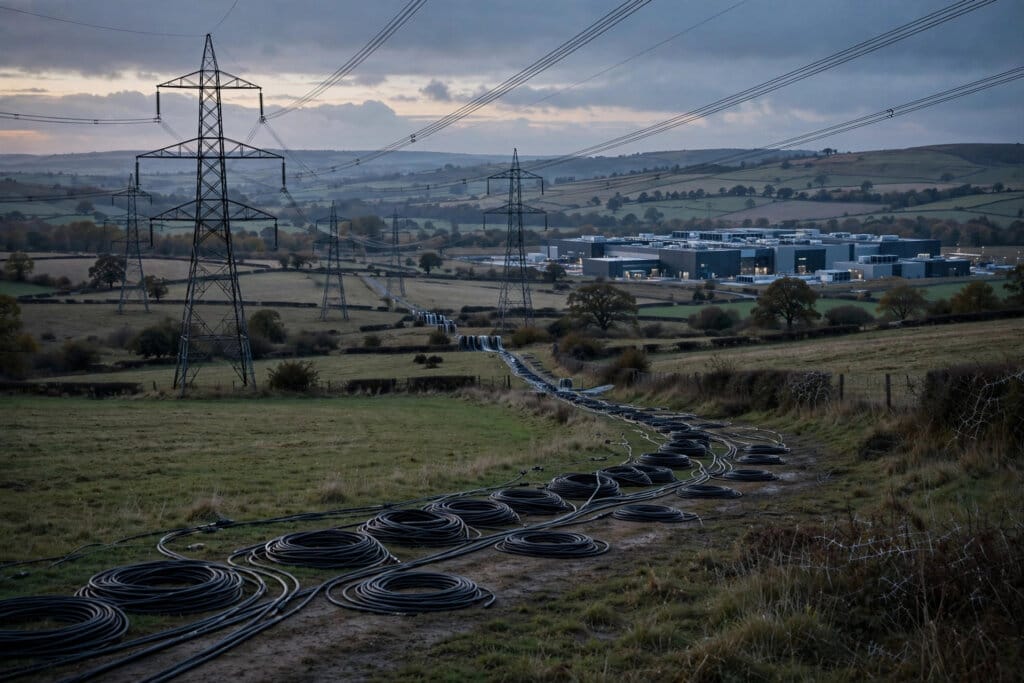
The exit leaves Nscale, the British AI infrastructure company developing the project, without its only publicly announced customer for Loughton. The site had been billed by the UK government as the country’s largest sovereign AI data centre, and it was expected to open next year.
What Microsoft Has Ended
Microsoft was not a minor customer at Loughton. It was the anchor tenant, the main customer around which the project was financed and announced, and its agreement covered the rental of more than 23,000 NVIDIA AI chips at the facility, according to the Telegraph’s reporting carried by Reuters.
Microsoft declined a Reuters request for comment on the withdrawal. The company remains involved with Nscale elsewhere, including a separate project in Norway, and the two companies have a much larger relationship covering roughly 200,000 NVIDIA GB300 GPUs across Nscale sites in the US and Europe, which Nscale says is unaffected.
That distinction matters when reading the scale of the wider Microsoft AI empire: this is one site losing its customer, not a break between Microsoft and Nscale as a whole.
The Power Problem Behind The Exit
The reason is electricity, not demand. The Telegraph reported that national grid officials had told Nscale they did not expect a power supply for the Loughton data centre until the 2030s in Britain. The Guardian had already reported in September 2026 that the grid would not be able to supply sufficient power to the site until the early to mid-2030s, and reported in March that the location was still an operational scaffolding yard.
A data centre planned around tens of thousands of GPUs cannot open in stages without its grid connection. The chips Microsoft was set to rent are the same class of hardware covered in our explainer on why NVIDIA powers the AI boom, and hardware of that class draws power at a scale a delayed connection simply cannot serve.
Microsoft has been working around exactly this constraint elsewhere by investing in its own silicon and facilities, as our explainer on Microsoft’s custom AI chips and data centres sets out. Loughton offered no such workaround on any usable timetable.
What Nscale Says Now
Nscale says it is not walking away from the site. A spokesperson told Reuters: “We remain committed to both the Loughton project and the UK, and we are exploring alternative power sources for the site, in addition to other expansion sites in the UK.”
The spokesperson added: “Our relationship with Microsoft remains strong and long-term, and this unfortunate London-wide grid issue has no impact on our other contracts.”
The timing is uncomfortable for the company. Nscale filed for an initial public offering in the US last month, with Microsoft and Anthropic expected to be its major customers according to its prospectus, and reports put the valuation it is seeking at up to $35 billion. Reuters notes the Nvidia-backed group has grown from $100 million to more than $103 billion in total contracted value in about two and a half years, competing with CoreWeave, Nebius, Crusoe and Lambda.
Why It Matters
The central entity here is the Loughton data centre, and its story is now the clearest example yet that the binding constraint on AI infrastructure is no longer chips or capital, but grid connections. A £2 billion project with a committed hyperscale tenant, government backing and NVIDIA hardware still could not proceed, because the electricity arrives a decade late.
For Microsoft, the withdrawal protects its capacity planning: anchor-tenant commitments shape where Azure AI capacity can actually be sold, and a site that cannot open until the 2030s cannot serve customers in this decade. For Nscale, losing its only announced Loughton customer weeks into an IPO process tests how investors price contracted revenue against deliverable power. And for the UK, a flagship “sovereign” AI site stalling on a grid queue undercuts the pitch that Britain can host frontier-scale compute on demand.
Background
The Loughton project was announced in September 2025 during President Trump’s state visit to the UK, as part of the £31 billion US-UK technology prosperity deal that promised up to 60,000 NVIDIA Grace Blackwell Ultra chips across Nscale’s sites, with the Essex facility presented as the future home of the UK’s largest AI supercomputer and around 250 permanent jobs. Nscale, founded as a British AI infrastructure provider and backed by NVIDIA, built its name on exactly these sovereign data centre deals. Thirteen months on, the showpiece site has lost its anchor tenant to the slowest moving part of the whole plan: the power grid.
Source: Reuters, October 18, 2026; The Brief (reporting the Guardian), October 18, 2026

0 Comments