

The National Highway Traffic Safety Administration has proposed letting driverless cars signal themselves with cyan marker lamps, in changes to Federal Motor Vehicle Safety Standard No. 108 announced October 23. The lamps would be optional, not required, and would switch on only while an automated driving system is in control and no occupant is expected to watch the road. The proposal is set for publication in the Federal Register on October 26, with public comments due November 25. NHTSA says it has not quantified the safety benefits and does not have enough information to require the lamps, but a shared signal could help police and other road users recognise when no human is driving.
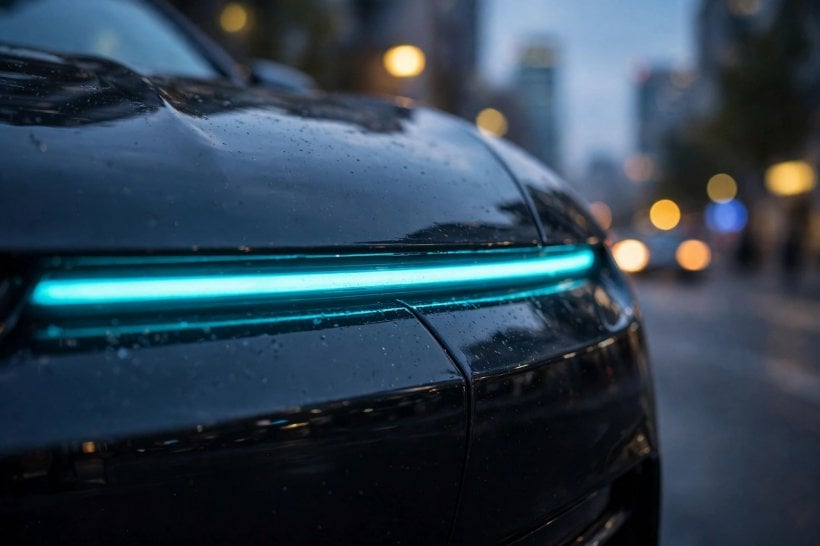
What the cyan lamps would look like
Vehicles that choose the lamps could carry four to eight of them: one or two at the front, one or two at the rear, and one or two on each side, mounted at least 15 inches above the ground. The proposed specifications draw on the SAE J3134 consensus standard. The lamps would shine steadily rather than flash, and all of them would switch on and off together. They could activate automatically while the vehicle is operating without anyone expected to watch the road, and they must switch off when an occupant is expected to monitor driving. NHTSA would set federal standards for the lamps’ colour, brightness and location, so any manufacturer that fits them uses the same setup instead of a confusing mix of colours and signals. The agency expects the optional lights to add no regulatory costs.
The standard would give robotaxi operators a single national signal to use, rather than different lights in different states, as robotaxi services expand into new countries. NHTSA names no manufacturer’s product as the reason for the change, but the proposal is written for vehicles built without manually operated driving controls, including purpose-built driverless designs.
Why cyan
Cyan fills a gap in the colours already used on the road. Red, amber and white are taken by brakes, turn signals and headlights, and flashing blue and red belong to emergency vehicles, so a blue-green lamp stands apart without mimicking any of them. There is also a precedent: Mercedes-Benz won state-level approval for turquoise lights on its Level 3 Drive Pilot cars, though it has since dropped the idea in favour of a Level 2++ system. A federal standard would replace that state-by-state patchwork with one colour, one brightness range and one set of mounting rules.
What else the proposal changes
The proposal also trims rules written for human hands and feet. Requirements for turn signal, hazard warning and headlamp beam controls would apply only to vehicles that have manually operated driving controls, and dashboard telltale rules would be narrowed the same way. NHTSA says the current standard’s assumptions about manual controls can create regulatory barriers for vehicles that were never designed to be driven by a person. The lighting proposal is part of a wider rewrite of the federal safety standards to fit vehicles operated entirely by automated driving systems.
Why It Matters
The proposal matters because it answers a question that has followed driverless cars since they reached public roads: how does a car with nobody at the wheel tell everyone else? A consistent signal helps police officers, pedestrians and other drivers recognise at a glance that an automated system is in charge, which matters most in the moments after a crash or a traffic stop. Making the lamps optional keeps costs down and avoids forcing a design choice on every manufacturer, but it also means the signal will only help if enough operators adopt it. The comment window to November 25 is where that argument will be tested, by the industry, safety advocates and the public.
Background
Driverless cars have debated self-signalling for years, with flashing text, audio alerts and custom lights all floated as options, while regulators and manufacturers argued over a common language. Mercedes-Benz tested turquoise marker lights under state approvals, the closest any carmaker has come to a production system, before abandoning it for a Level 2++ approach. NHTSA’s proposal would turn that experiment into a national option, alongside the wider push to build physical AI systems that operate in the real world without human drivers.
Source: The Verge, EconoTimes


0 Comments