
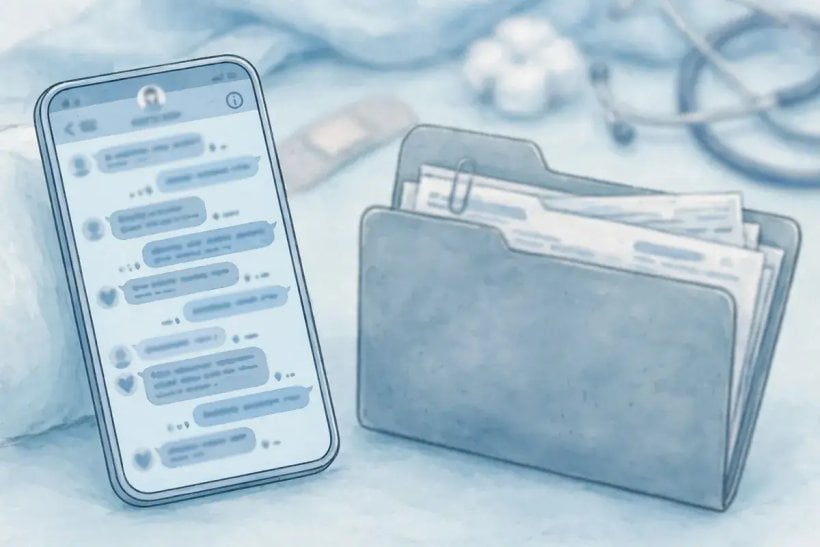
OpenAI has reversed a privacy promise it made when Health in ChatGPT launched in July. Chats that draw on connected medical records can now be used to improve its models, depending on a user’s settings. The change took effect on November 19.
What changed
The notice draws a sharp line between synced records and the chats about them. Raw records and Apple Health data still get extra encryption and are never used to train foundation models or target ads. But conversations referencing that data, and content derived from it, may now improve OpenAI’s models.
The July launch post said the opposite in plain terms. It promised that connected records and Apple Health information, and conversations that use them, would not train foundation models or target ads, regardless of the model-training setting a user chose. That blanket carve-out is now gone.
Whether a health chat enters training now turns on one switch: ‘Improve the model for everyone,’ in Settings, Data Controls. OpenAI says the setting is on by default for most personal accounts. Users who never revisit it are opted in, and the switch also covers memories from health chats.
OpenAI emailed Health users on November 12, tying the change to plans to bring Health to Android, the Mac desktop app, Sites and dots. The email said the model-improvement setting would now determine whether such chats could be used. The new notice took effect on November 19.
The shift reaches one of ChatGPT’s biggest uses. OpenAI says more than 300 million people ask ChatGPT health-related questions every week. Health itself remains limited to logged-in users 18 and older in the United States on Free, Go, Plus and Pro plans.
The change does not touch business deployments. ChatGPT for Healthcare, ChatGPT Enterprise and other hospital deployments keep the old treatment, and the synced records themselves stay out of training. Only the conversations of personal-account users, and the content derived from them, now fall under the model-improvement setting.
Our read
The quiet rollout is the story as much as the rule itself. OpenAI emailed users, but the reversal arrived in a notice update, not an announcement, and the July promise sits on its launch post. Users who trusted the blanket exclusion must now find the switch themselves.
Health chats are the data that could sharpen a health assistant, and OpenAI keeps the raw records out. But a carve-out removed quietly, leaving a default most users never touch governing medical chats, is a poor way to earn trust over medical data, especially when the old promise said ‘regardless.’
Why It Matters
More than 300 million people ask ChatGPT about their health each week, and Health grounds those questions in records. Once those chats can enter training, the most sensitive conversations a user has carry a default they never chose. The opt-out exists — but only for users who find it.
Background
Health in ChatGPT launched in the United States on July 23, letting users connect Apple Health and medical records for personal answers. OpenAI expanded into hospitals and insurers in November with ChatGPT for Healthcare, which this change does not affect. The feature is expanding to Mac, Android, Sites and dots.
Source: OpenAI’s Health Privacy Notice and Becker’s report




0 Comments