
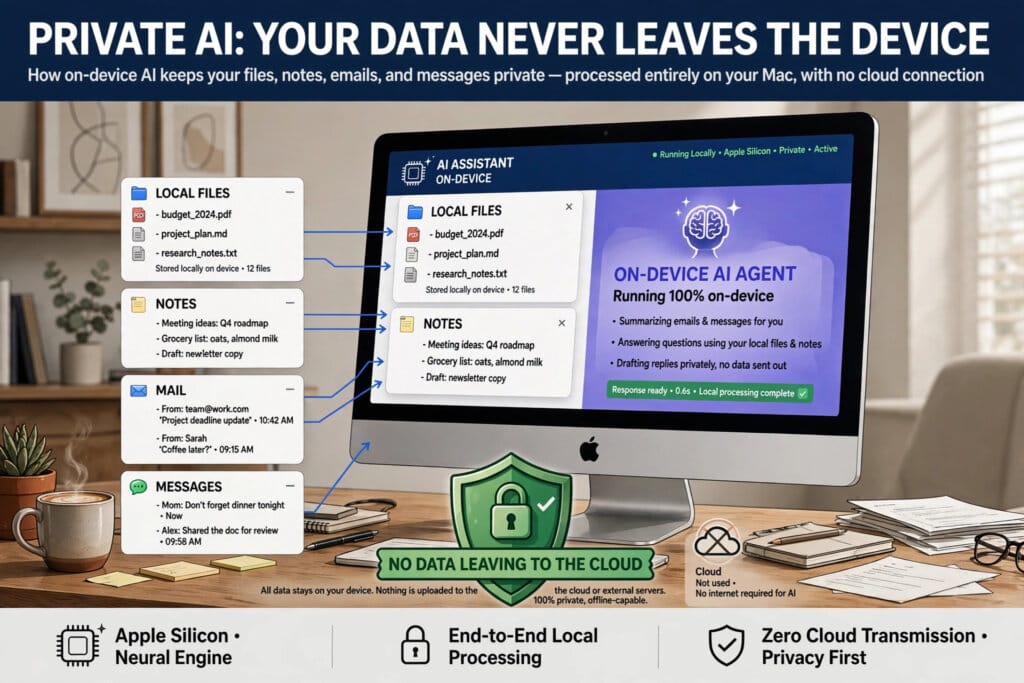
Perplexity Computer can now run fully local on a Mac. Perplexity announced on October 20 that the model, the harness and task execution can all run entirely on device, so Computer can work across local files and Mac apps without sending personal data to the cloud.
The fully local mode is available in the Perplexity Mac app to Pro, Max and Enterprise subscribers on supported Apple silicon Macs, with 36 GB of memory or more recommended. It launches with two local model options: Qwen 3.6 and PPLX Pro, Perplexity’s post-trained version of Qwen.
Perplexity Computer Fully Local On Mac: What Runs On Device
Perplexity says the whole task now runs locally: planning, reasoning and file processing stay on the Mac, powered by the machine’s own processing. That is a step beyond the two earlier stages of the same product line — Personal Computer for Mac, launched in May, which first brought Computer to local files and native apps, and last month’s Hybrid Compute, which combined frontier reasoning in the cloud with local models processing private information, coordinating the two automatically.
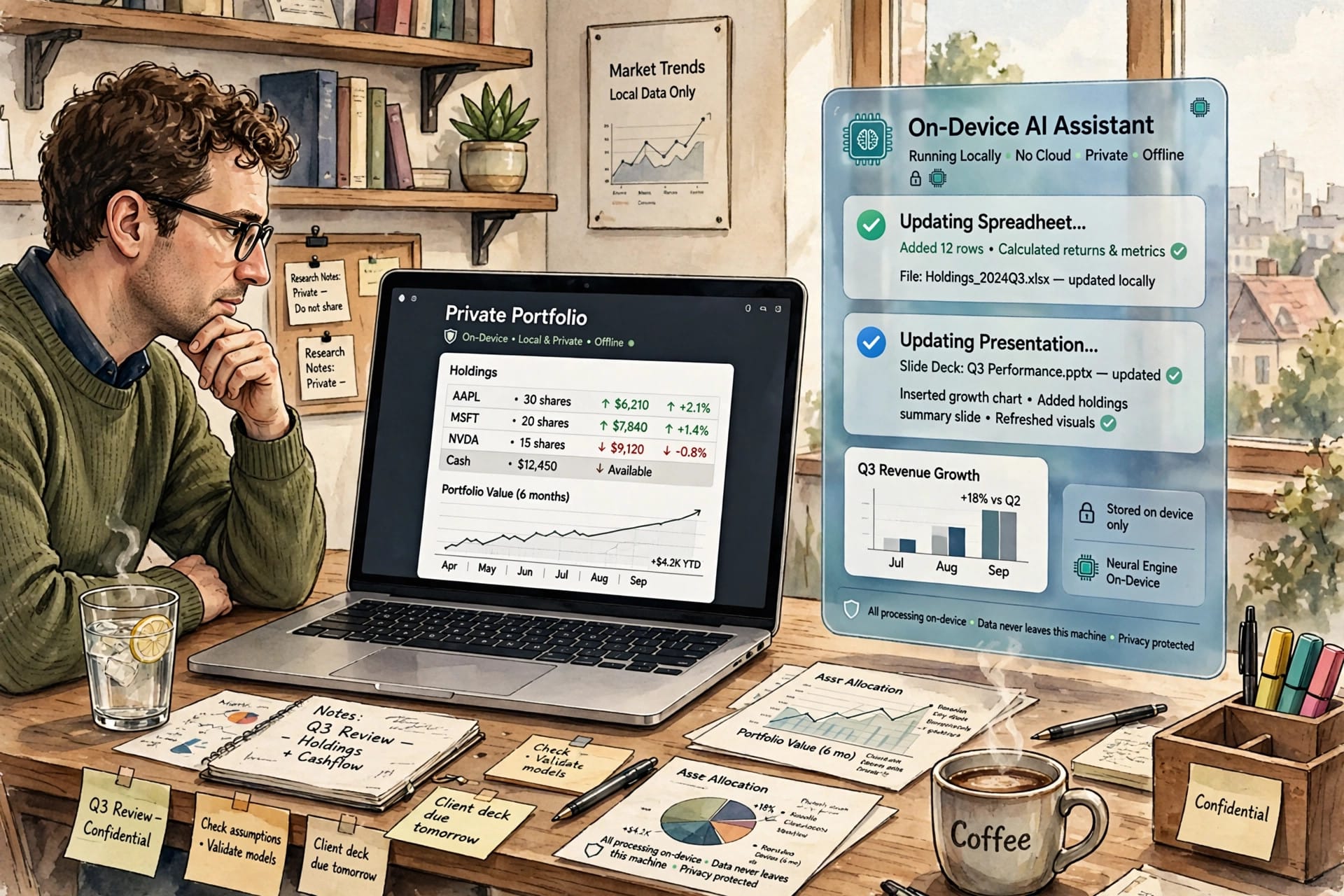
The Mac app now offers both routes side by side. Hybrid Compute starts in the cloud, coordinating research and reasoning with local work on private files. Running Computer locally starts on the Mac, and the choice of where a task runs, and how credits are spent, stays with the user. Perplexity’s examples draw the line clearly: a portfolio analysis based on private holdings and downloaded market data can run entirely on device, while a deal review combining current market research with confidential financials can use Hybrid Compute.
Local is not a dead end. Users can authorise Computer to escalate to the cloud for current information, browser use and connected apps, and the local orchestrator can call on more than 15 frontier models for advanced reasoning when the user allows it.
Files, Apps, Sandboxing And Availability
With permission, Computer works across local files and supported apps, including Notes, Messages, Mail and Numbers. Perplexity’s worked example has it reading a project’s to-do list in Notes, checking a teammate’s request for a budget update in Messages, pulling planned and actual spending from a spreadsheet, and then preparing a status update with open tasks and remaining budget and sending a meeting invitation.
Its other examples cover a portfolio review that flags concentration risk and allocation drift and updates a workbook and deck for an analyst, a client proposal built from confidential discovery notes, a brief and an internal rate sheet, and a morning-priorities routine that reviews Messages and Mail, identifies requests and deadlines, and drafts follow-ups in Notes. On security, Perplexity says code and tool execution run in isolated sandbox environments with controlled access to files and connected apps, the same protocols as in the cloud version of Computer.
Availability is the Mac app on supported Apple silicon — Perplexity names machines like the new Mac mini with M6 and M5 Pro — for Pro, Max and Enterprise subscribers, with setup done in the app by downloading a local model and choosing fully local. The launch extends the on-device direction behind products like Perplexity’s Comet browser, and gives the subscribers covered by Perplexity’s paid plans a privacy tier the cloud product cannot offer.
Why It Matters
The central entity is Perplexity Computer, and its defining attribute in this story is location: the agent’s model, harness and execution have moved from Perplexity’s servers onto the customer’s own Mac. That connects it to its neighbours. For professionals with sensitive data — holdings, financials, client notes — the control argument is concrete: the data never leaves the machine unless the user authorises escalation, and credit spend is the user’s choice task by task. For Apple silicon, a 36 GB recommendation and named support for its newest chips make local agents a reason to buy memory, not just speed. For rival agent platforms, including the answer-engine company Perplexity started as, the competitive line shifts from model quality alone to where the work is allowed to happen — a line regulated and privacy-conscious buyers draw first.
Background
Perplexity has been moving Computer toward the desktop all year: Personal Computer brought it to local files and Mac apps in May, Hybrid Compute split tasks between cloud reasoning and local private-data processing last month, and fully local is the third step, made practical by local models such as Qwen 3.6 reaching a size and quality that a well-specced Mac can run. The sequence mirrors the wider industry argument over whether agents should live in data centres or on the machines their users already own.
Source: Perplexity, Engadget

0 Comments