

Anthropic is an American artificial intelligence company founded in 2021, and the maker of Claude, one of the most widely used AI assistants in the world. It sits in the small group of frontier AI labs, alongside OpenAI and Google DeepMind, whose models set the pace for the industry.
The company was started by siblings Dario and Daniela Amodei, together with several colleagues who had previously worked at OpenAI. They left with a specific concern: that AI systems were becoming powerful faster than the techniques needed to keep them safe, and they wanted to build a lab where safety research shaped the products from the start.
A company built around a worry
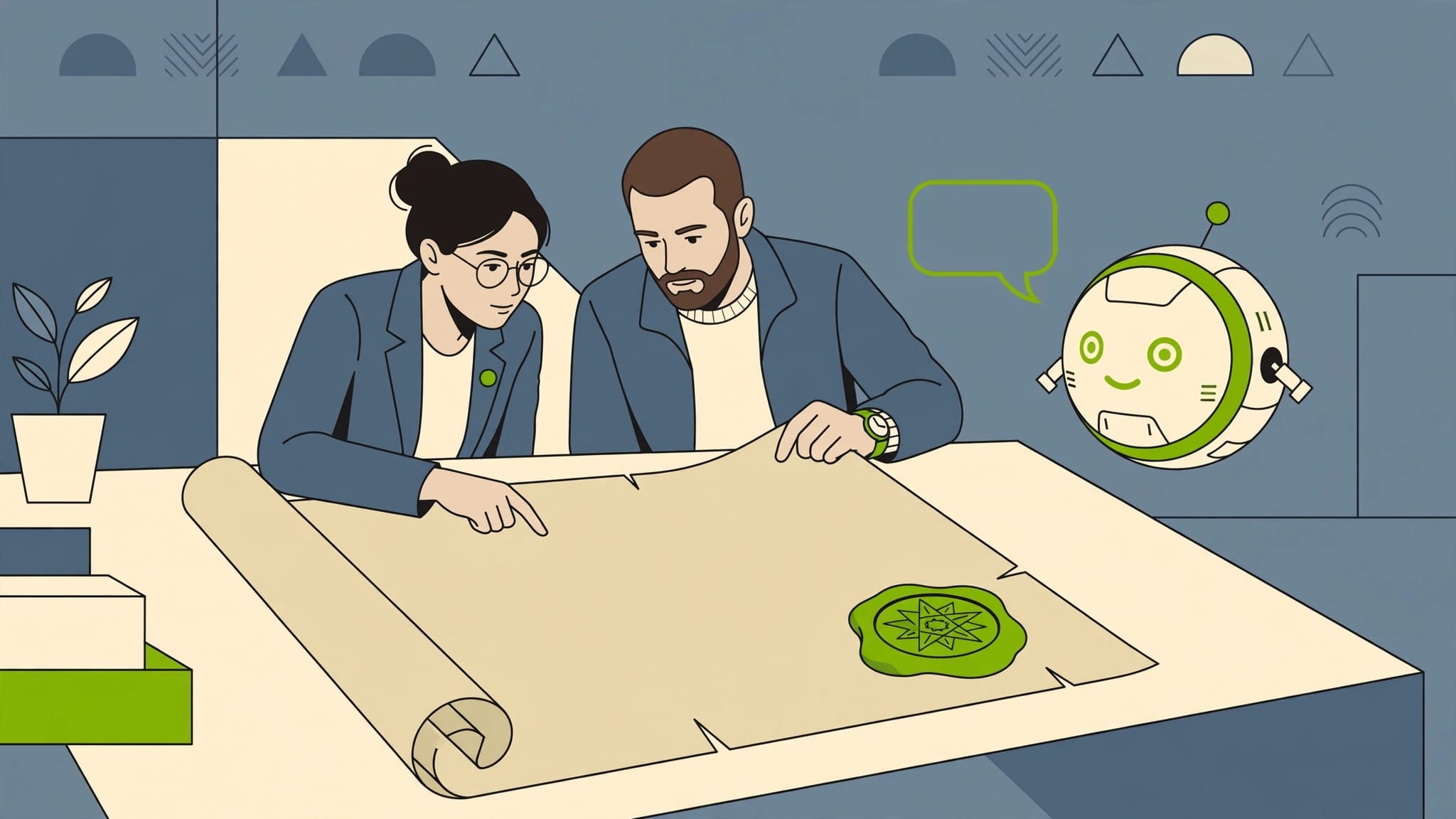
Anthropic describes itself as an AI safety and research company, and its legal structure reflects that framing. It is organised as a Public Benefit Corporation, which means its directors are expected to weigh a stated public benefit — the responsible development and maintenance of advanced AI — alongside commercial results.
That structure is not just branding. Anthropic publishes a Responsible Scaling Policy that sets out safety evaluations its models must pass before release, including capability thresholds tied to what it calls AI Safety Levels. When a model crosses a threshold, stronger safeguards are supposed to follow.
Constitutional AI and the safety stack
The company’s best-known research idea is Constitutional AI. Instead of relying only on human reviewers to flag bad answers, Claude is trained against an explicit written constitution: a set of principles covering honesty, harmlessness and helpfulness that the model uses to critique and revise its own responses.
Around that core sit more conventional layers. Anthropic runs red teams that probe models for dangerous capabilities, publishes interpretability research that tries to map what happens inside a model’s network, and releases system cards describing each new model’s evaluations and limits.
The approach has real costs and real friction. In 2026 the company agreed a $1.5 billion settlement in the Bartz case over books used in training, which received final court approval in July 2026. The episode underlined that even a safety-branded lab faces hard legal and commercial pressures over how its data is sourced.
What Anthropic actually sells
For most people, Anthropic is simply Claude: a conversational assistant available on the web, on phones and on desktop, in free and paid tiers. Claude answers questions, writes and edits text, analyses documents, works with spreadsheets and presentations, and writes and explains code.
Underneath the chatbot sits a family of models in three sizes — Haiku for speed, Sonnet as the all-rounder, and Opus for the hardest problems — which businesses rent through the Anthropic API and through cloud marketplaces such as Amazon Bedrock and Google Cloud. A fourth product, Claude Code, has become a major business in its own right: an agentic coding tool that passed a $2.5 billion revenue run-rate in February 2026.
Anthropic also sells Claude to governments and large enterprises, where the pitch leans on its evaluations, audit trails and data-handling controls. The same safety paperwork that slows a launch can be a selling point for a regulated buyer.
Who leads it, and who backs it
Day to day, Anthropic is led by its co-founders: Dario Amodei as chief executive and Daniela Amodei as president, with a leadership bench drawn heavily from research. The company’s public voice is unusually technical — its leaders publish essays and policy papers alongside product news, treating the argument about AI’s direction as part of the job.
Financially, Anthropic is backed by the two cloud giants it also competes with for distribution. Google and Amazon have each invested billions of dollars, and Claude is sold through both companies’ cloud marketplaces. The arrangement is typical of the frontier era: the labs need more compute than any balance sheet holds, and the clouds need the labs’ models inside their platforms.
That dependence cuts both ways. It guarantees Anthropic the computing capacity to stay at the frontier, and it means its strategy is always partly a negotiation with partners who have AI ambitions of their own.
Where it stands
Anthropic’s identity creates a deliberate tension. It competes head-on with OpenAI and Google for users, developers and enterprise contracts, while arguing that the race itself needs guardrails. Its researchers publish some of the industry’s most-cited safety work, and its models are regularly near the top of independent benchmarks.
Whether that balance holds is the open question. Frontier development is expensive, the legal bills are real, and users mostly choose assistants on capability and price. But if you want to understand why Claude behaves the way it does — cautious, explanatory, willing to refuse — the answer starts with the company that built it.

0 Comments