
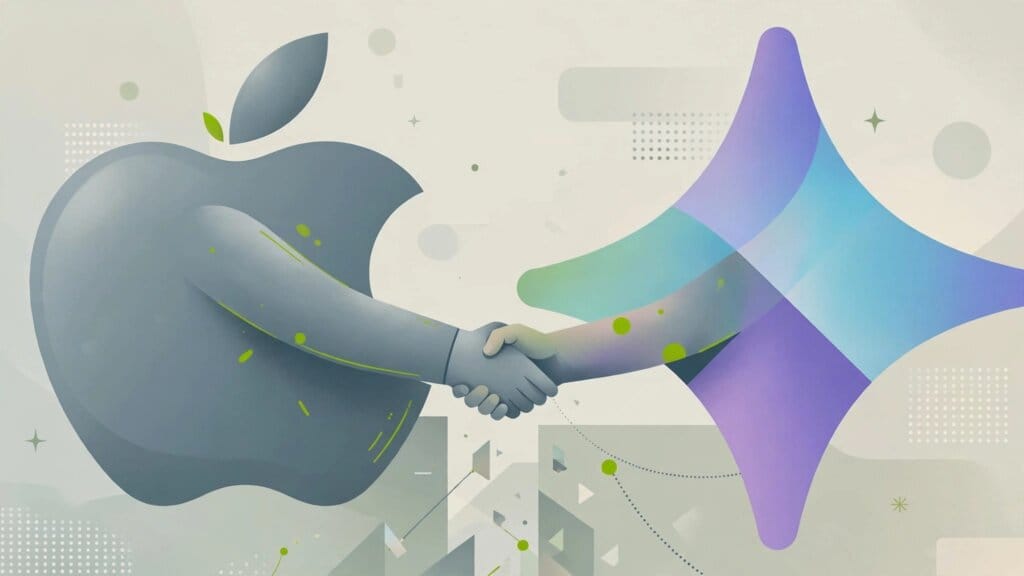
Apple is renting Google’s AI brain because it needed frontier-level models faster than it could build them itself. Under the arrangement behind the new Siri, Apple licenses Google’s Gemini models and runs them inside its own systems. In plain terms, Google supplies much of the underlying intelligence, and Apple supplies the product, the devices and the privacy framework around it.
That is an unusual position for Apple. This is a company that designs its own chips, writes its own operating systems and has spent decades arguing that controlling the core technology produces better products. Turning to its biggest mobile rival for the centre of its AI strategy is an admission worth understanding properly.
The Deal In Plain Terms
Licensing a model is not the same as sending users to another company’s app. Apple is not putting Google’s consumer chatbot on the iPhone as Siri. It is using Gemini models as an engine, adapted for Apple’s purposes, behind an interface Apple designs and controls, with permissions set by Apple’s system and choices made by the user.
The arrangement also sits inside a long commercial relationship. Google has for years been the default search engine on Apple’s devices under a separate, well-known deal. The Gemini licensing extends that pattern from search into AI: Google gets distribution at enormous scale, and Apple gets a mature technology without waiting years to match it.
Details such as the exact cost and duration of the licensing have not been the focus of Apple’s public messaging, and they are not needed to understand the logic. What matters is the direction of travel. The most valuable company in consumer technology decided that, for AI, buying time from a rival beat arriving late with a weaker home-grown model.
Why Apple Needed Help
Apple’s own foundation models lagged the frontier. While rivals shipped increasingly capable chatbots and assistants and improved them in public, Apple’s efforts produced a slower start and a delayed Siri reboot. In a market where each model generation resets expectations, falling one or two generations behind is hard to hide from ordinary users.
Apple also started from a different culture. Its strengths are polish, integration and privacy, and its instinct is to ship a finished product rather than an experiment. Generative AI rewarded the opposite approach in its early years: release quickly, learn from huge numbers of users, and iterate in the open. That mismatch cost Apple time it could not easily recover.
Talent and computing scale played their part too. Training frontier models requires vast amounts of specialised computing power and relatively small pools of experienced researchers, and Apple was competing for both against companies that had committed earlier and bigger. Licensing Gemini does not solve those long-term problems, but it stops them from defining the product users hold today.
What It Means For Privacy And Control
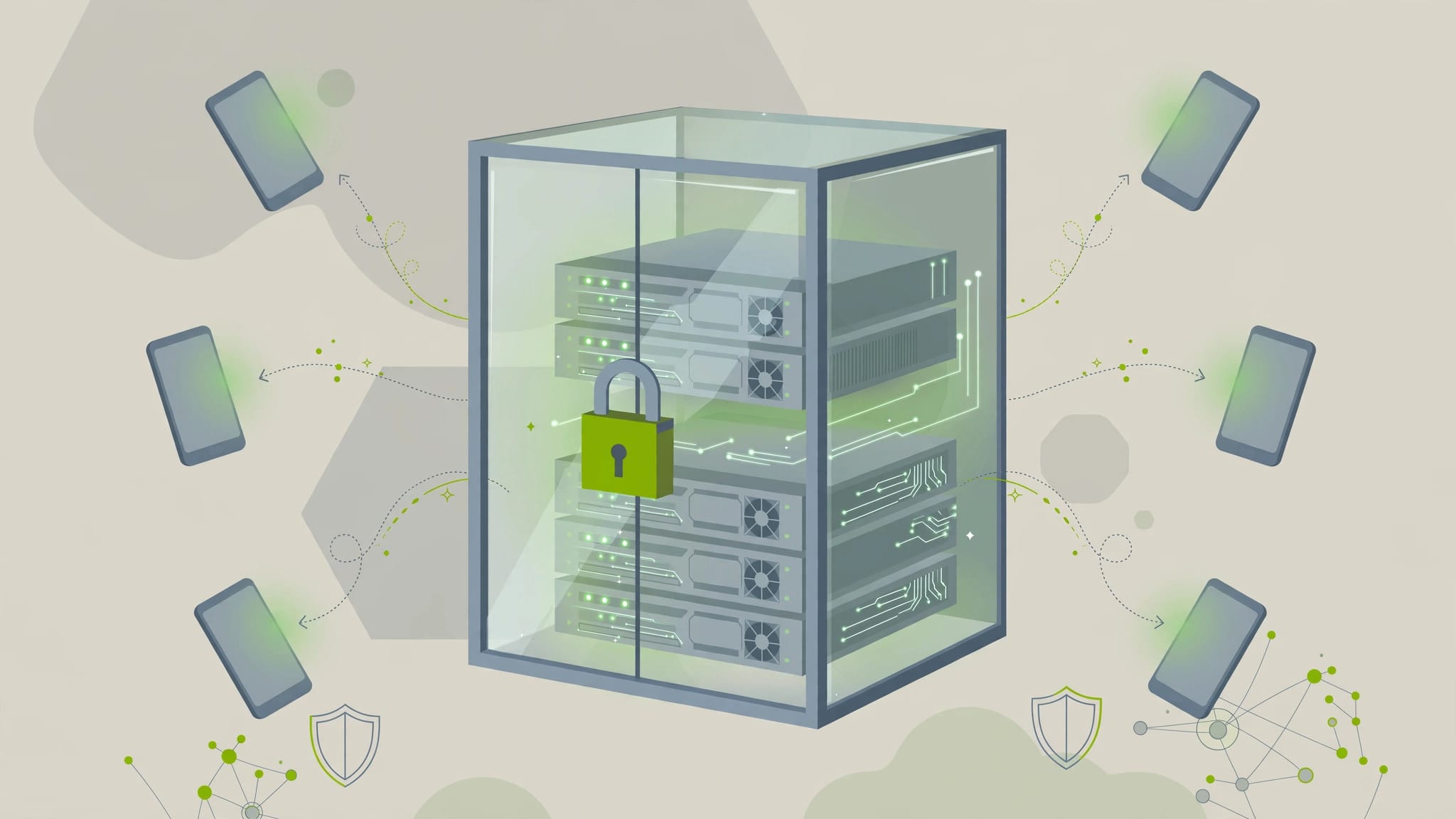
Privacy is the obvious question, because Apple has made it a selling point for years. The company’s answer is architecture. Simpler requests can stay on-device, larger ones run through Private Cloud Compute under Apple’s rules, and the Gemini models involved are used within that framework rather than as a free-standing Google service collecting data in the usual way.
Users should still read that claim carefully rather than either dismissing or swallowing it whole. The model at the centre now comes from Google, even if the pipes and permissions are Apple’s. Trust therefore rests on Apple’s contracts, its technical controls and its willingness to let outside researchers inspect the cloud system it describes, not on branding alone.
Control is the longer-term risk. If the intelligence inside Siri belongs to a rival, Apple depends on that rival’s roadmap, pricing and priorities at renewal time. Google, meanwhile, strengthens its position as the supplier behind assistants it does not own. Both companies benefit today, and both know the balance could matter more in the next negotiation.
A Rental, Not A Surrender
It would be wrong to read the deal as Apple giving up on its own models. The company continues to develop its own foundation models for on-device tasks and future products, and a rental can be a bridge while that work catches up. Many features of Apple Intelligence still run on Apple’s technology, close to the user’s data, by design.
It would be equally wrong to treat the deal as a minor supplier contract. AI is now the layer through which users ask questions, draft text and operate their devices, and Apple has placed a rival’s models in that layer. The company that once insisted on owning every important layer of its stack has decided this one, for now, is too important and too far ahead to own.
For users, the outcome is simpler than the strategy. Siri and Apple Intelligence get stronger sooner than they otherwise would have, inside an experience Apple still designs end to end. Whether the rental becomes a permanent arrangement or a bridge to something of Apple’s own is one of the defining questions for the company over the next few years.

0 Comments