

Google has brought Gemini to Google Maps navigation on Apple CarPlay, giving iPhone drivers a conversational assistant on the car’s own display for the first time. The rollout is live in the United States, with a global rollout underway, Google said in posts on X on October 21.
Drivers tap the Gemini icon on the right edge of the Maps screen while navigating and speak naturally. It is the first time Google Maps has offered any voice assistant inside CarPlay: until now, Google Assistant worked only when a driver was navigating directly on the iPhone itself.
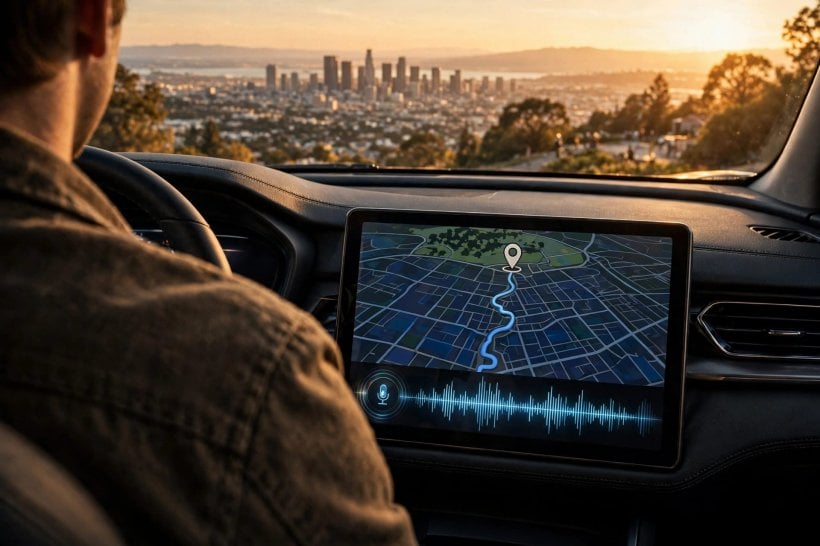
How Gemini Works In Maps On CarPlay
The assistant handles multi-step requests rather than single commands. In Google’s examples, a driver can ask what park is famous for gorgeous views overlooking the city, follow up by asking whether now is a good time to go — not too busy, with the weather staying nice — and then say “start navigating me there but make sure to avoid toll roads,” all inside one conversation.
Google’s demonstration runs the same pattern in Seattle: Gemini identifies Kerry Park as the viewpoint overlooking the skyline and the Space Needle, fields follow-up questions about timing and expected rain, and then starts the route with tolls excluded. The company notes that the demonstration is shortened and simulated, so real results and availability may vary.
Gemini can also take voice reports of traffic disruptions, help find parking, and answer questions about places along the route, including where to stop to eat or refuel, or what the weather will be like at the destination on arrival. The feature operates inside Google Maps; it is not a separate Gemini app, and it does not replace Siri, which remains the way to reach the iPhone’s own apps, messages and calls.
A Rollout That Started On Android
CarPlay is the last major in-car surface to get the experience. Conversational Gemini navigation arrived in Google Maps for Android and iOS last year and was already available in Android Auto, so iPhone users navigating through Apple’s dashboard were the holdouts. Drivers need the latest Google Maps app for iPhone to see the Gemini icon in CarPlay.
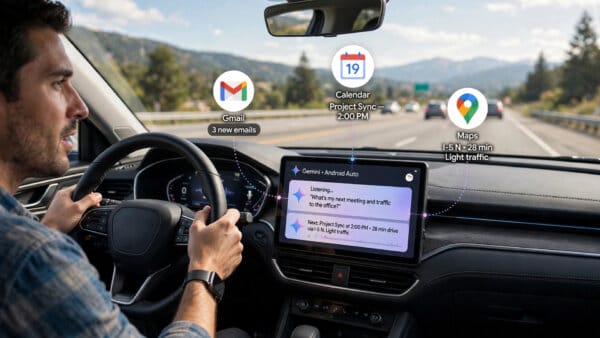
What CarPlay does not get is Personal Intelligence. That separate feature, which lets Gemini draw on Gmail, Calendar, Photos, YouTube and Search to personalise answers, began rolling out on Android Auto on October 20 and reaches cars with Google built-in in the coming months. Google has not announced it for CarPlay, and it has not published a country list or timing for the wider CarPlay rollout beyond saying it is underway.
Why It Matters
Gemini in CarPlay matters because navigation is where a voice assistant earns or loses a driver’s trust: the questions are chained, time-sensitive and asked with hands on the wheel. A driver who can describe a place instead of naming it, check weather and crowds in the same breath, and change the route’s terms without touching a menu is using search as a conversation rather than a keyword box — the same shift Google is pushing across AI Mode and AI Overviews on phones.
It also puts Google’s assistant onto Apple’s dashboard on workable terms. Because the feature lives inside Google’s own app and leaves Siri in place, Google could ship it without waiting on Apple, and it reaches the large share of iPhone owners who already navigate with Google Maps rather than Apple Maps. For local businesses, more conversational discovery in the car means more “near me” decisions made from an AI summary, a shift already under way since Ask Maps replaced the old Business Profile Q&A with AI answers.
Background
Google has been moving Gemini into every Maps surface since it rebuilt navigation around conversation on phones last year and put AI answers in front of business listings. The in-car push widened in the same week the CarPlay rollout landed: Personal Intelligence reached Android Auto, and a Frankfurt court ruled that Google needs consent to publish aerial images of private property on Maps and Earth — a reminder that the assistant’s expansion is running alongside fresh legal limits on what Maps itself may show.
Source: 9to5Google, Thurrott


0 Comments