

An estimated 400,000 trees have been felled across two sites in northern Finland for Google data centres that had not completed the environmental impact assessments Finnish law requires, according to a Guardian investigation published on October 22. Finland’s Licensing and Supervision Authority (LVV) ordered the company to temporarily stop work at both sites earlier this month, and Google has apologised, saying it acted on its best understanding of the legislation at the time.
At Muhos, an estimated 250,000 trees stood on 330 hectares (815 acres) of forest a few months ago. They are all gone. The Guardian reports the entire area was stripped, topsoil included, leaving mud and machinery tracks. Residents say brown water is flowing off the site into a stream that feeds the Oulujoki River.
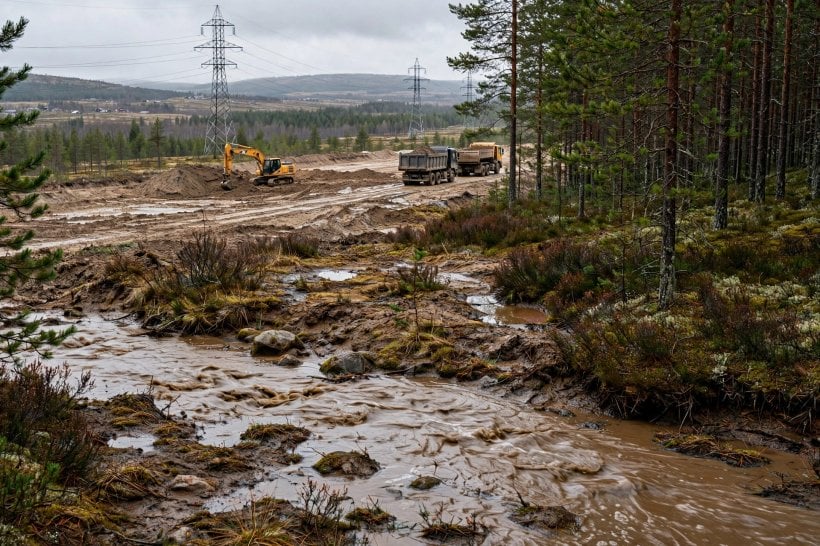
What Was Cleared At Muhos And Otanmäki
The Muhos clearcut is 3 kilometres long and 2 kilometres wide, 400 metres from the Oulujoki River. Mari Annala, an ecologist with the Finnish Association for Nature Conservation (SLL), estimates a further 150,000 trees were felled at the second site, in the village of Otanmäki about 100 kilometres south-east, taking the total to roughly 400,000. Because the felling was illegal, she says, the wood cannot be sold to processing plants.
The effects are already visible locally. In Otanmäki, residents say wolves that lived in the forest came into the village after the felling, and a local biologist says three-toed woodpeckers nesting there were pushed out. Hanna Halmeenpää, who chairs SLL’s board, said she had never heard of a company doing anything like this in Finland. “It’s pure arrogance,” she told the Guardian. “They bought the vast land area and they just started to cut it, just like that.”
The Regulator’s Order And Google’s Response
LVV wrote to Google’s local company, Tuike Finland Oy, on October 6, ordering it to suspend preparatory work that significantly alters the environment at Muhos and Kajaani, the municipality for the Otanmäki site, because the required assessments had not been completed before the land was cleared. Al Jazeera reported the agency set a deadline of October 23 and that Tuike Finland could face enforcement proceedings if it failed to comply.
Google says it stopped preparatory works at both sites after receiving the letters and has submitted a formal response confirming this. Its Finland country manager, Antti Järvinen, apologised for the clearings last week. A spokesperson said the company has operated in Finland for 15 years and has always worked to meet or exceed environmental requirements, adding: “We will fully comply with LVV’s requests.” Google says it is protecting water quality at Muhos and plans to plant trees across 130 hectares there, a figure conservationists say is too low next to the damage done.
A €13 Billion Project Meets A National Reckoning
Muhos and Otanmäki are part of a €13 billion AI infrastructure project Google announced in September, covering Hamina, Kajaani, Muhos and Vaala during 2027 and 2028, and described by the company as its largest single investment in Europe. Prime minister Petteri Orpo welcomed the deal last month, calling investment a “top priority”, but has since described what happened in Muhos as a “cold shower”.
More than 93,000 people have signed a petition demanding more data centre regulation and a fee to compensate local communities, well past the 50,000 signatures that force parliamentary consideration in Finland. With 145 new data centres at various stages of planning, the country’s cool climate, available land and stable politics have put it at the forefront of the tech industry’s expansion, and the push is likely to become a key issue in Finland’s April election, the Guardian reports. Jussi Kangasharju, head of computer science at the University of Helsinki, argues the national benefit is minimal: the centres serve international customers, pay little corporate tax in Finland and create few jobs. The environment ministry says it is monitoring the sector and is prepared to propose legislative amendments if necessary.
Why It Matters
Google’s Finland project shows that the binding constraint on the AI building boom is increasingly not chips or power but land, law and local consent. The assessments Google skipped exist to judge a project before the landscape is changed, and no apology or replanting programme can restore 330 hectares of forest and its topsoil on any useful timescale. The same tension is surfacing across Europe: in Germany, PreussenElektra and NVIDIA are assessing former nuclear plant sites for AI factories through a formal evaluation, while in Britain Microsoft has pulled out of a planned data centre project at Loughton. Spending continues at record scale, as Amazon’s €16 billion German investment shows, but Finland is now the clearest example of a government discovering, after the trees were already down, that public trust is part of the permitting process too.
Background
Google has operated in Finland for 15 years, centred on its data centre at Hamina on the south coast, and the country has long marketed itself to builders on its cool climate, low-carbon electricity and stability. The €13 billion programme announced in September 2026 was the biggest project of its kind in Finland’s history, which is why clearance running ahead of environmental law at two of its locations has become a national political story rather than a local planning dispute.
Source: The Guardian, Al Jazeera


0 Comments