

Maxinsights, a Santa Clara startup building the data layer for physical AI, has raised $30 million in seed funding led by Peak XV, the venture firm formerly known as Sequoia India. The company pays more than 5,000 contractors across six countries to wear cameras while they cook, clean and do their jobs, then turns the first-person footage into robot-ready training data.
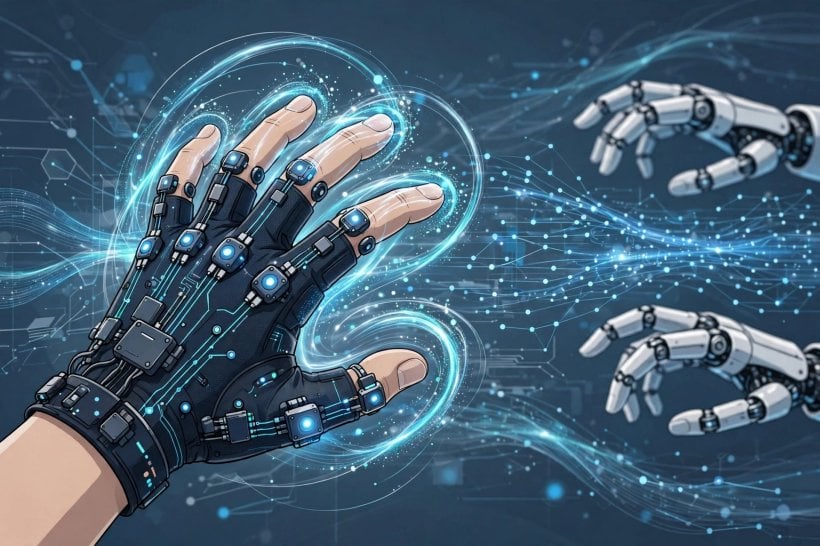
The round also drew participation from Tola Capital, South Park Commons, INCE Capital and Alumni Ventures. Alongside the funding, Maxinsights launched two products: MaxLoop, an agent-in-the-loop platform that scores and corrects data collection as it arrives, and MaxGlove, a sensor glove built with Genesis AI that captures touch and force data a camera cannot see.
Recording Real Work, At Natural Speed
Maxinsights’ pitch is that robots learn from watching people, and that nobody has captured enough of the right watching. Competitors stage tasks in mock environments and ask operators to slow down for the cameras. Maxinsights records real work at natural speed in real homes, restaurants and hotels, capturing the unplanned moments — spills, interruptions, improvisations — that the company says are the actual training signal for robots that must operate in the real world.
Every step of the pipeline happens in-house: contractors hired through staffing firms wear the company’s proprietary camera hardware, and Maxinsights handles collection, review, annotation and delivery. The company says it has captured more than 2 million hours of footage, with 1.5 million hours model-ready for immediate delivery, and serves more than 30 customers — including frontier AI labs and foundation model companies, eight of them on recurring contracts.
MaxLoop And MaxGlove
The two launches address the two hardest parts of the pipeline. MaxLoop is the software layer: it scores every clip as it arrives, using hand-tracking models the company trained on its own footage, and gives operators feedback the same day instead of one to two weeks later. Maxinsights says review costs are down roughly 80% and it now processes 450,000 hours a month, while the same models extract more from each clip — hand pose, object states, contact and force estimates.
MaxGlove is the hardware layer, developed with Genesis AI: a sensor glove that records how hard a hand grips, how much an object weighs and how contact shifts through a task. Vision alone cannot tell a robot how an interaction feels, and Maxinsights says existing force-capture setups need long calibration and yield only 10 to 20 minutes of usable capture a day. MaxGlove is aimed at scaling across the existing contractor network, with a target of 1 million hours of force data in 2027.
Who Is Behind It
The company was founded by CEO Yuguang (YG) Yuan — previously the youngest executive team leader at Eaton and a co-founder of Mega Gear Robotics, which was acquired — and CTO Kun Wang, an early Google X and Waymo engineer who co-founded QCraft, which grew into a unicorn with autonomous-driving technology in more than a million vehicles. The broader team includes engineers from Google, Microsoft, Meta, Waymo and Hulu.
“We built the whole pipeline ourselves, from the hand-tracking models to the platform that scores every operator’s footage as it arrives, because nobody was going to sell us the pieces that make messy real-world data usable,” Yuan said in the announcement. Peak XV managing director Rohit Agarwal said the company’s bet on quality control as an engineering problem, not a staffing cost, is “hard to copy after the fact.”
Why It Matters
Capital is flowing into physical AI faster than the data exists to train it: the company’s announcement notes that investors put $47.4 billion into the sector in the first half of 2026. Models for robots and embodied AI are data-starved in a way language models no longer are, because real-world physical interaction data cannot be scraped — it has to be captured deliberately.
The raise also marks a shift in who builds that data. Rather than the labs capturing their own training footage, a specialist data layer is emerging: Maxinsights says two of the most closely watched robotics foundation models of 2026 — Genesis AI’s GENE-26.5 and Dyna Robotics’ Dyna-2 — were trained in part on its data. The data layer, like the cloud layer before it, is becoming infrastructure.
Background
Physical AI has been one of the busiest corners of startup funding this month. Eka Robotics raised $150 million at a $1.45 billion valuation for its physical AI model, Reliable Robotics pushed past $1 billion with a Series D extension, and Enact Intelligence exited stealth with a $30 million pre-seed for robot dexterity. Maxinsights’ $30 million seed — one of the largest seed rounds in its region, per Dealroom — puts it in the same wave, but on the data side of the stack rather than the model side.
Source: Business Wire ; Dealroom


0 Comments