

Google says it is testing shopping carousels in AI Mode where sponsored listings appear alongside organic product results, with every sponsored listing labelled as sponsored. A Google spokesperson confirmed the format is part of the company’s ongoing experiments with advertising in AI Mode, and said shopping advertisements can appear alongside organic visual search results within carousels for commercially relevant queries. The test was spotted by Sachin Patel, and it is not yet a confirmed wider rollout.
What the test shows
The screenshots show a product carousel in AI Mode with a header that can read either Sponsored or All products, or both together. The distinction matters because it decides whether a shopper can tell, at a glance, which items in the carousel were paid for and which were surfaced because they matched the query.
Search Engine Roundtable, which first reported the test, said it could not tell from the screenshots whether the items under All products are sponsored or not.
Search Engine Land, covering the same test, reads the design differently: it describes Sponsored as the heading for paid product listings and All products as the heading for organic listings, with the new layout adding clearer section-level labels. The two readings are not yet reconciled, and Google has not said how widely the format is being shown.
Not a new idea, a new surface
Search Engine Roundtable notes that Google confirmed mixing advertisements with organic results in October 2023, a practice Google calls dynamic ad placement, and that it has continued since. What is new here is the surface: AI Mode, where the answer itself is generated, rather than a traditional list of links. Placing a shopping carousel inside that answer puts advertising inside the response shoppers are most likely to trust.
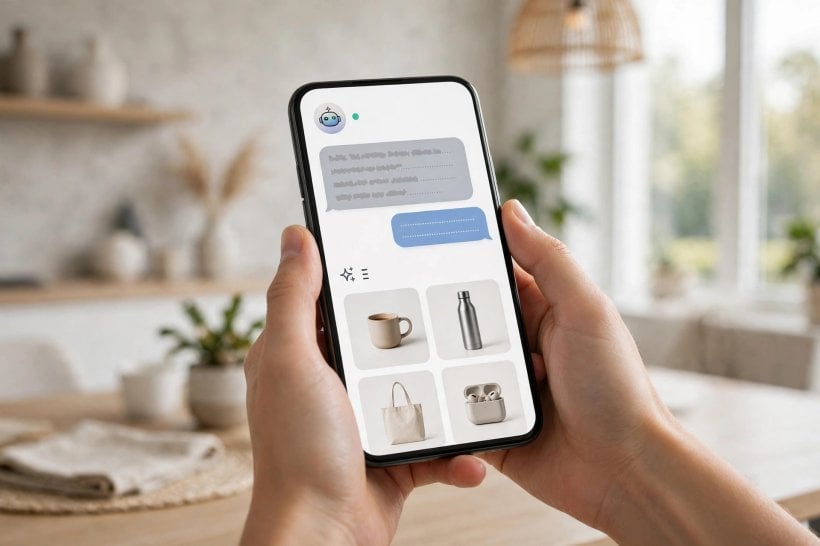
That context helps explain why a small header test attracts attention. AI Mode is becoming a shopping surface in its own right, not just a way to find a store.
Google has already expanded advertising in AI Mode to more countries, as covered in our report on the ten-country expansion, and it keeps testing new ways to route searchers into AI Mode from ordinary queries. Each test changes, in a small way, how much of the answer is bought and how much is earned.
Why It Matters
For shoppers, the stakes are transparency. If a carousel mixes paid and unpaid products under a single heading, a recommendation can look like an editorial choice when it is, at least in part, a commercial one.
Google’s statement that all sponsored listings are labelled as sponsored is reassuring, but labels only work if shoppers notice them and understand them, especially when the heading above the whole carousel is ambiguous. That is why the uncertainty over All products matters more than the test’s size.
For advertisers and retailers, the test is a signal about where Google’s shopping attention is moving. A product that appears inside an AI Mode answer may be seen before any ordinary search result, and the format of that carousel will shape which products get clicked.
For now, there is no evidence that the new headings improve or reduce advertising engagement, and no confirmed rollout date, so the practical advice is to watch the format rather than rebuild a strategy around it. Google’s other AI Mode experiments, such as the Fan POV button for sports searches, show how quickly these tests can appear and change.
Background
AI Mode is Google’s conversational search experience, which answers questions directly and links to sources, rather than returning only a list of web pages. Advertising inside it has expanded steadily through 2026.
Source: Search Engine Roundtable report


0 Comments