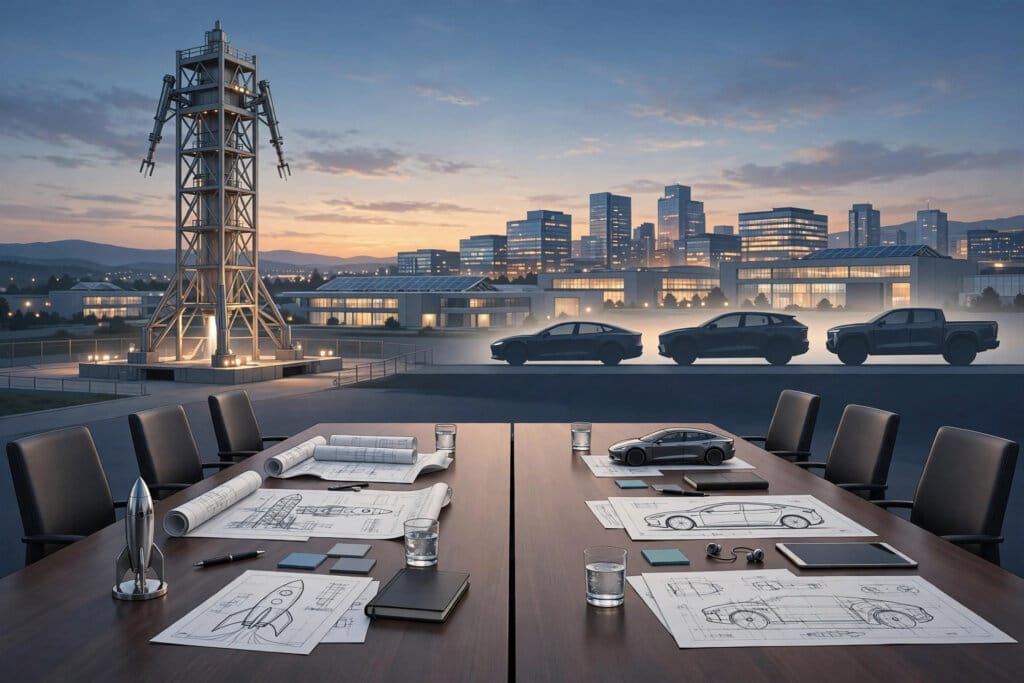
Elon Musk has said he would back a merger of SpaceX and Tesla, and revealed that special committees of independent directors at both companies have already been set up to study the idea. Musk made the remarks on SpaceX’s third-quarter earnings call on October 20, as the rocket and AI company reported its first quarterly profit since going public, driven by the Super Intelligence segment that houses its Grok business.
Asked about a possible tie-up, Musk said he felt he was “tap dancing through a minefield,” but that a combination would be “a good idea.” Shares in SpaceX rose nearly 5 per cent in after-hours trading following the comments.
SpaceX-Tesla Merger: What Musk Said On The Call
Musk told analysts that the committees were formed at the request of shareholders, and that he cannot take part in their talks because he has a conflict of interest. He is chief executive of both companies and also serves as chairman and chief technology officer of SpaceX. He owned 48.4 per cent of SpaceX as of June 30, according to a regulatory filing, and controls more than 82 per cent of its voting power through super-voting shares. He holds about 20 per cent of Tesla.
Musk was careful to lower expectations about the outcome. The committees have not agreed on the terms of any deal and there is no guarantee they will, he said, cautioning that it would be overstating it to treat a merger as a certainty.
SpaceX-Tesla Merger: The Approval Hurdle
Any deal would need the backing of a majority of all Tesla shares, not just the shares cast in a vote, which Musk called “quite a high hurdle.” That threshold is unusually demanding: abstentions and non-votes effectively count against the deal, so the committees’ work would have to produce terms that persuade a broad majority of Tesla’s entire register, not merely the shareholders who turn up.
The structure of the process matters for the same reason. With Musk recused as a conflicted party, the independent directors on each side are the ones who would negotiate and recommend any transaction, and their findings would carry the process long before shareholders are asked to vote.
SpaceX-Tesla Merger: The AI Overlap Behind The Idea
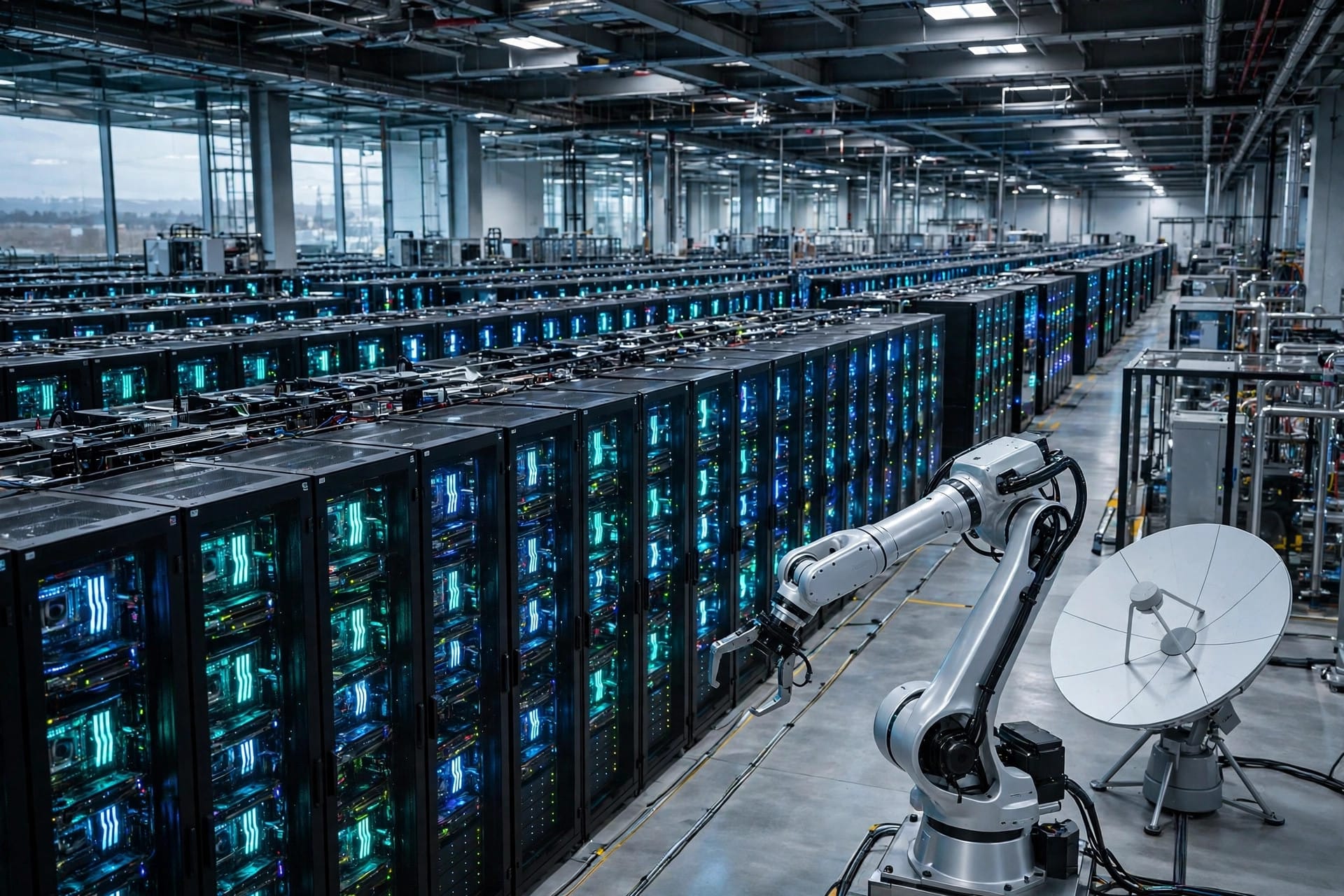
Musk said the two companies could gain from working together on AI software, chip design, robotics and space-based computing. The overlap is no longer theoretical. SpaceX’s Super Intelligence segment — the home of Grok — has become the company’s largest business, as SpaceX’s third-quarter results showed, with cloud agreements renting computing power to AI firms including Anthropic and Google, wider adoption of the Grok chatbot and the acquisition of the coding startup Cursor.
Tesla, for its part, designs its own AI chips, builds robots and trains models on large computing clusters — the same disciplines SpaceX is now scaling with its Colossus data centres. A combined company would put model development, chip design, robotics and orbital computing under one roof, and one capital budget.
Why It Matters
The proposed SpaceX-Tesla merger sits at the junction of the AI industry’s two scarcest resources: computing capacity and the capital to build it. SpaceX spent heavily on AI infrastructure in the quarter and is racing to add gigawatts of capacity, while Tesla controls chip designs, robotics programmes and a large cash-generating car business. For rivals across the AI coding and model markets, a merged Musk company would be a vertically integrated competitor spanning chips, models, robots and distribution. For Tesla shareholders, the question runs the other way: whether absorbing a fast-growing but capital-hungry AI and space business rewards or dilutes the car company’s register — which is exactly why the majority-of-all-shares hurdle, and the independent committees, matter more than Musk’s enthusiasm.
Background
SpaceX began trading on the Nasdaq on June 12 after an IPO priced at $135 a share that raised about $85.7 billion, and its second-quarter debut report showed a net loss. The third quarter reversed that picture on the strength of its AI division. Musk has run Tesla and SpaceX in parallel for two decades and has moved talent, and now AI strategy, between them before — but a formal merger of the two empires has never previously reached the stage of board committees studying it.
Source: AFP via Malay Mail; Cointelegraph via TradingView News; New York Post

0 Comments