

Stellantis made two autonomous-driving moves in France on October 23. At the Assises du Véhicule Autonome in Paris, the automaker joined Wayve, NVIDIA and the French Government to announce a collaboration on autonomous vehicle deployment across France, and in a separate announcement it teamed up with ride-hailing firm Bolt and the Métropole du Grand Paris on a robotaxi pilot that targets commercial service from 2030.
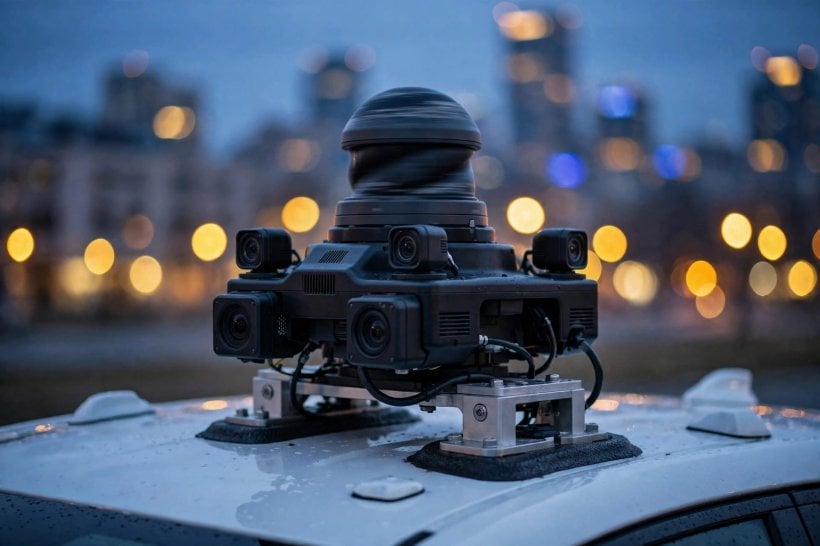
Both announcements run on NVIDIA hardware. The Wayve collaboration pairs Stellantis’s L4-Ready Platforms with Wayve’s AI Driver integrated on NVIDIA Halos OS and the NVIDIA Hyperion compute and sensor architecture. And in the Bolt project, Chinese self-driving company Pony.ai is named as the potential technology provider — again on NVIDIA Hyperion and the Halos safety system.
Wayve, NVIDIA And The French Government Form An AV Ecosystem
The first announcement positions France as the base for an autonomous-vehicle ecosystem covering the full value chain, from silicon to vehicles. Wayve, the London-based developer of embodied AI for driving, brings its AI Driver; Stellantis contributes its L4-Ready Platforms™ plus vehicle engineering and manufacturing expertise; NVIDIA supplies the Halos safety operating system and Hyperion compute and sensor stack.
The partners say the collaboration builds on existing relationships among them. Beyond the technology stack, it commits to working with local French partners: engagement with trade unions, city authorities and mobility stakeholders will be led by the local partners responsible for transport operations, with the stated aim of making sure the transition to autonomous transport benefits workers, communities and riders.
France’s transport minister, Philippe Tabarot, said the country is committed to adapting its regulatory framework to accelerate autonomous vehicle development while maintaining strict safety and data sovereignty requirements, and described the forum as the approach needed to move from trials to real-world deployment. Wayve’s Kaity Fischer, VP of autonomous mobility and operations, said France is leading the way in preparing for autonomous vehicles and that working directly with the government would help shape how the technology is deployed safely and responsibly across the country and the EU. Stellantis’s Anne Laliron, SVP of technology research, said France is one of Stellantis’s key centers for engineering and technology development. NVIDIA’s Ali Kani, VP of automotive, said the Hyperion platform combined with Wayve’s embodied AI and Stellantis’s automotive expertise provides the foundation for bringing safe autonomous mobility to Europe.
Bolt And Greater Paris Plan A 2028 ‘Living Lab’ Robotaxi Pilot
The second announcement, confirmed by Reuters on October 23, is more concrete about where and when. Métropole du Grand Paris, Bolt and Stellantis plan to introduce autonomous mobility services through a pilot program submitted to the European Commission’s ADACities initiative. The pilot starts from 2028 across up to five municipalities in north-west Greater Paris, with the ambition of expanding to around 30 municipalities by 2030 and moving toward commercial operations, subject to approvals.
The partners call the project “The Greater Paris Autonomous Driving Living Lab.” It will assess how autonomous vehicles can complement existing public and private transport services and address unmet mobility needs — including first- and last-mile journeys, access to employment hubs, off-peak travel and major events — across a metropolitan area of 7.2 million inhabitants.
Each partner has a defined role. Métropole du Grand Paris coordinates with local authorities and stakeholders and oversees an evaluation framework covering operational safety, service quality and user acceptance, mobility impacts and integration with public transport, social and environmental effects, and the economic conditions for future deployment. Bolt’s autonomous driving solutions unit leads service integration and deployment planning. Stellantis provides vehicles built on its L4-Ready Platforms.
“This experiment will also help inform public decision-making and define the conditions for potential wider deployment,” said Patrick Ollier, president of the Métropole du Grand Paris. Bolt founder and CEO Markus Villig said autonomous vehicles will only matter if they solve real transport problems, and framed the project as another concrete step toward a commercial autonomous mobility service built for Europe. Ned Curic, Stellantis’s chief engineering and technology officer, said the goal is driverless mobility that complements public transport and makes everyday journeys simpler and more accessible.
Two Announcements, One Hardware Strategy
Read together, the two announcements leave Stellantis with two autonomous-driving software partners in France — Wayve alongside NVIDIA, and Pony.ai alongside Bolt — and both stacks converge on NVIDIA. The Kazakhstan robotaxi MoU Pony AI, inDrive and NVIDIA signed earlier the same week uses the same Hyperion and Halos combination, showing how quickly the NVIDIA stack is becoming the default plumbing for robotaxi projects worldwide.
Bolt’s ambitions go further than Paris. The company said it also plans to test autonomous vehicles in Madrid during 2027, and has spoken of an ambition to have 100,000 autonomous vehicles on its platform across Europe and the wider UNECE region by 2035. Reports of the announcement note Bolt selected NVIDIA’s Alpamayo software stack and Lucid vehicles for its European AV program. Stellantis, for its part, is pursuing AV partnerships on multiple fronts — including Qualcomm and Uber — around its scalable platforms for hands-free and Level 4 driving, including STLA AutoDrive.
The government angle matters as much as the technology. France hosted the AI Action Summit in Paris, where €109 billion in AI investment was announced, and the transport ministry’s message at the Assises was explicit: adapt the regulatory framework to accelerate autonomous vehicles while keeping strict safety and data sovereignty requirements. The ADACities submission route means the Paris experiment is designed from the start to generate evidence regulators can use — aggregated operational data, independent evaluation, public-interest oversight — rather than just to test the vehicles.
Why It Matters
The French announcements matter because they put Europe back on the robotaxi map with a model that American and Chinese rollouts have largely skipped: the city as a co-designer. In Astana and most Chinese cities, robotaxi expansion has been led by commercial operators with regulators reacting afterward; in Greater Paris, the metropolitan authority is defining the evaluation criteria before the first vehicle moves. If the Living Lab produces credible evidence on safety, social impact and integration with public transport, it becomes a template the EU can point to when every other capital asks for permission next.
For NVIDIA, the day confirms the company’s strategy of winning the AV market at the infrastructure layer. It launched the OpenShell reference architecture for safe AI agents at GTC Berlin two days earlier; now two separate European AV announcements in a single day both rest on its compute and safety stack. And for Stellantis, the dual announcements signal that its L4-Ready platforms are no longer a research program but a product line with real deployment partners — Wayve for the ecosystem play, Pony.ai for the ride-hailing play.
Background
Stellantis has been assembling its autonomous-driving portfolio over several years, combining in-house platforms like STLA AutoDrive with partnerships spanning chipmakers, AI labs and mobility operators. Wayve, founded in London, has built its reputation on an “embodied AI” approach that learns driving behavior end-to-end from real-world data rather than from hand-coded rules. Pony.ai, meanwhile, has been the most aggressive Chinese AV company in expanding abroad, running robotaxi operations in Chinese cities and pushing into Europe, the Middle East and Southeast Asia. France’s push fits a wider European effort to build sovereign AI and mobility capacity after years of watching the robotaxi race play out mostly in the United States and China.
Source: Stellantis press release; Reuters


0 Comments