

Pony AI is joining ride-hailing platform inDrive and NVIDIA to bring robotaxi services to Kazakhstan, the three companies said on Friday, signing a memorandum of understanding that marks Pony AI’s first move into Central Asia. The plan starts in the capital, Astana, subject to an agreement with the government.
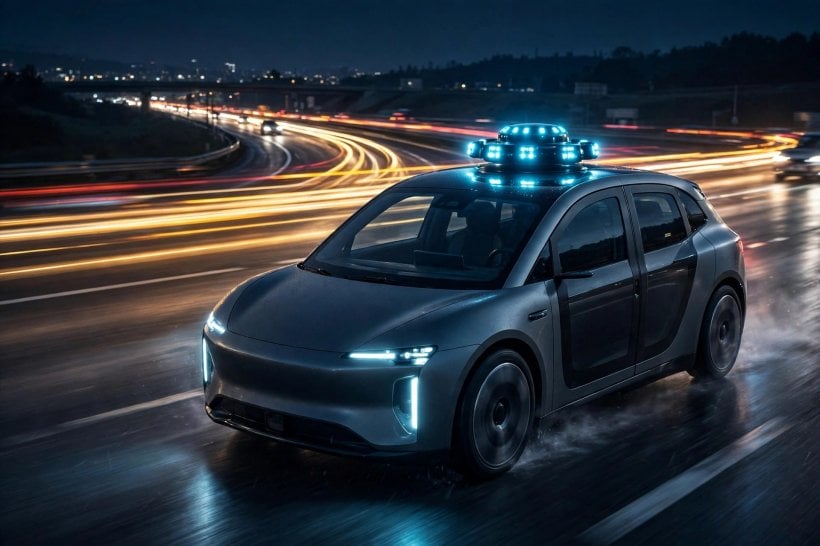
Dow Jones Newswires reported the agreement on October 23, quoting the three companies’ joint statement. The MoU covers an assessment of the technical, regulatory and commercial feasibility of offering driverless rides through the inDrive app. Pony AI will supply its seventh-generation robotaxis, inDrive will provide the ride-hailing platform and operate the service, and NVIDIA will back the effort with its artificial-intelligence infrastructure.
How The Three-Way Split Works
Each partner has a defined role. Pony AI, the autonomous-vehicle company, contributes the vehicles — its seventh-generation robotaxi platform — and the self-driving software. InDrive, the global ride-hailing company, contributes the marketplace and the operations: the rides will be offered through its app, and it will run the service on the ground in Kazakhstan.
NVIDIA’s role is the technology stack underneath. The company will support the effort with its AI infrastructure for autonomous vehicles, including Hyperion, its reference platform for Level 4 autonomous vehicles, and Halos, its vehicle safety system. Hyperion is the same platform NVIDIA supplies to automakers and robotaxi operators building production driverless systems — the chipmaker is simultaneously lining up next-generation custom memory for its AI hardware with Samsung and TSMC.
The initial project will assess whether the service can eventually expand beyond Astana to other cities in Kazakhstan and to additional markets where inDrive operates. The companies did not disclose a launch date, an investment amount or an expected fleet size.
Quotes From The Top
“Autonomous mobility has the potential to make transportation more affordable and accessible in the cities we serve,” inDrive founder and chief executive Arsen Tomsky said.
Pony AI chief executive James Peng said the collaboration would build on the company’s experience scaling driverless operations in China and expanding internationally. Pony AI already runs robotaxi operations in major Chinese cities and has pushed into Europe, the Middle East and Southeast Asia.
Kazakhstan As A Robotaxi Testbed
For Kazakhstan, the deal is a first taste of commercial driverless mobility. The MoU explicitly makes the launch subject to an agreement with the government, which means regulators in Astana will have a direct say in the terms under which robotaxis operate — from safety oversight to data handling.
The Central Asian market is new territory for the global robotaxi race. American operators have concentrated on US cities, while Chinese players like Pony AI have scaled domestically and are now exporting their operations. Kazakhstan sits between the two spheres: a large, relatively car-dependent country with a capital that has been investing in smart-city infrastructure.
The three companies also framed the project as a stepping stone. If the Astana assessment succeeds, the same template — Pony AI’s vehicles, inDrive’s platform and operations, NVIDIA’s compute — could be rolled into other markets where inDrive already has a ride-hailing presence.
Why It Matters
Robotaxi expansion is no longer a story about one company’s technology. The Pony AI–inDrive–NVIDIA agreement is a model for how driverless services will spread globally: a vehicle maker, a marketplace operator and a chipmaker splitting the stack, each doing the part it already does best. That template lowers the cost of entering a new country, because nobody has to build the whole system from scratch.
For NVIDIA, the deal is another deployment win for Hyperion and Halos, the platforms through which the company sells into autonomous vehicles — part of the same strategy that has it shipping open models for always-on agents and custom memory hardware with Samsung and TSMC. For Pony AI, Kazakhstan is proof of concept for its international playbook beyond China, Europe, the Middle East and Southeast Asia.
The open questions are the practical ones regulators always ask: who certifies the safety case, how incident data is shared, and what happens when a driverless vehicle meets Astana’s winter. The MoU stage means those answers come next — and the shape they take will set the precedent for every robotaxi deal that follows in the region.
Background
Pony AI has been one of the most aggressive Chinese autonomous-vehicle companies in expanding abroad, building on robotaxi operations in major Chinese cities to enter Europe, the Middle East and Southeast Asia. InDrive operates one of the world’s largest ride-hailing networks by market presence. NVIDIA’s Hyperion platform has become the reference architecture of choice for Level 4 autonomous vehicle developers. The Kazakhstan MoU brings all three together in a country where commercial driverless transport has not yet arrived — and where the regulatory framework will be written as the project goes.



0 Comments