

Google has acquired the Wyoming data-center site where it plans to spend $17 billion, taking over a campus that AI infrastructure firm Crusoe spent more than a year preparing. Crusoe said on Friday that the deal completes its pre-development work on the southeast Wyoming project — site selection, government approvals and a power strategy — a day after Google announced its first data center in the state. The price was not disclosed. The handover gives Google direct ownership of a project it had already committed to build, and ends Crusoe’s role on the site.
What Crusoe handed over
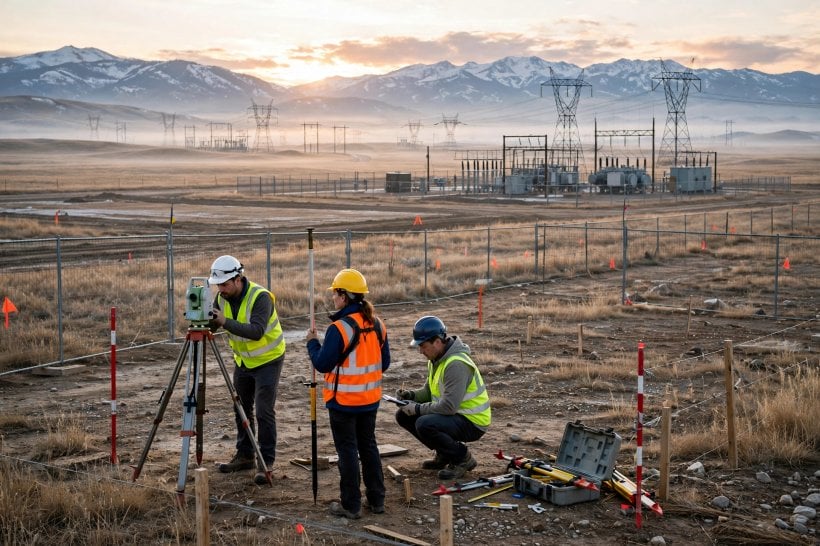
Crusoe and Tallgrass Energy started the campus together, developing its power and data-center plans in parallel. The pair introduced the project in July 2025 as a 1.8-gigawatt AI campus expandable to 10 gigawatts. Crusoe’s package included the site, the approvals and a power design built around fuel cells, grid power and gas turbines, with carbon capture planned through Tallgrass’s hub.
Google’s announcement covered the project from the other side: a $17 billion investment in Laramie County, its first Wyoming data center, built with Tallgrass, Black Hills Energy, American Electric Power and Related Digital. Its centerpiece: a 702-megawatt fuel-cell development with carbon capture, the largest of its kind, Google says, and a pledge to cover the power the site uses.
The backstory behind the handover
Bloomberg reported that Google took on the project itself after Crusoe failed to line up customers for the campus. Crusoe’s announcement does not address that account, describing the deal instead as the completion of its pre-development work. Chief executive Chase Lochmiller said Crusoe’s efforts in origination, entitlement and de-risking “have set up the Wyoming project for construction and eventual operation.”
Crusoe stays in Google’s orbit
The sale does not end the relationship. Crusoe said it is the developer of Google’s data-center campus under construction in Armstrong County, outside Amarillo, Texas. Lochmiller said the company has more than 6 gigawatts of contracted capacity and over 40 gigawatts in its development pipeline, figures that cover its whole business rather than the Wyoming site alone.
Our Read
The handover shows how the AI buildout is consolidating. Developers like Crusoe originate sites, secure approvals and line up power, then the hyperscaler with the balance sheet takes the project over. Google now owns the Wyoming site outright instead of renting capacity from a developer’s campus, giving it control over construction, power and the pledges it made to Laramie County.
The contrast with Microsoft is sharp. Microsoft walked away from a Texas data-center deal with Nscale this week as it tightens oversight of cloud providers, while Google is absorbing a developer’s project whole. One hyperscaler is pulling back from rented capacity; the other is buying the ground underneath its next campus.
For Crusoe, the exit is a pivot, not a retreat. It keeps the Texas development work and a pipeline of more than 40 gigawatts, shedding a site whose customer never materialised. The question is whether other developers face the same squeeze: if hyperscalers prefer to own the sites, the firms that prepare them become vendors of finished groundwork, not landlords.
Why It Matters
Ownership changes who carries the risk. Google’s $17 billion Wyoming bet is now its own outright, not a lease on someone else’s campus, so delays, cost overruns and the politics of the buildout land on Google. That matters days after voters across the United States backed limits on data-center projects, while the industry’s largest spenders keep building regardless.
The deal also sets a pattern. If developers keep originating gigawatt-scale campuses and hyperscalers keep buying them out, the AI infrastructure market splits into two tiers: the companies that find power and permits, and the giants that own what gets built on them.
Background
Google announced the Wyoming project on Thursday, a day after unveiling a $15 billion data-center hub in Malaysia, and the two investments frame power supply, not buildings, as the real spending. Wyoming is the first project where Google has wrapped its announcement in power and community pledges from the start.
Source: Crusoe’s announcement and Reuters’ report


0 Comments