
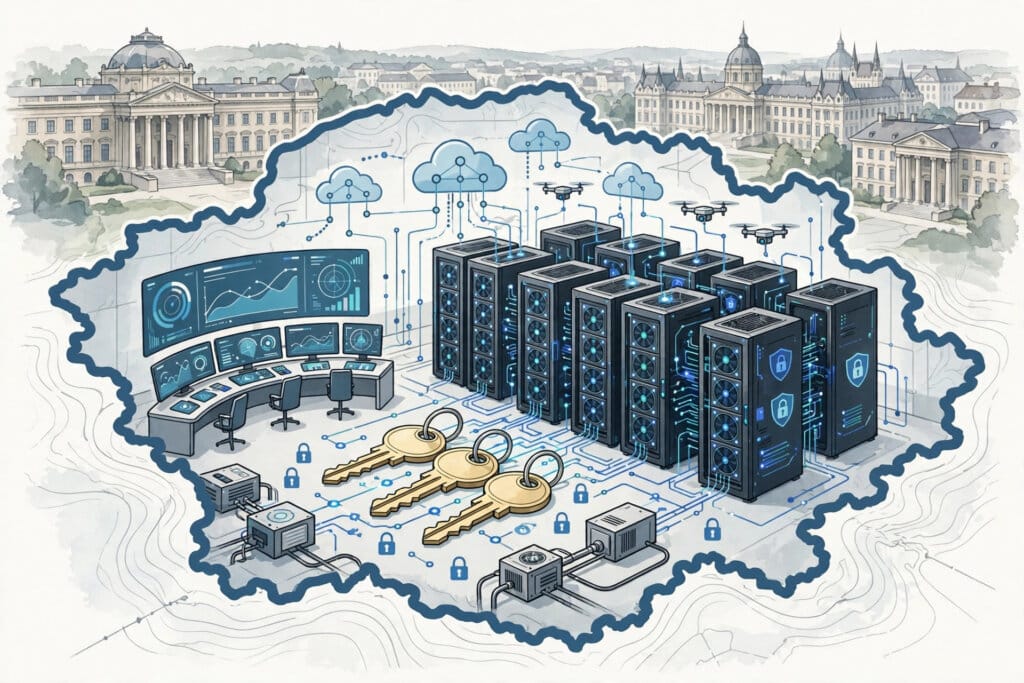
Microsoft on Tuesday set out the next stage of Microsoft Sovereign Cloud, adding a Sovereign Control Panel entering public preview at Microsoft Ignite, a European Data Guardian rollout, generally available external key management, and a wider set of locally operated AI services on Azure Local. The announcement, by Douglas Phillips, who leads global engineering for Microsoft’s specialised, sovereign and private clouds, frames sovereignty as a workload-by-workload continuum rather than a single deployment choice.
The package is aimed at governments, critical infrastructure and regulated industries that want advanced cloud and AI capabilities while keeping control over where data resides, who can access and operate their systems, and whether critical services continue when connectivity, regulation or geopolitics change. Microsoft introduced Sovereign Cloud last year; Tuesday’s post turns those commitments into named products with preview and general-availability dates.
Microsoft Sovereign Cloud: Control Panel, Data Guardian And External Keys
For public-cloud workloads, the Sovereign Control Panel, entering public preview at Ignite, brings sovereignty signals together in a unified Azure portal experience, showing an organisation its posture, controls, gaps and risks, and supporting business-continuity readiness by mapping workload dependencies and portability. Alongside it, Just-in-time Access and Customer Lockbox govern the operator-access lifecycle.
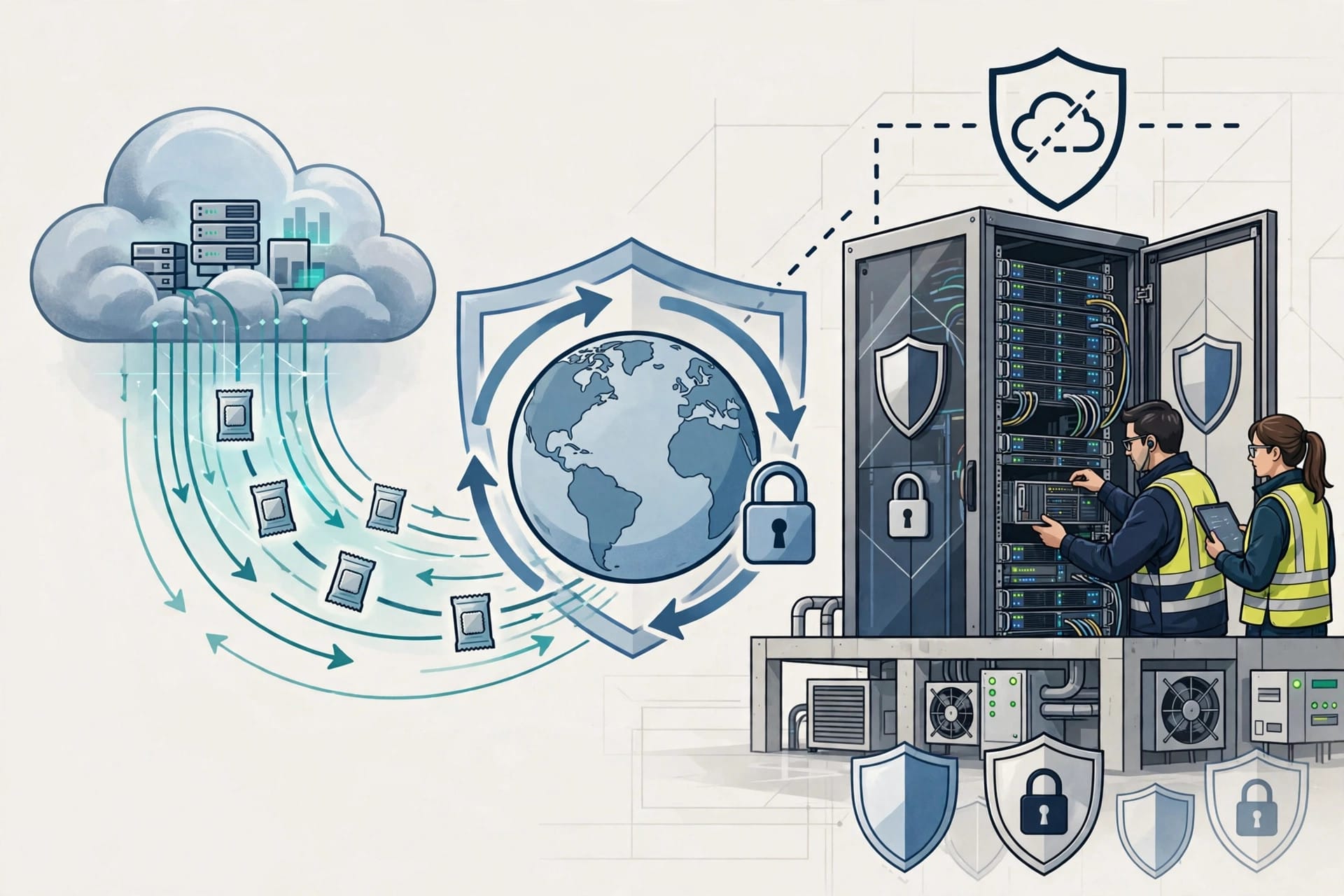
For customers in the European Union and the European Free Trade Association, Microsoft is rolling out Data Guardian, which adds European-resident oversight by a trusted EU partner for qualifying Microsoft engineer remote access to in-scope production systems. Production Touch Ledger, also launched with a phased rollout in the EU and EFTA, creates tamper-evident records of that access and the actions performed. External key management with Azure Managed HSM is now generally available, letting customers keep the root encryption key in hardware they own and operate on-premises or through a trusted third party. Azure Confidential Clean Rooms, now in limited preview, applies confidential computing to approved multiparty collaboration over shared sensitive data.
Foundry Local And Azure Local: AI Under Local Control
Sovereign Private Cloud, built on Azure Local, extends the model into customer-operated environments, including disconnected operations; the ability to transition workloads from connected to disconnected operations is entering public preview, and Microsoft is publishing new sovereign business-continuity guidance and architecture patterns. SQL Server on Azure Local is already generally available, while DocumentDB and Blob Storage on Azure Local are both entering public preview.
The AI layer is Foundry Local, which will become generally available at Ignite for connected and disconnected operations on Azure Local, with an expanded model catalogue spanning Microsoft, partner, open-weight and open-source models, plus local inference and agentic retrieval over local enterprise data. GitHub Enterprise Local will also become generally available at Ignite as a validated GitHub Enterprise Server appliance on Azure Local, and developers can use GitHub Copilot with locally hosted models for inference. Confidential virtual machines on Azure Local are generally available, and Azure Local will support multitenancy, separating resources, governance and management across tenants on shared infrastructure. A Sovereign Partner Ecosystem, including national partner clouds such as Bleu in France, completes the model.
Why It Matters
The central entity is Microsoft Sovereign Cloud, and the attribute that changed is verifiability: sovereignty stops being a contractual promise and becomes a panel, a ledger, an external key and a locally hosted model catalogue that a regulator can inspect. Its neighbours feel the pressure in sequence — European policymakers building sovereign capacity, the same debate behind Europe’s bet on Mistral as a sovereign champion; enterprises deciding which AI agents they can trust inside their own estates, the problem behind Microsoft’s Guardian Agents for policing companies’ own AI agents; and infrastructure planners discovering that power and jurisdiction now decide where AI can be built at all, as when Microsoft pulled out of the Nscale Loughton data centre as grid power slipped to the 2030s. For rivals, the bar is now a product surface, not a policy paper.
Background
Microsoft introduced Sovereign Cloud last year as European governments and regulated industries pressed US cloud providers over data residency, foreign access to data and dependence on overseas operators. Since then it has expanded Azure Local, its customer-operated cloud, and built a partner ecosystem of national clouds and local operators; Tuesday’s announcement is the point where that programme gains its control, audit and local-AI tooling in one release.
Source: Microsoft (official blog, Douglas Phillips, Oct 20); Storyboard18





0 Comments